18.1 C
Delhi
Friday, February 20, 2026

Moon’s first AI brain gets attached to Astrolab rover. Here’s what it will do

The Moon is about to get its own brain upgrade: hardware for real-time artificial intelligence (AI) and edge computing has been successfully bolted onto a lunar rover for the first time, clearing a critical milestone on the road to smart data processing 3,84,400 km from Earth.

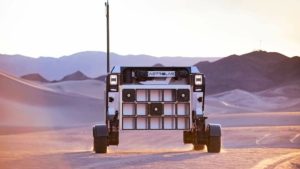
In a February 2026 update shared on LinkedIn, Astrolab, a California-based space startup, confirmed the first mechanical integration of tech giant Hewlett Packard Enterprise (HPE)’s computing payload on the FLIP rover, marking tangible progress towards lunar deployment.
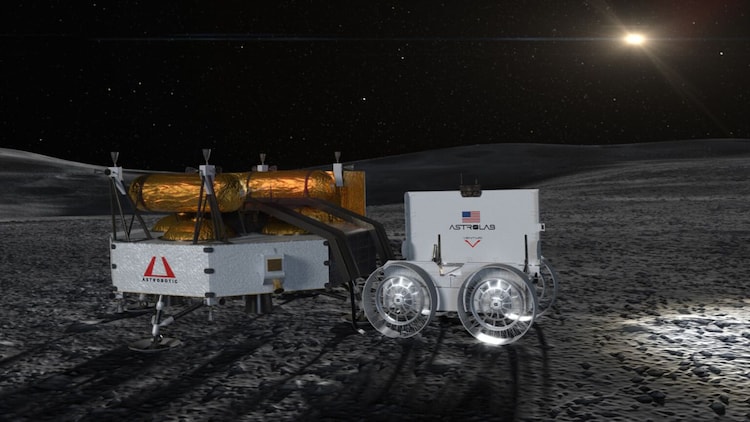
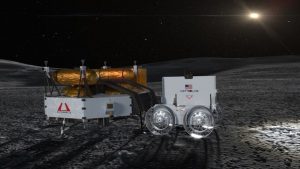
Astrolab's FLIP rover has been integrated with HPE computing hardware. (Photo: Astrolab)

Astrolab’s FLIP rover has been integrated with HPE computing hardware. (Photo: Astrolab)

The partnership between the two firms was first announced in 2024. They aim to place HPE’s Spaceborne Computer, a rugged high-performance system already proven on the International Space Station (ISS), inside Astrolab’s rovers.

This will allow immediate AI analysis of sensor data, images and mission commands on the Moon, removing the long delays of sending large volumes of raw data back to Earth.

WHAT ARE FLIP AND FLEX ROVERS?

FLIP, short for FLEX Lunar Innovation Platform, is Astrolab’s smaller technology demonstrator rover.

It weighs roughly half a ton and carries a payload of 30–50 kg.

The rover will test essential subsystems such as hyper-deformable Venturi wheels, which are advanced, 930-mm-diameter lunar wheels.

It will also test batteries, avionics, sensors and software in real lunar conditions. FLIP is scheduled to land at the lunar South Pole in summer 2026, on Pittsburgh-based aerospace firm Astrobotic’s Griffin Mission-1 lander.
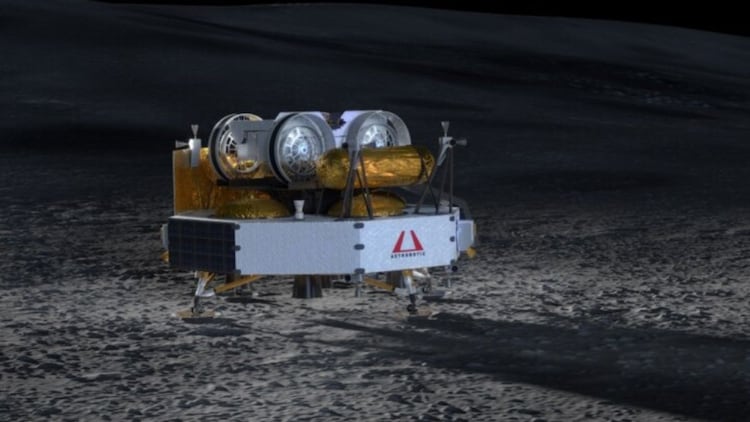
FLIP, short for FLEX Lunar Innovation Platform, is Astrolab's smaller technology demonstrator rover. (Photo: Astrolab)

FLIP, short for FLEX Lunar Innovation Platform, is Astrolab’s smaller technology demonstrator rover. (Photo: Astrolab)

It will carry science instruments, including a multispectral camera to detect Helium-3. The recent hardware integration took place on the FLIP rover.

FLEX, which stands for Flexible Logistics and Exploration Rover, is Astrolab’s flagship vehicle. The company describes it as the largest and most capable rover planned for the lunar surface.

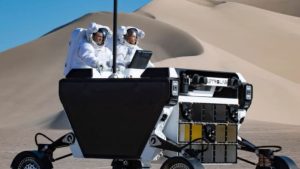
It supports a payload of up to 1,600 kg and three cubic metres of cargo volume. It can transport two suited astronauts, deploy infrastructure, perform construction tasks, move resources and support permanent outposts.
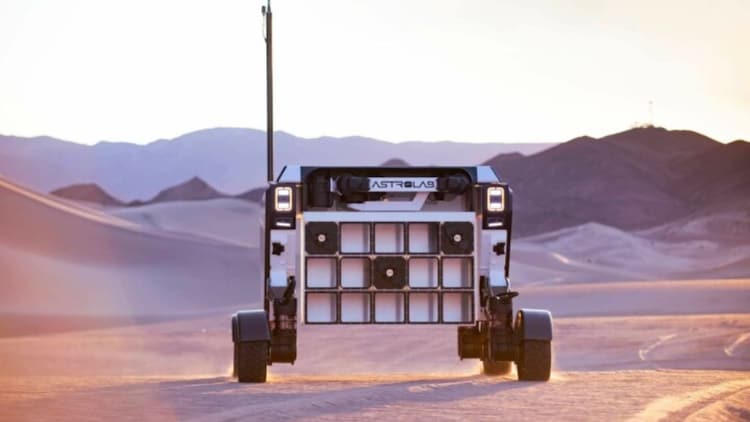
The FLEX rover is set to become the largest and most capable rover on the Moon. (Photo: Astrolab)

The FLEX rover is set to become the largest and most capable rover on the Moon. (Photo: Astrolab)

The rover includes bendable wheels to move on soft lunar regolith, articulating limbs for terrain adaptability, deployable solar arrays, a six-degree-of-freedom robotic arm, semi-autonomous navigation sensors and dust-tolerant interfaces.

FLEX missions are targeted for late 2026 or later, potentially using SpaceX vehicles.

HOW IS THE SPACEBORNE COMPUTER BENEFICIAL?

HPE’s Spaceborne Computer is expected to deliver proven space-grade processing power to Astrolab’s rovers, starting with FLIP and later expanding to FLEX.

It will enable high-speed, AI-capable computation at the edge.

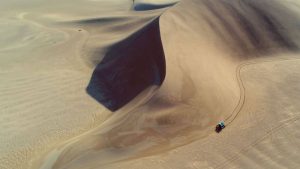
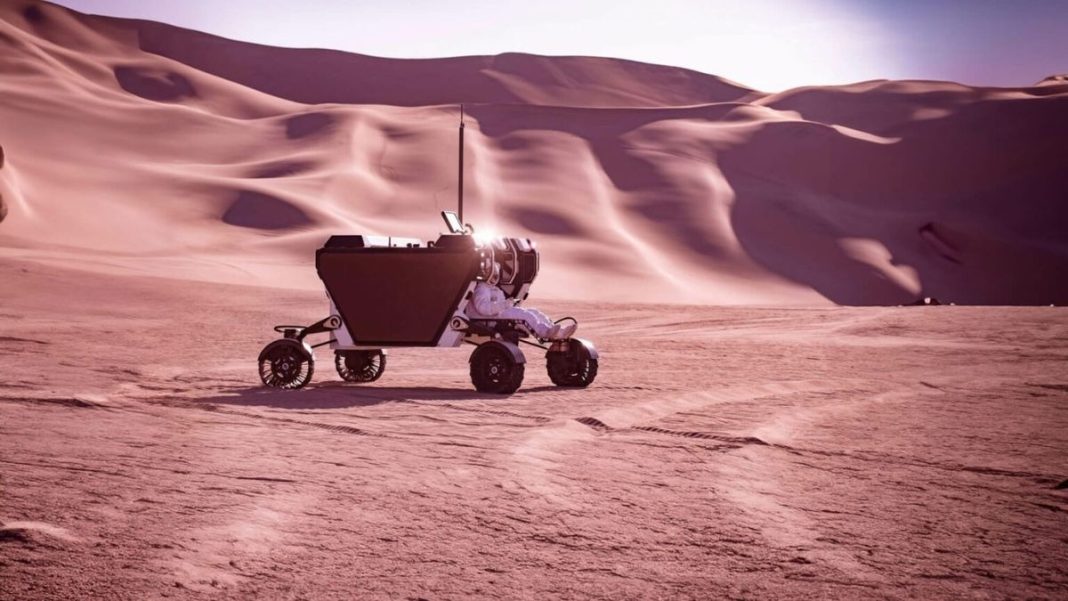
FLEX is built to handle extreme lunar terrain.  Its hyper-deformable wheels will maintain traction on loose dust without sinking. (Photo: Astrolab)

FLEX is built to handle extreme lunar terrain. Its hyper-deformable wheels will maintain traction on loose dust without sinking. (Photo: Astrolab)

This will allow immediate analysis of images, sensor readings and commands without transmitting massive data volumes over 3,84,400 km to Earth.

WHO BENEFITS FROM LUNAR EDGE COMPUTING AND AI?

Artemis astronauts will receive real-time benefits. These include instant interpretation of medical images, live mapping of water ice and Helium-3 deposits, lag-free experiment control and safer rover navigation.

Future lunar bases, resource mining and communication networks will function more efficiently.
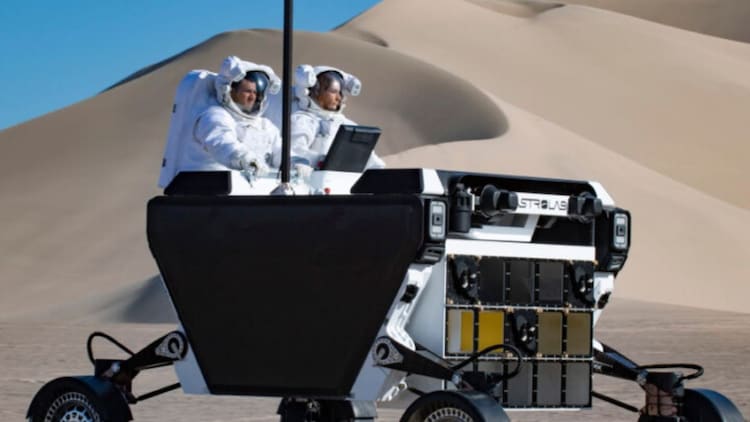
FLEX can transport two suited astronauts, deploy infrastructure, perform construction tasks, move resources and support permanent outposts. (Photo: Astrolab)

FLEX can transport two suited astronauts, deploy infrastructure, perform construction tasks, move resources and support permanent outposts. (Photo: Astrolab)

The rugged technology also offers potential improvements for edge computing in remote Earth locations such as deep oceans, polar regions and disaster zones.

WHEN IS DEPLOYMENT OF FLIP AND FLEX PLANNED?

FLIP will launch first in summer 2026 on Astrobotic’s Griffin-1 lander.
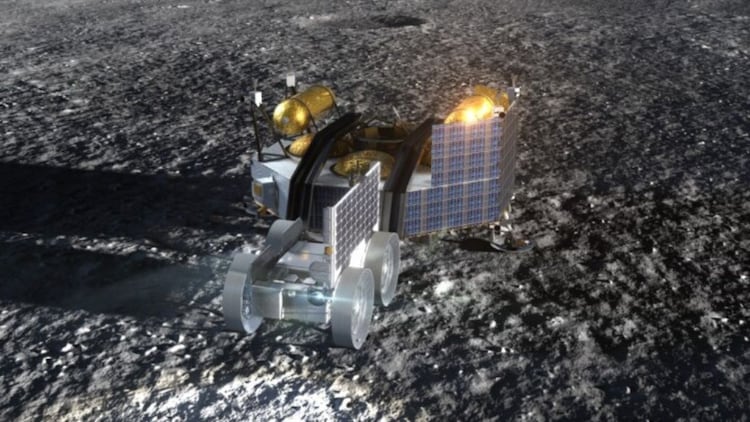
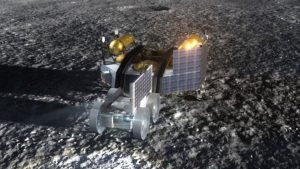
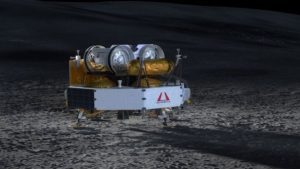
FLIP is scheduled to land at the lunar South Pole in summer 2026. (Photo: Astrolab)

FLIP is scheduled to land at the lunar South Pole in summer 2026. (Photo: Astrolab)

FLEX missions are scheduled to follow in late 2026 or beyond, potentially using SpaceX vehicles to provide full-scale mobility and computing capacity.

WHY IS THE MOON IDEAL FOR EDGE COMPUTING?

The Moon’s near-vacuum environment removes atmospheric signal interference. Polar regions supply near-constant sunlight for reliable solar power.

Large radio-quiet zones protect sensitive electronics.
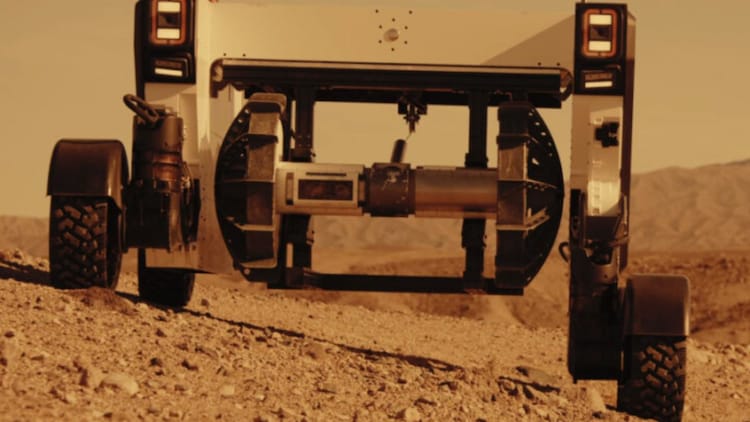
FLEX includes bendable wheels for soft regolith and articulating limbs for terrain adaptability. (Photo: Astrolab)

FLEX includes bendable wheels for soft regolith and articulating limbs for terrain adaptability. (Photo: Astrolab)

With hardware integration now complete, the project is shifting lunar computing from drawings to real metal and circuits, setting the stage for a connected Moon economy.

WHAT ARE ELON MUSK’S MOON PLANS?

Elon Musk has outlined ambitious visions for SpaceX and xAI, including Moonbase Alpha, a self-sustaining lunar city powered by Starship rockets.

Musk has repeatedly expressed interest in building a mass driver on the Moon, an electromagnetic rail system that could catapult AI satellites into deep space with minimal fuel, leveraging the Moon’s low gravity and no atmosphere.

Elon Musk aims to build mass drivers on the Moon. (Photo: Generative AI/India Today)

Elon Musk aims to launch orbital AI supercomputers. (Photo: Generative AI/Radifah Kabir/India Today)

This would enable massive scaling of orbital AI supercomputers, potentially harnessing terawatts or more of solar energy to launch billions of tons of satellites annually for deep-space exploration, including hunting for signs of ancient alien civilisations.

WHAT IS INDIA DOING IN TERMS OF ORBITAL DATA CENTRES?

India is actively entering the orbital AI data centre race.

Chennai-based space startup Agnikul Cosmos and Bengaluru’s NeevCloud have signed an agreement to launch India’s first indigenous AI-powered data centre in low-Earth orbit, with a proof-of-concept mission targeted for late 2026 and commercial operations in 2027.

An artistic rendering of an AgniKul rocket upper stage functioning as an AI data centre in Low-Earth Orbit. (Photo: Generative AI/Radifah Kabir/India Today)

An artistic rendering of an AgniKul rocket upper stage functioning as an AI data centre in Low-Earth Orbit. (Photo: Generative AI/Radifah Kabir/India Today)

The Indian Space Research Organisation (Isro) is also conducting feasibility studies for in-orbit data centres to process and store satellite data in space, reducing ground relay needs.

Experts see abundant solar power and vacuum cooling as major advantages, positioning India as a potential player in space-based AI infrastructure alongside global efforts.
Latest

‘Harbinger’ of pollution? Scientists measure SpaceX rocket re-entry fireball in Earth’s atmosphere — What we know

Scientists measured the pollution caused by the SpaceX rocket re-entry fireball in Earth's atmosphere. The team detected a sudden spike in the metal lithium in

Temperatures to rise gradually in North India from Friday, South braces for rain

Northern India will see rising temperatures and clear skies tomorrow while parts of the south prepare for heavy rainfall. Experts suggest a warm weekend ahead f

Your old smartphone hides a rare treasure that could help India. It’s not gold

India is turning electronic junk into strategic gold to fuel its future. See how your old smartphone is being recycled into the powerful magnets needed for nati

DRDO tests Gaganyaan’s drogue parachute that will return astronauts to Earth

DRDO has successfully completed qualification-level load tests for the Gaganyaan drogue parachute at the Rail Track Rocket Sled facility in Chandigarh, ensuring

Beijing shines as astronaut captures fireworks to mark Chinese New Year

Nasa astronaut Chris Williams shared a stunning view of Beijing celebrating the Lunar New Year from the International Space Station (ISS). The twinkling lights

Topics

Trump’s Board of Peace meeting: Shahbaz humiliated, Trump dozes off, Gaza gets empty promises

Trump's Board of Peace summit in Washington turned into a spectacle, with Pakistan's Shahbaz Sharif humiliated on camera, Trump caught napping mid-meeting, and

US Supreme Court invalidates majority of Trump tariffs, citing overreach of emergency powers

In a major blow to former President Donald Trump, the U.S. Supreme Court ruled on Friday that his administration exceeded its legal authority by imposing large

‘I am your soldier, how can you deny us?’: The chilling plea of a son with a disabled father as execution deadline looms

The Balochistan Liberation Army (BLA) has released ID cards of 8 captive Pakistani soldiers, contradicting ISPR's AI-fabricated claims. With the Feb 21 deadline

British-era tractor lying in scrap sold as antique for Rs 1.25 Cr after video goes viral – Details

According to a viral post circulating online, the enthusiast expressed interest in acquiring the old tractor. The buyer reportedly purchased the old tractor for

Trump’s ‘stand up’ stunt for Shehbaz Sharif: 2026 Board of Peace summit viral highlights & 200% tariff claims

US President Trump ordered Pakistan PM Shehbaz Sharif to stand at the 2026 Board of Peace Summit while claiming he averted a nuclear war with 200% tariffs. See

J-K: Major tragedies were averted by security forces in the last two months

Major tragedies were averted by security forces in the last two months. Six IEDs were detected and defused, hence neutralizing multiple terrorist plots targetin

Fire breaks out in Hyderabad building housing coaching institutes; 50 students rescued

Fire-fighting personnel rescued about 50 students trapped in an IT coaching institute on the second floor. The incident occurred at Maitrivanam in the heart of

SC on West Bengal SIR: Court orders deployment of judicial officers to oversee exercise

West Bengal SIR: Bench of Chief Justice of India (CJI) Surya Kant and Justices Joymalya Bagchi and Vipin Pancholi also observed that a “trust deficit” betw
spot_img

Related Articles

Popular Categories

spot_imgspot_img