Astronauts returning from space struggle with something surprisingly simple: holding a glass of water. New research explains why, and the answer lies deep inside the brain.
A study published in JNeurosci by Philippe Lefevre and colleagues at Universite catholique de Louvain, Belgium, and Ikerbasque, Spain, has revealed that the brain does not simply forget gravity when astronauts leave Earth.
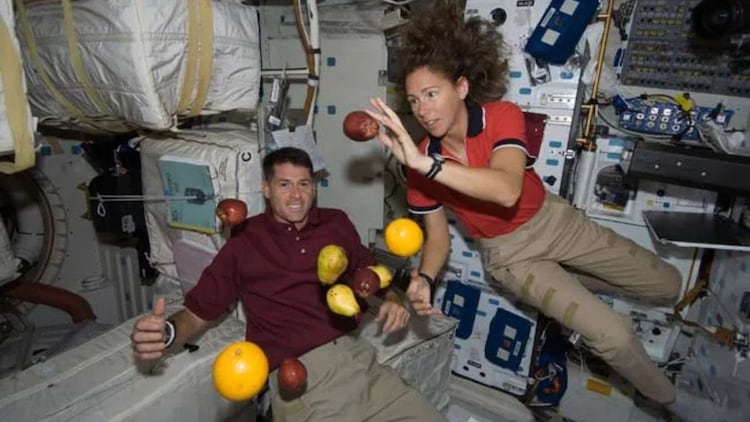
Instead, it holds on to the memory of gravity for months, sometimes long after the body has floated weightlessly through space.
WHY DO ASTRONAUTS STRUGGLE TO HOLD OBJECTS IN SPACE?
On Earth, gripping an object is second nature. You hold your coffee mug tightly enough so it does not slip.
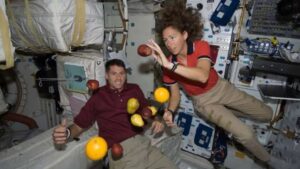
But in space, the rules change completely. When you let go of an object without moving it, it simply floats because gravity is not pulling it down.
However, the moment you move that object in any direction, something called inertia kicks in.
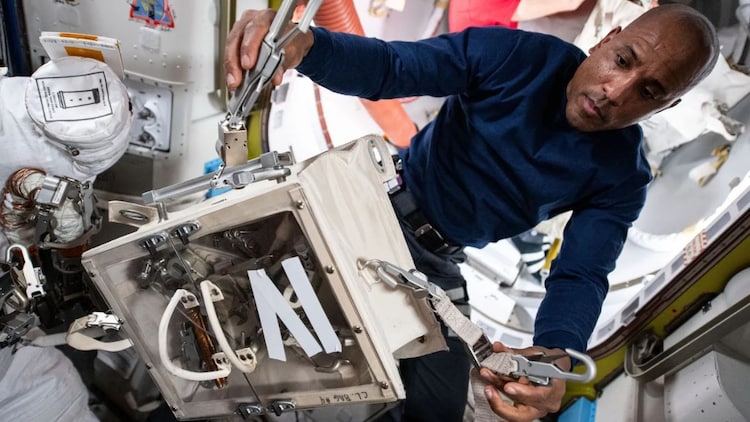
Inertia is the tendency of an object to keep moving in the direction it was pushed. So if an astronaut moves an object upward and loosens their grip slightly, the object drifts away.
The researchers found that astronauts in space were gripping objects far more tightly than necessary.
Their brains, still wired for Earth’s gravity, kept predicting that objects would fall and be overcorrected as a result.
WHAT HAPPENS WHEN ASTRONAUTS RETURN TO EARTH?
The reverse problem occurred when astronauts came back home.
Initially, their brains made incorrect predictions about how much force was needed to hold and move objects under gravity.
Over time, they gradually adjusted, but the transition was not instant.
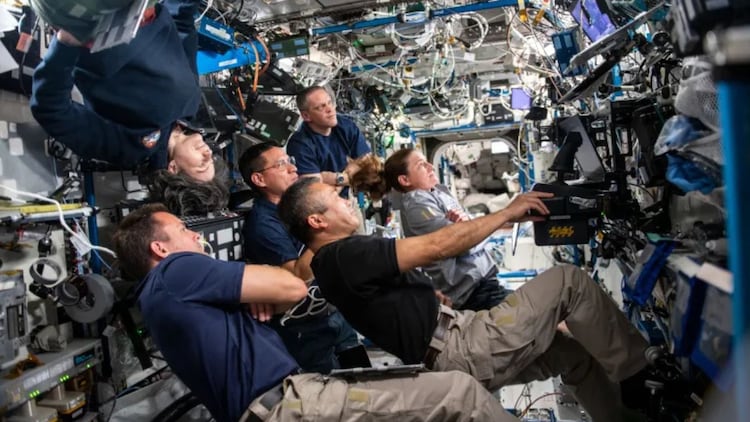
The researchers concluded that the brain adapts to new gravitational environments slowly, and that grip control is governed largely by the brain’s predictions about the risk of dropping something.
The study took nearly 20 years to complete, accounting for coordination with space agencies and data analysis, a testament to just how painstaking space neuroscience research truly is.