
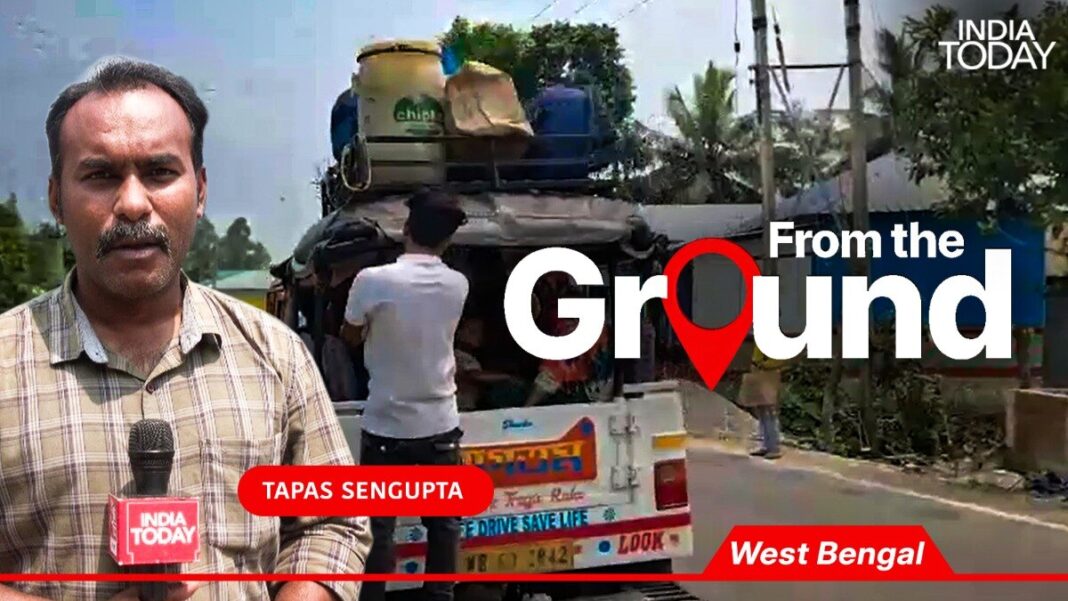
As the first phase of the West Bengal Assembly Elections approaches on April 23, a massive homecoming of native voters is underway. From the brick kilns of Bihar to the construction sites of Assam, thousands of migrant workers are abandoning their workstations, packing their lives into tin boxes, and boarding overcrowded buses and “magic” vans.
Their destination? The polling booths of Cooch Behar, Alipurduar, Jalpaiguri, Darjeeling.
Their mission? To ensure their names remain etched in the state’s political and civil identity.
Notably, a total of 90.66 lakh names were chucked out during the Special Intensive Revision (SIR) process in West Bengal, according to the final data released by the Election Commission.
For many, this journey isn’t just about democratic duty; it is a desperate race against the SIR and the looming shadow of the NRC. In Dinhata, the air is thick with anxiety over documentation.
Shah Alam Sheikh, a migrant worker who recently arrived from Assam with his wife and young son, explained the urgency. To secure their place in the current SIR, they needed records dating back to 2002.
“There may be another SIR in the future,” Shah Alam said while unloading his belongings from a hired vehicle. “We need our names in the 2026 list to protect our children’s future. That is why we are here to cast our vote”.
A migrant labourer, Binoy Ray, a resident of dinhata who was returning from Gujrat, said, “There are no jobs in Bengal. So I have to go to Gujrat for work. I am happy to see the Gujarat development model. I will cast my vote for who will develop my state like Gujarat”.
Similarly, Mohammad Ashraf Ali and his companions travelled overnight from Bihar.
Having survived on puffed rice for days during the 2016 demonetisation crisis with nothing but a Rs 500 note, Ashraf remains fiercely loyal to the current state leadership. “Even if my heart is torn out, I will still vote for Mamata,” he stated, citing the fear of NRC as his primary motivator.
DISILLUSIONMENT BEYOND BORDER
The influx isn’t limited to Cooch Behar. In Siliguri, workers returning from BJP-ruled states and neighbouring Nepal are vocal about their reasons for favouring the Trinamool Congress (TMC).
While acknowledging a lack of local employment, many argue that “peace” and “freedom of speech” are the trade-offs they are willing to make.
VOICES FROM THE GROUND
“If you vote for Modi, everything, trains, airlines will be sold. Didi is better,” remarked one worker at a Siliguri transit point.
Another returning labourer expressed concern for those still working outside: “Our brothers in BJP-ruled states won’t even be allowed to come back and vote. That’s why we must stand for Didi.”
Many also pointed to the recent elections in Bihar as a cautionary tale, claiming the economic situation there remains dire despite political promises.
The physical manifestation of this migration is striking. Buses arriving in Dinhata and Cooch Behar are topped with bicycles tied firmly to roof racks.
Inside, boxes and bags contain the meagre belongings of families who have settled their accounts with contractors early just to make it in time for the April 23 deadline.
For these workers, the vote is more than an exercise of choosing one’s representative, it is a document of existence. As the first phase of polling nears, the message from the highways of North Bengal is clear that no distance is too far when the right to belong is on the ballot.
The 294-member Legislative Assembly of West Bengal will go to polls in two phases on April 23 and 29 respectively. The votes will be counted, and the results will be announced on May 4, alongside those for Tamil Nadu, Puducherry, Kerala and Assam.
With inputs by Partha Pratim Das and Mansur Habibullah


