
In what is being projected as the most extensive security deployment in the state’s electoral history, the Election Commission of India has introduced a multi-layered framework for the 2026 Assembly elections, combining strict ground protocols with advanced technology to curb voter intimidation and fraud.
At the centre of the plan is a clearly marked 100-metre perimeter around every polling station, informally called the ‘Lakshman Rekha’, aimed at creating a controlled and secure voting environment.
The Commission has directed that a 100-metre circular boundary be drawn around each polling station using visible markings, establishing a strict no-entry zone for unauthorised persons.
To regulate access, two verification desks will be set up at the edge of this boundary. Booth Level Officers and their assistants will check voter credentials before allowing entry, ensuring only verified voters proceed towards the polling booth.
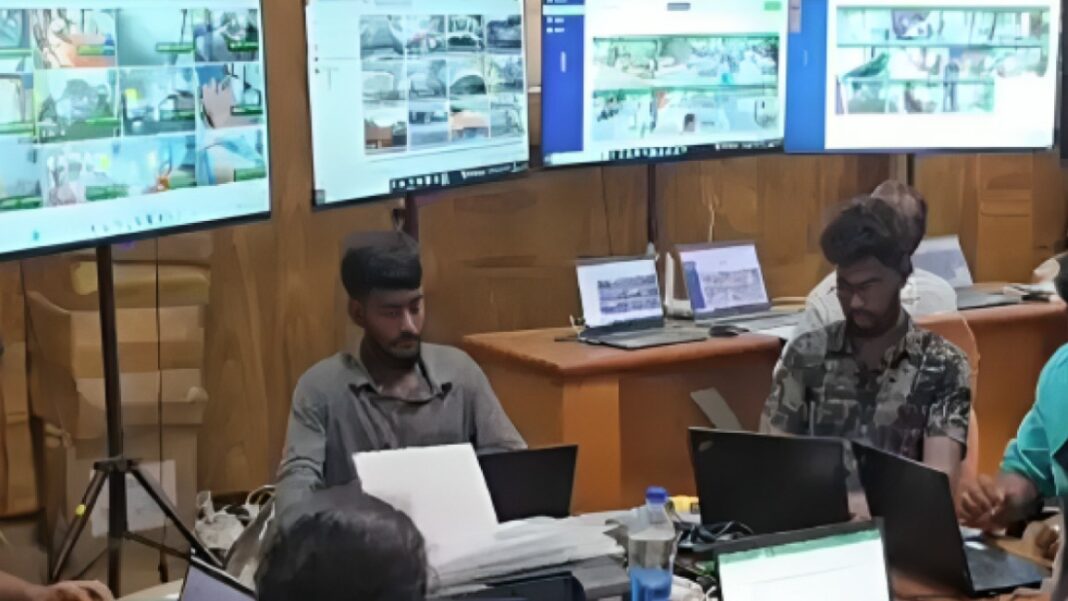
In a significant technological push, AI-enabled cameras will monitor polling areas in real time, detecting unusual activity such as crowd build-up or suspicious movement. Alerts will be sent instantly to officials for quick intervention.
Micro-observers, Central Armed Police Forces, and state police personnel will also be equipped with body-worn cameras, creating a digital record of all interactions in and around polling stations.
In addition, the Commission has taken operational control of government CCTV cameras in nearby areas to maintain continuous monitoring through a central control room.
The Election Commission is tightening checks on the ASD (Absent, Shifted, Dead) list to prevent misuse.
Booth Level Officers have been asked to deliver voter slips directly to residents, with any undelivered slips requiring documented reasons. If a voter earlier marked as “absent” arrives to vote, the Presiding Officer will conduct strict verification, cross-checking identity against the ASD database and multiple ID proofs before allowing a ballot.
Following a high-level meeting with senior police officials, including the DGP, IG and ADGs, detailed instructions have been issued for the 72 hours leading up to polling.
The plan outlines clear responsibilities for law enforcement and immediate response measures in case of disturbances, aiming to maintain order during the most sensitive phase of the election cycle.
Alongside security measures, the Commission has launched a large-scale awareness campaign to inform voters about electoral offences. Through advertisements and outreach, it is reinforcing a zero-tolerance approach towards any attempt to disrupt the voting process.


