
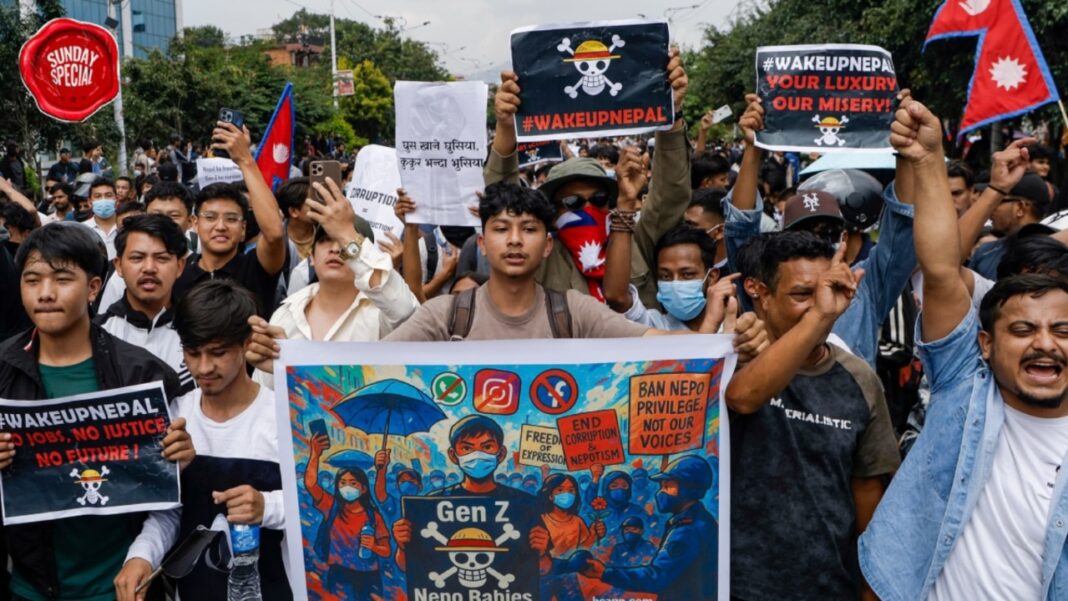
Last year, something genuinely unexpected happened. Teenagers and twenty-somethings, the same generation routinely mocked for doom-scrolling and chronically online behaviour, put down their phones and picked up pirate flags. Not metaphorical ones. Actual Jolly Roger flags from One Piece, the anime. They waved them in Nepal, Bangladesh, Morocco, Indonesia, Peru and Madagascar. These were not random tantrums. Gen Z looked at corrupt governments, nepotism-soaked parliaments and crumbling hospitals and said: enough. Some governments fell. Some protesters got shot. So what actually happened?
The triggers were not complicated
The causes behind each protest differed by country, but the underlying grievances were identical everywhere. Youth unemployment so severe it made opportunity feel like a myth. Schools and hospitals falling apart while governments spent lavishly on football stadiums and vanity projects. Corruption that no longer bothered to disguise itself. And nepotism so entrenched that an entire generation coined a phrase for it: nepo kids. A Bloomberg Economics study analysed 22 million data points and reached a straightforward conclusion. Young populations combined with high social media penetration produced extreme discontent over inequality and corruption. The kindling had been sitting there for years. Gen Z simply struck the match.
A pirate flag became the symbol of a generation
Before tallying wins and losses, the flag needs explaining. How did an anime symbol end up pinned to burning buildings in Kathmandu and protest squares in Madagascar? The Straw Hat Pirates’ Jolly Roger, that grinning skull in a straw hat, represented one consistent idea in One Piece: fighting corrupt, power-hoarding rulers who kept everyone else down. Gen Z recognised the villain immediately and the symbol spread on TikTok and Instagram, crossing borders without a visa. It appeared in Nepal, Bangladesh, Indonesia, Peru, Morocco and Madagascar, sometimes adapted locally. No headquarters. No coordination committee. Just a shared image that communicated everything without a single word.
Five governments actually fell
This is the part that tends to surprise people. Gen Z did not merely rattle a few governments and go home. Bangladesh fell first in 2024, where student protests against nepotistic job quotas escalated into a full revolution that brought down Sheikh Hasina’s authoritarian government. Nepal followed, where protesters ousted an entire government in just 48 hours after demonstrating against corruption and a social media ban. Six months later, a youth-backed party won elections and installed a 35-year-old rapper as prime minister, the movement’s single greatest achievement to date. Madagascar saw its president flee after a colonel publicly backed the protesters. Peru added yet another leadership collapse to a decade already marked by chronic political instability.
But the wins did not always hold
Indonesia and the Philippines produced rallies and minor concessions, nothing more. Morocco responded with mass arrests and delivered no meaningful reform. Turkey’s Gen Z filled streets repeatedly and Erdogan did not shift. Kenya and Sri Lanka saw enormous turnouts that subsequently splintered without producing structural change. The pattern that emerged was clear. Where elites fractured and elections followed, protesters won something real. Where governments held firm and policed brutally, movements stalled. Copying tactics across borders did not guarantee copying outcomes.
The next wave is already loading
The uncomfortable part is what comes next. Youth unemployment across many of these countries already sat between 30 and 50 per cent before any of these protests began. Artificial intelligence now threatens to eliminate the entry-level jobs that a young generation depends on simply to begin a career. The same grievances do not disappear quietly. They compound. Experts tracking global unrest predicted escalation through 2026, and Turkey and Indonesia were already showing early signs of a second wave by early that year.
The honest verdict
Gen Z toppled five regimes, put a rapper in a prime ministerial office, and proved that a meme and a pirate flag can shake governments that tanks could not. But sustained, structural change remained elusive for most movements. The Arab Spring delivered precisely this lesson 15 years earlier. Enthusiasm without institutions is a very loud bonfire that burns itself out. Gen Z lit the fire. Whether anyone builds something lasting on the ashes is not a cliffhanger. It is a warning.


