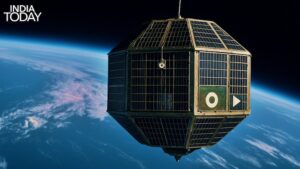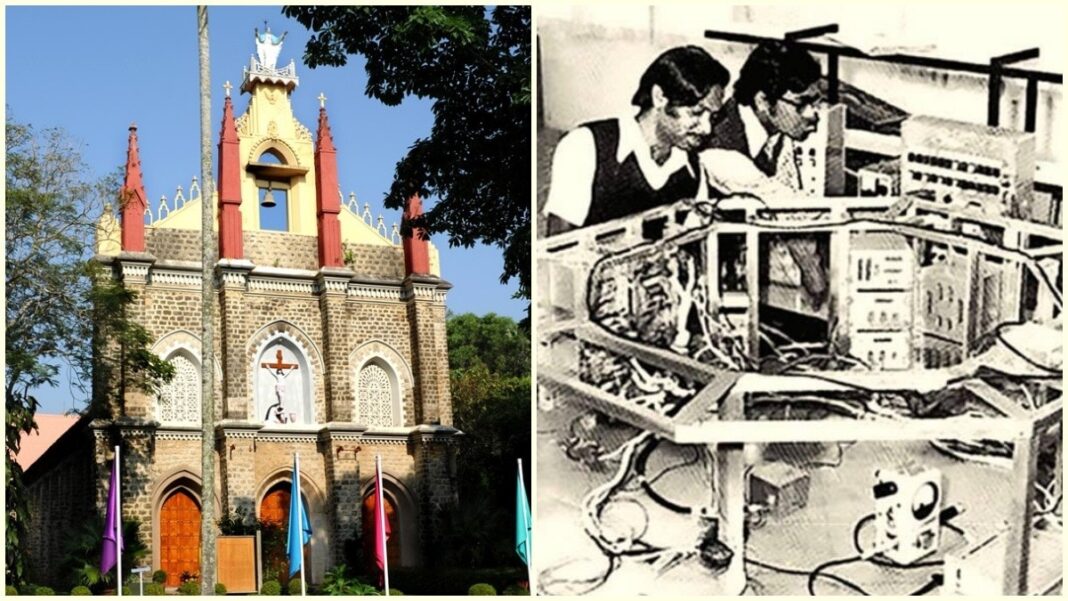
51 years ago, India marked a historic milestone with the launch of Aryabhata, its first step into space. But long before the satellite lifted off aboard a Soviet rocket, its story had already begun in an unlikely place: a small church by the Arabian Sea.
In the early 1960s, India’s fledgling space programme, what would later become the Indian Space Research Organisation, was operating with limited resources but boundless ambition.
Under the leadership of Vikram Sarabhai, scientists were searching for a location close to the magnetic equator to study the upper atmosphere. They found it in Thumba, a quiet fishing village near Thiruvananthapuram.
At the heart of Thumba stood the St. Mary Magdalene Church. In a remarkable act of community support, the church was handed over for scientific use. What followed has since become one of the most enduring images of India’s scientific journey: a space programme taking shape within the walls of a place of worship.
BIRTH OF INDIA’S FIRST SATELLITE: ARYABHATA
The church building itself became the first laboratory and control room.
The bishop’s residence was converted into offices, and nearby coconut groves turned into makeshift workshops. With no advanced infrastructure, scientists improvised, assembling equipment by hand and transporting rocket parts on bicycles and bullock carts.
These early efforts were focused on launching sounding rockets to study atmospheric conditions. But more importantly, they helped build the technical expertise and confidence that would eventually lead to the creation of Aryabhata.
By the time Aryabhata was ready for launch in April 1975, India had moved beyond its church-based beginnings. Yet the spirit of those early years remained embedded in the mission. The satellite, named after the ancient Indian mathematician, symbolised not just scientific progress but the culmination of years of groundwork laid under the most modest conditions.
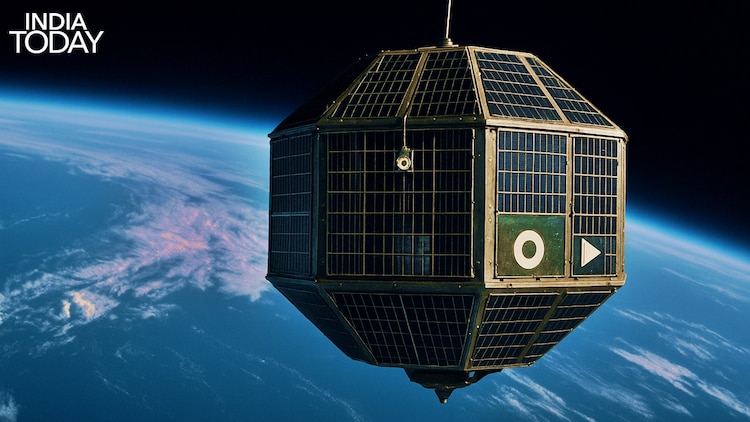
Aryabhata itself functioned for only a few days before a power failure halted its operations. Still, the mission was widely regarded as a success. It demonstrated that India could design and build its own satellite, an achievement that placed the country firmly on the global space map.
Today, the same church in Thumba stands preserved within the Vikram Sarabhai Space Centre campus as a museum, a quiet reminder of where it all began.
From prayer halls turned laboratories to satellites orbiting Earth, India’s space journey is about how vision and ingenuity can overcome even the most limited beginnings.