
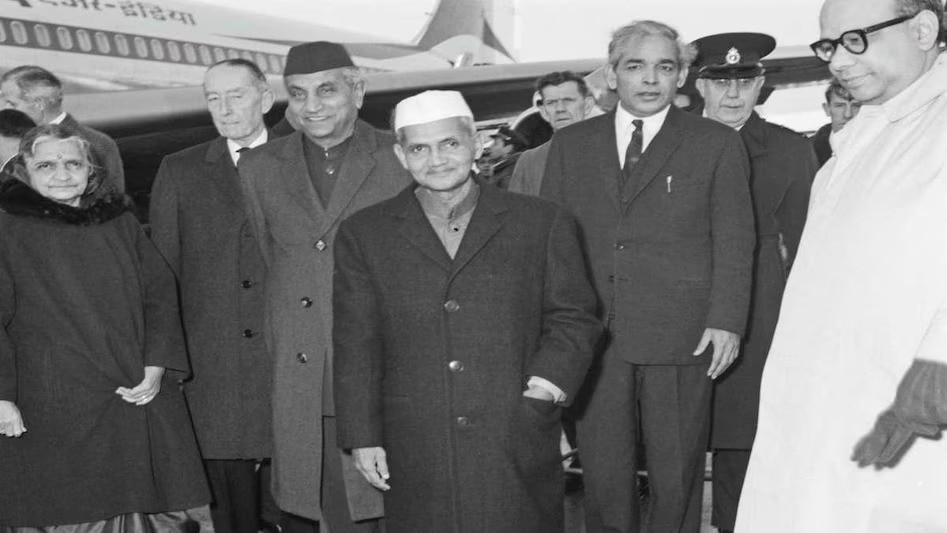
In a decade shaped by uncertainty and external threats to India, Lal Bahadur Shastri, India’s second Prime Minister, served from June 9, 1964, to January 11, 1966, articulated a view of national security that extended beyond the battlefield. His words reframed strength as a collective responsibility rather than a function of military power alone.
At the time, India was navigating the aftermath of conflict and internal challenges. The idea that freedom required participation from every citizen reflected a broader understanding of nation-building.
Shastri’s message was direct: resilience cannot be outsourced. It must be cultivated across institutions, communities, and everyday civic behaviour.
ABOUT LAL BAHADUR SHASTRI
Lal Bahadur Shastri was born on October 2, 1904, in Mughalsarai, Uttar Pradesh.
He grew up during the freedom struggle and was influenced by leaders like Mahatma Gandhi. Known for his simplicity, he joined the independence movement at a young age and spent time in prison during British rule.
After independence, he held key ministerial roles, including Railway Minister and Home Minister, before becoming India’s second Prime Minister in 1964.
His tenure, though brief, was marked by decisive leadership during the 1965 war and efforts to address food shortages.
Shastri is widely remembered for promoting self-reliance and integrity in public life.
He passed away on January 11, 1966, in Tashkent, leaving behind a legacy of understated but firm leadership.
WHAT DOES THE QUOTE MEAN?
The quote expands the idea of national defence. It suggests that freedom is sustained not only through armed forces but through economic stability, social cohesion, and responsible citizenship.
Every individual contributes to national strength through discipline, awareness, and participation.
WHY DOES THIS QUOTE MATTER TODAY?
In today’s context, threats are not limited to conventional warfare. Cybersecurity risks, misinformation, economic disruptions, and public health crises all test a nation’s resilience. Shastri’s words remain relevant because they highlight the role of collective responsibility.
The quote also aligns with current conversations around civic engagement.
From voting to community service, the strength of a nation increasingly depends on how its citizens respond to challenges.


