There is something quietly extraordinary about being seen from another planet.
On Earth Day, Nasa shared a breathtaking reminder of just how small, how blue, and how lonely our planet truly is.
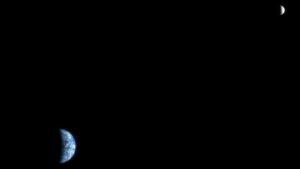
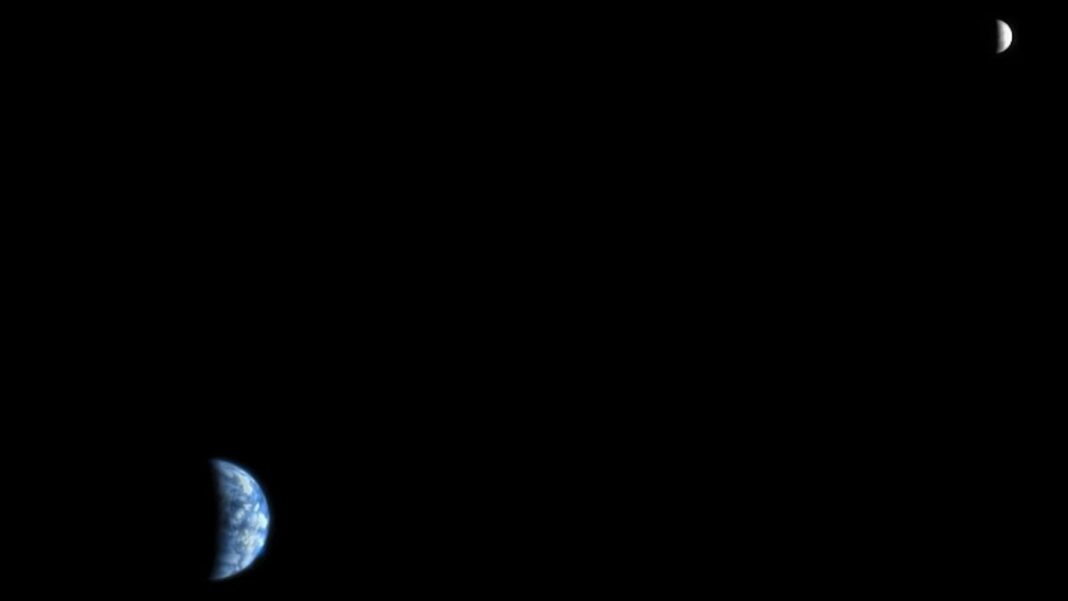
The US space agency posted a composite image of Earth and the Moon, captured not by a satellite hovering above us, but by a spacecraft orbiting Mars.
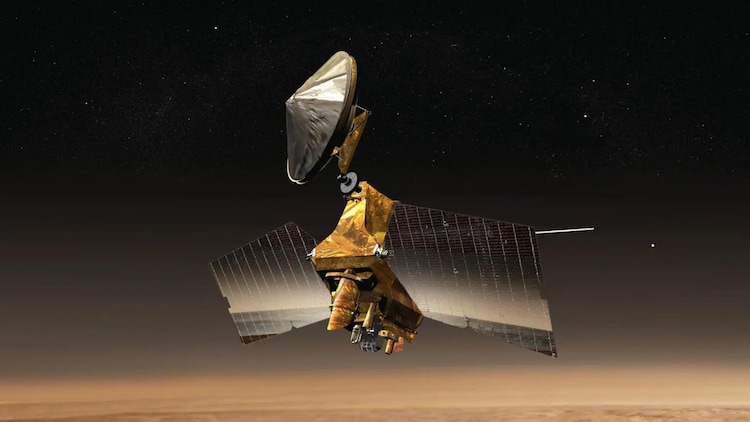
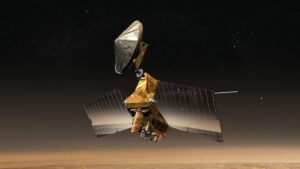
The image was taken by the HiRISE camera, short for High Resolution Imaging Science Experiment, aboard NASA’s Mars Reconnaissance Orbiter (MRO).
Think of HiRISE as an extraordinarily powerful telescope, one so sharp it can pick out objects the size of a kitchen table on the Martian surface from hundreds of kilometres above.
But on this occasion, it turned its eye homeward.
WHAT EXACTLY DID THE CAMERA CAPTURE?
The image was acquired on October 3, 2007, by the HiRISE camera on Nasa’s Mars Reconnaissance Orbiter.
At the time, Earth was approximately 142 million kilometres away from Mars.
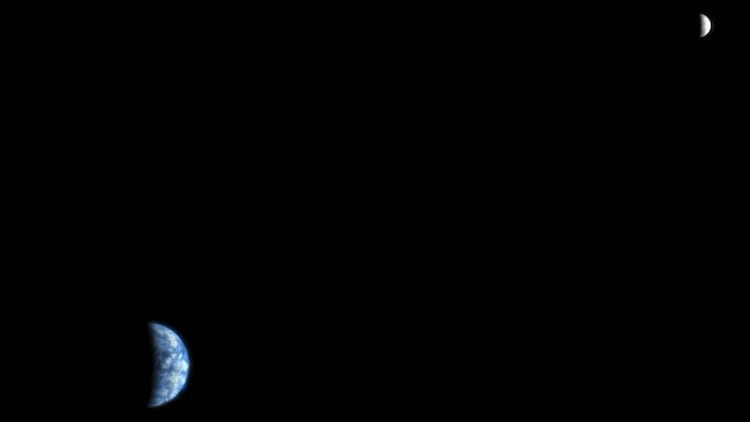
Because Earth and the Moon are so dramatically different in brightness, each was processed separately before being combined into a single frame.
The Moon is far darker than Earth and would barely be visible if shown at the same brightness scale.
WHY DO EARTH AND THE MOON LOOK SO FAR APART?
Unlike later HiRISE images where the Moon appears tucked close to Earth, here the two bodies sit at opposite ends of the frame.
Earth glowing blue in the lower left, the Moon a pale crescent in the upper right. This reflects their true geometry as seen from Mars on that day.
The phase angle, which is the angle between the Sun, the observed body, and the camera, was 98 degrees.
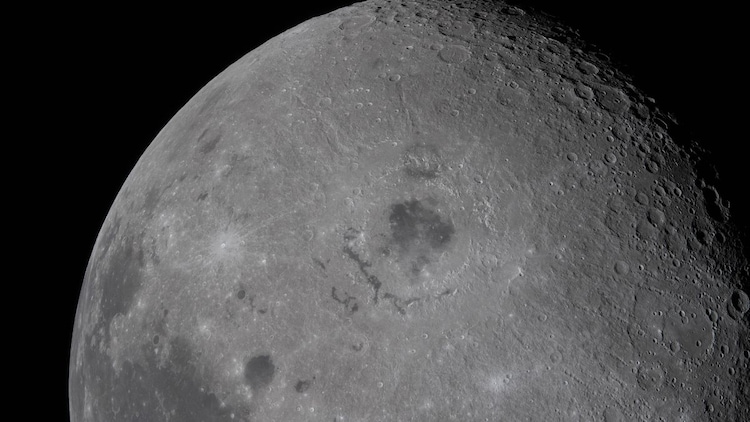
In plain terms, this means less than half of each body was directly lit by the Sun, which is why both Earth and the Moon appear as crescents rather than full discs.
Clouds dominate Earth’s visible surface in the image, so bright they nearly overwhelmed the camera’s sensors. The faint outline of South America’s west coast is just barely visible at the lower right.
From 142 million kilometres away, everything we know, every forest, every ocean, every city blazing with light, fits into a single, fragile pixel.