Key Takeaways
- A severe G4-class solar storm is disrupting satellites, power grids, and aviation worldwide
- Rare Ground Level Event detected as solar protons penetrate deep into Earth’s atmosphere
- Radiation levels spiked for airline passengers, particularly over polar routes
- NOAA forecasters remain on high alert as multiple solar eruptions continue
A powerful solar storm has triggered global alerts as satellites, power infrastructure, and aviation systems face disruption from one of the most significant space weather events in decades.
The geomagnetic disturbance, classified as G4-level severe, began impacting Earth on November 11 following multiple coronal mass ejections from the sun. The storm has produced spectacular auroras visible as far south as Florida and Texas while posing serious technological threats.
Rare Ground-Level Radiation Event
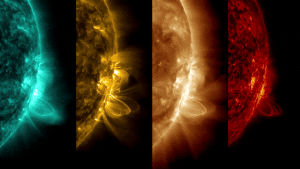
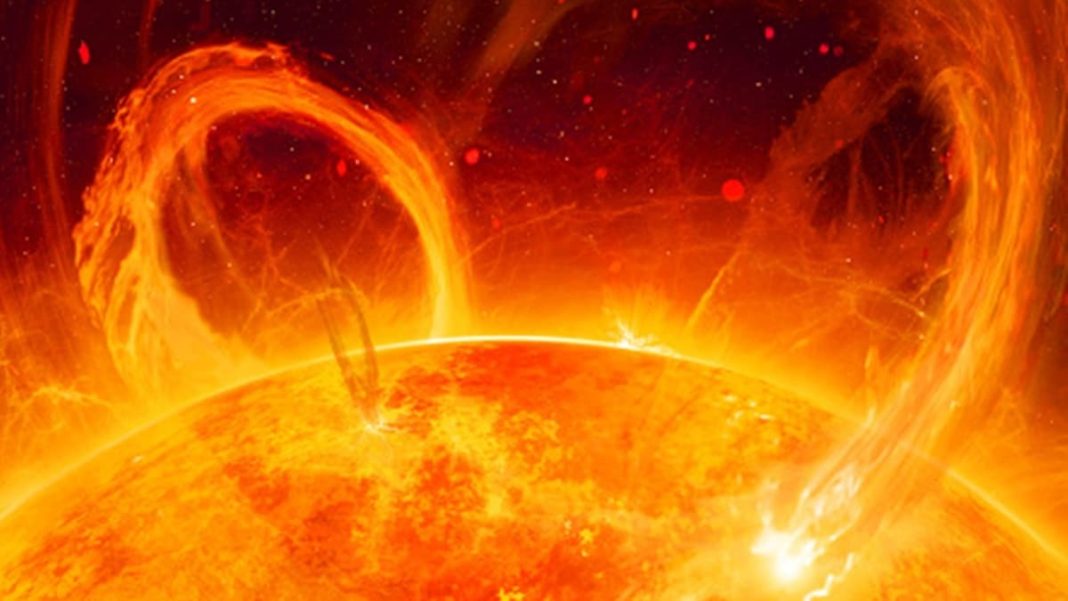
Solar activity peaked with a massive flare from sunspot 4274, sending highly energetic protons deep into Earth’s atmosphere in what scientists call a Ground Level Event.
“This is a very significant event,” said Professor Clive Dyer of the Surrey Space Centre. “Neutron monitors around the world are detecting an unusual spike in cosmic-ray activity, evidence of what’s known as a Ground Level Event (GLE),” Dyer told spaceweather.com.
Such events occur only once or twice per solar cycle. Professor Dyer compared the current situation to the December 2006 GLE, describing it as a “20-year event.”
Aviation Radiation Concerns
During the 2006 episode, airline passengers on polar routes experienced radiation increases up to 30 microSieverts per hour – approximately 20% higher than normal exposure. Initial analysis suggests similar spikes may be occurring now.
Studying this GLE provides crucial data for preparing against even larger solar outbursts, including the historic 1956 event that multiplied high-altitude radiation by 1,000 times.
Satellite and Infrastructure Impact
Beyond atmospheric effects, solar protons are bombarding satellite systems in orbit, threatening spacecraft operations and data integrity.
NOAA forecasters remain on high alert as multiple CMEs continue arriving. The severe geomagnetic conditions risk disrupting:
- Radio communications and GPS systems
- Air traffic control, especially near polar regions
- Power grids through geomagnetically induced currents
Historical Context and Future Risks
While aurora displays captivate observers, solar storms carry serious consequences. Historical events like the 1859 Carrington Event ignited telegraph systems, while a 1972 storm detonated naval mines.
Despite forecasting advances, accurate long-term space weather predictions remain challenging. Critical infrastructure operators typically receive only days of warning before solar eruptions reach Earth.
With the current solar cycle approaching its peak, continuous monitoring and rapid response protocols are essential for minimizing impacts from future celestial eruptions.