
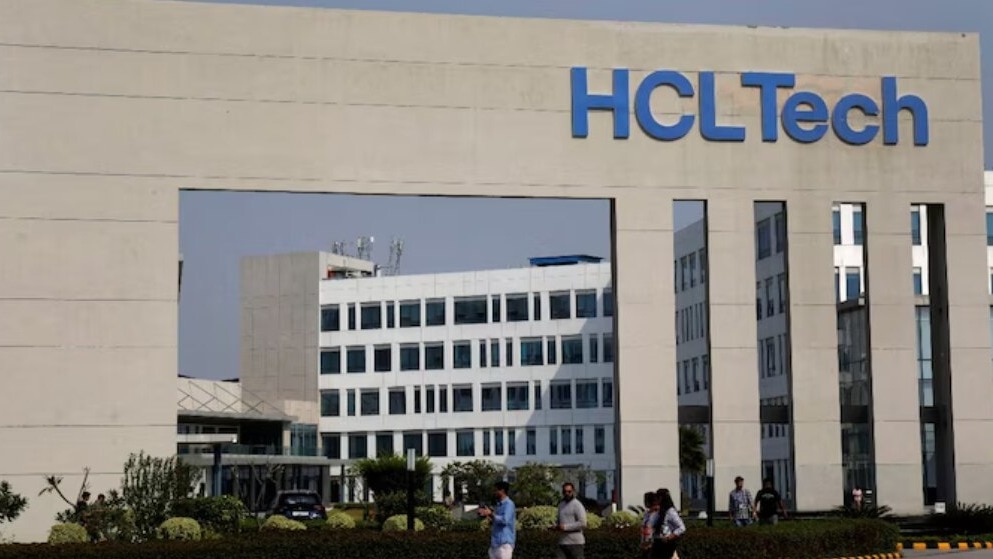
HCLTech shares plunged nearly 9% in early trade on Wednesday after the company reported a softer-than-expected March quarter and issued cautious FY27 guidance, dragging the broader IT pack lower.
The stock fell 9.64% to Rs 1,302.60 at 9:18 am, making it the biggest loser among frontline technology names. Other IT stocks also fell sharply in early trade.
Tata Consultancy Services dropped 1.9%, Infosys declined 2.8%, and Tech Mahindra fell 4.2% as investors interpreted HCLTech’s commentary as an early warning for the sector ahead of more earnings announcements.
The sharp selloff was driven less by the reported quarter and more by the outlook. HCLTech guided for FY27 revenue growth of 1%-4% in constant currency, below market expectations of around 3%-5%. Management pointed to softer discretionary spending, delayed client decision-making, and two client-specific ramp-downs.
For the March quarter, the company posted consolidated net profit of Rs 4,488 crore, up 4.2% year-on-year, while revenue rose 12.3% to Rs 33,981 crore. Both figures were below analyst estimates, according to Reuters.
PRESSURE ON THE WHOLE IT PACK
The broader selloff reflects how investors use early large-cap IT earnings as a signal for the rest of the sector. When one major company flags demand weakness or cautious client behaviour, the market often assumes peers may face similar challenges.
That appears to be the case today, with Infosys and Tech Mahindra falling sharply despite not yet reporting numbers. Concerns remain centred on slower tech spending in key overseas markets, delayed project starts, and pressure on pricing as clients push for efficiency gains.
The next trigger for the sector will be earnings and guidance from other IT majors. If peers also strike a cautious tone, pressure on valuations could continue. If commentary proves more resilient, today’s sharp reaction in HCLTech may be seen as excessive.
This reaction shows markets are focused far more on future growth than past-quarter numbers. Investors can usually absorb a modest earnings miss, but a weaker outlook tends to hit confidence quickly because it raises doubts over demand recovery and earnings momentum for the year ahead.


