
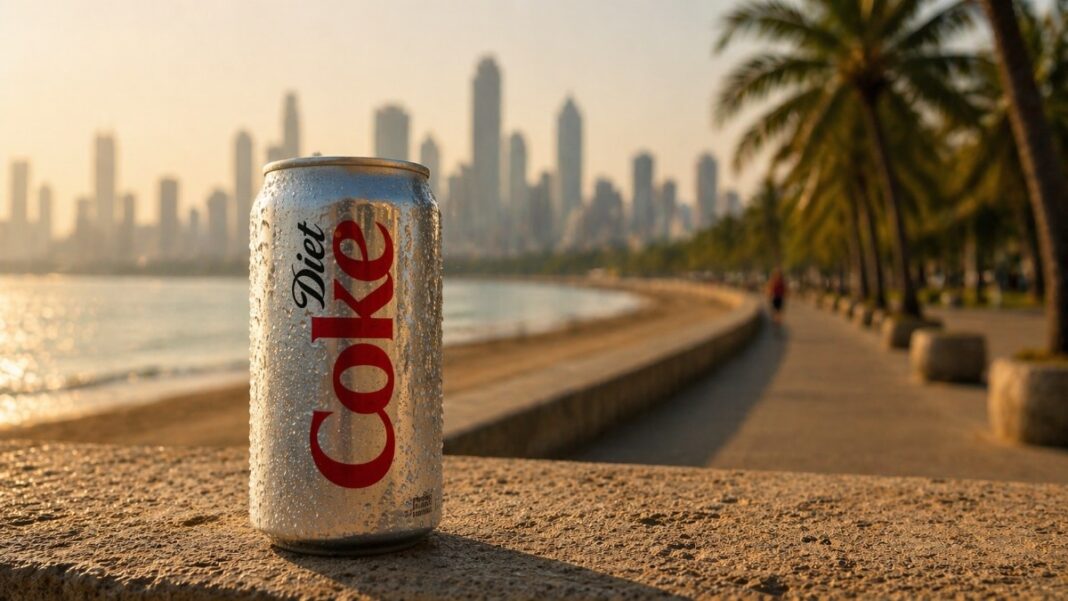
Summer is starting to take full effect, and as temperatures rise, many are reaching for that familiar, chilled silver can of Diet Coke to beat the heat.
But this year, the go-to sugar-free drink may not be as easy to find. Across cities, shelves are running dry just when demand is at its peak, leaving consumers wondering why their usual refreshment is suddenly missing.
What looks like a simple stock-out, however, is tied to a much larger global disruption, one that begins with aluminium and stretches all the way to a conflict in the Middle East.
SHORTAGE THAT STARTS WITH THE CAN
The problem is not the drink itself, but what it comes in.
A shortage of aluminium beverage cans is hitting supplies of Diet Coke and other canned drinks across cities. Unlike other colas that are widely available in plastic bottles or glass, Diet Coke is largely dependent on cans.
That makes it more exposed when aluminium supply tightens.
At the same time, demand for sugar-free and low-sugar drinks has surged sharply. Sales in this segment have doubled over the past year, creating a mismatch where demand is rising just as supply is getting constrained.
THE GLOBAL ALUMINIUM SHOCK
Behind this shortage is a sharp and sustained spike in aluminium prices.
Globally, aluminium has surged to four-year highs on the London Metal Exchange, touching $3,672 per tonne earlier this month. In India, prices have climbed to around Rs 375 per kg.
What makes this surge significant is not just the price, but the scale of disruption behind it.
The global aluminium market is currently witnessing a “black swan” event, a rare and unpredictable shock, reported news agency Reuters.
Nick Snowdon, head of metals and mining research at commodity trader Mercuria, told Reuters, “The scale of the supply shock we’re seeing in the aluminium market is probably the largest single supply shock a base metals market has suffered in the post-2000 era.”
“We are already in a ‘black swan’ event. No one could have foreseen something on this scale,” he told Reuters.
WHY THE MIDDLE EAST WAR IS TO BLAME
The trigger for this disruption lies in the ongoing conflict involving Iran.
The Middle East accounts for about 7 million metric tonnes of aluminium smelting capacity — roughly 9% of global supply. While the region may not dominate production, disruptions here have an outsized impact on global trade flows and supply chains.
The war has affected shipping routes, increased freight and insurance costs, and created uncertainty around the movement of key raw materials like alumina, which is essential for aluminium production.
If flows through critical routes such as the Strait of Hormuz are disrupted, supply could tighten further.
A MARKET WITH VERY LITTLE BUFFER
The numbers show just how tight the market has become.
Mercuria estimates a supply deficit of at least 2 million tonnes this year, and that could be a conservative estimate. This shortfall is being compared against roughly 1.5 million tonnes of visible inventory and just over 3 million tonnes of total global stock.
In simple terms, there isn’t enough buffer to absorb the shock.
Replacing this supply is also not easy. China, the world’s largest producer, is already operating under output limits, while the US and Europe have very little idle capacity that can be brought back quickly.
This structural tightness is what is keeping aluminium prices elevated.
WHY ALUMINIUM PRICES ARE RISING FURTHER
Beyond geopolitics, multiple factors are pushing aluminium higher.
Demand from construction, automotive and packaging sectors remains strong. At the same time, supply disruptions and rising energy costs are making production more expensive.
Aluminium smelting is highly energy-intensive, and with oil prices rising, the cost of electricity has also gone up globally. This directly feeds into higher production costs, which are then passed on to buyers.
The result is a perfect storm — strong demand, constrained supply, and rising costs.
For beverage companies, this global disruption is translating into immediate challenges.
With domestic supply falling short, companies are increasingly importing aluminium cans from regions like West Asia and Southeast Asia — often at significantly higher costs. Packaging expenses across the board are rising, from cans to glass and cartons.
Some manufacturers are operating at reduced capacity due to shortages, while others are prioritising certain products over others based on margins and availability.
And that is where consumers start to feel the impact.
GEN Z’S GO-TO DRINK TAKES A HIT
Among those affected the most are younger consumers.
For many Gen Z buyers, Diet Coke has become a daily staple — a go-to beverage that fits into a low-sugar lifestyle. With supplies tightening, social media platforms like X and Instagram are already seeing posts about the drink becoming hard to find.
In some cases, consumers are turning to bulk buying when stocks appear online, making the shortage even more visible.
What makes this moment interesting is how something as small as a missing can reflects a much larger story.
A geopolitical conflict disrupts supply chains. Aluminium prices surge. Packaging becomes scarce. And suddenly, a consumer in India cannot find their preferred drink on a hot summer day.
It is a reminder that in today’s interconnected world, even the most everyday products are tied to global forces far beyond them.
This summer, the missing Diet Coke is not just about supply. It is about how deeply the world’s systems are linked — and how quickly that link can be felt.


