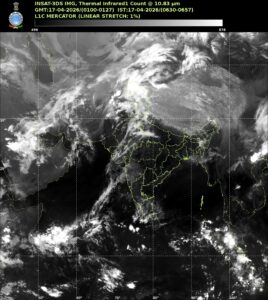
A weak western disturbance is set to impact north India from Thursday night, bringing light rainfall to the Himalayan region while offering little relief from rising temperatures across the plains.
According to weather forecasts, light to moderate rain is expected over Jammu and Kashmir, Himachal Pradesh, and Uttarakhand between Friday and Sunday. The system, however, is not strong enough to significantly influence weather conditions in the northern plains.
In states such as Punjab, Haryana, and Delhi, the impact will remain minimal. Skies are likely to stay partly cloudy, with only a slight chance of isolated thunderstorms developing on Friday evening. Experts estimate that such activity will be limited in coverage, affecting only 10 to 20 per cent of these regions, while the majority of areas are expected to remain dry.
Despite the incoming system, temperatures across north and central India are forecast to remain high. Meteorologists warn that the limited rainfall will not be sufficient to bring down the heat in the near term.
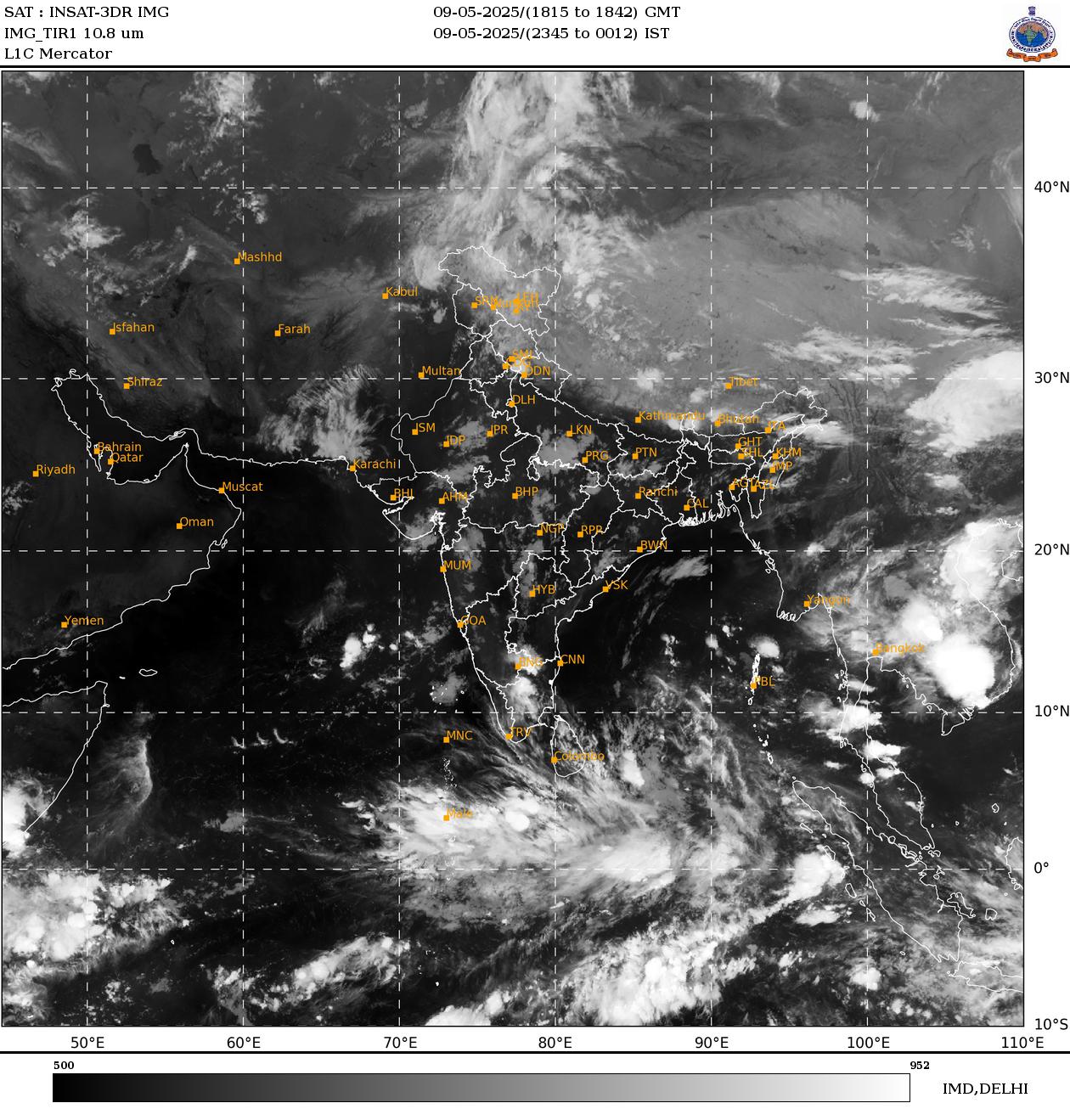
Maximum temperatures are expected to range between 39°C and 43°C in several cities across Uttar Pradesh, Madhya Pradesh, Delhi, Rajasthan, Haryana, and Punjab over the weekend.
The continuation of hot conditions is likely to increase discomfort levels, particularly in urban areas where heat retention is higher. Weather experts advise residents to take necessary precautions, including staying hydrated, avoiding prolonged exposure to direct sunlight, and planning outdoor activities during cooler parts of the day.
Western disturbances are common weather systems that originate in the Mediterranean region and travel eastward, often bringing rain and snow to northern India. However, not all such systems are strong enough to significantly alter temperature patterns, especially during peak summer conditions.
This latest disturbance appears to be one such weak system, with its effects largely confined to the mountainous regions. For the plains, the outlook remains dominated by heat, with only brief and isolated weather activity expected.
As the summer season intensifies, forecasters indicate that more substantial weather systems will be needed to provide any meaningful relief from the ongoing heatwave conditions across large parts of the country.