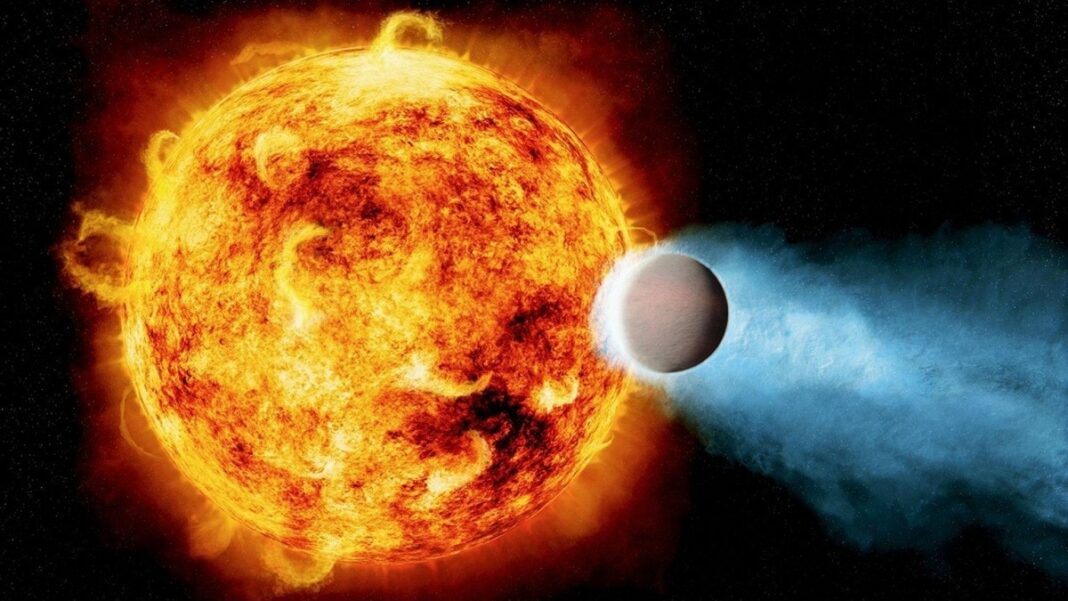
A new study using data from NASA’s Chandra X-ray Observatory has revealed that young stars similar to our Sun may become less hostile to life much earlier than scientists previously believed, raising fresh optimism in the search for habitable worlds beyond Earth.
The research, published in The Astrophysical Journal, found that these stellar “cousins” rapidly reduce their emission of high-energy X-rays within a few hundred million years. This is significant because intense X-ray radiation from young stars can strip away planetary atmospheres and hinder the formation of life-supporting molecules.
Astronomers analysed eight star clusters aged between 45 million and 750 million years and discovered that Sun-like stars emitted only about a quarter to a third of the X-ray radiation scientists had expected. This suggests that planets orbiting such stars may have a better chance of retaining their atmospheres and developing conditions suitable for life.
The findings stand in stark contrast to the fictional premise of Project Hail Mary, where alien microbes consume a star’s energy, causing it to dim and threatening life across planets. In reality, scientists say the dimming observed in young stars is a natural and beneficial process.
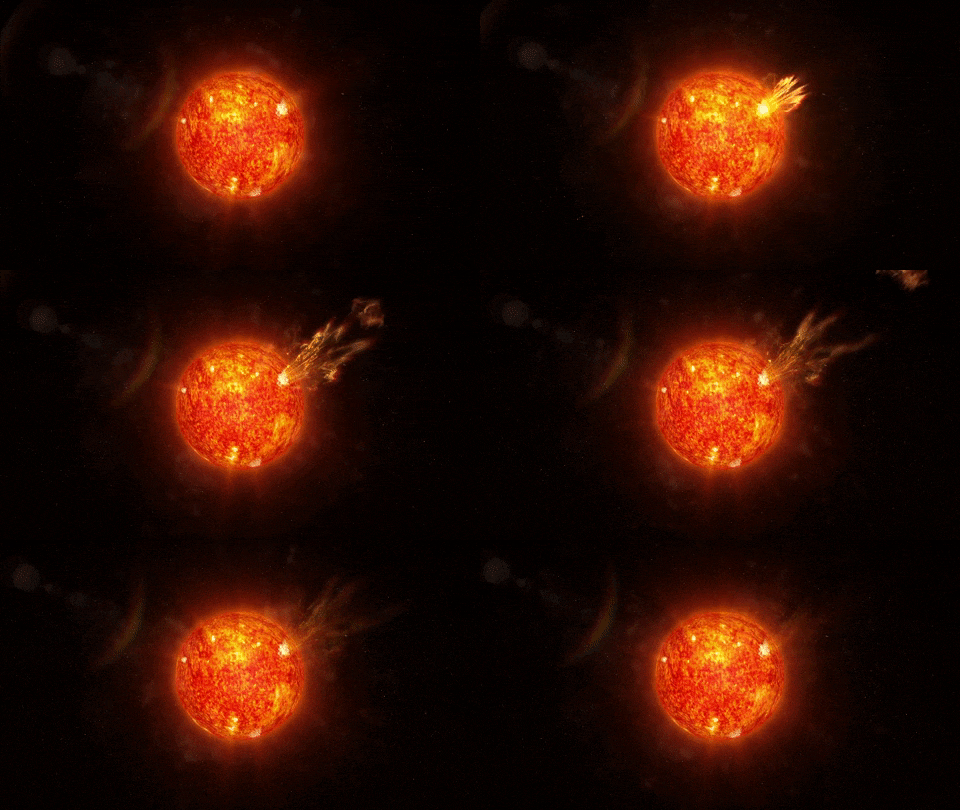
“While science fiction imagines alien life dimming stars, what we see here is a natural quieting,” said lead researcher Konstantin Getman. “This happens because the internal processes that generate magnetic fields in stars become less efficient over time.”
The study suggests that this early “calming” phase could be crucial for life to emerge. For comparison, very young Sun-like stars can emit up to 1,000 times more X-rays than our present-day Sun, while stars around 100 million years old are still about 40 times more intense.
Over time, however, this radiation drops sharply, creating a more stable environment for orbiting planets.
Scientists believe Earth itself may owe its existence to a similar process billions of years ago, when the young Sun gradually became less volatile, allowing our planet’s atmosphere to stabilise.
The research has sparked excitement online, with social media users drawing parallels to Ryland Grace, the scientist played by Ryan Gosling in Project Hail Mary. Many joked about “sending Dr Grace” to investigate these stars, blending scientific discovery with pop culture imagination.
Beyond the humour, the findings carry serious implications. By narrowing down which stars are most likely to host habitable planets, astronomers can better target future observations and missions.
The team also incorporated data from the Gaia and ROSAT missions to refine their analysis, filling a long-standing gap in understanding how stars evolve during their early life stages.
As scientists continue to study these stellar systems, the research offers a hopeful message: the universe may be more hospitable to life than once feared, not because of heroic interventions like in science fiction, but due to the quiet, natural evolution of stars themselves.