
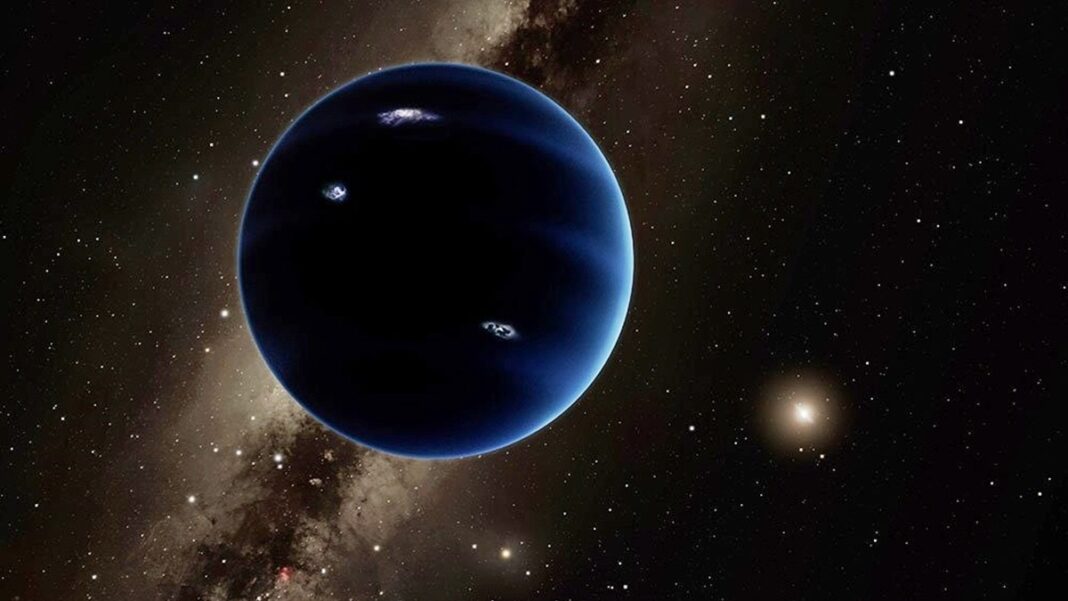
A new study by researchers at the University of Washington suggests that dry, desert-like planets beyond our solar system may be far less likely to support life than previously believed, even if they lie within the so-called habitable zone.
Scientists estimate that there are billions of planets orbiting stars outside our solar system, with more than 6,000 confirmed exoplanets discovered so far. Many of these worlds fall within the “habitable zone,” a region where temperatures are just right for liquid water to exist on a planet’s surface.
However, the new research indicates that simply being in this zone is not enough.
The study, published in the Planetary Science Journal, reveals that planets need a significant amount of water, at least 20 to 50 per cent of the volume found in Earth’s oceans, to maintain conditions suitable for life.
Lead author Haskelle White-Gianella explained that while water is essential for life, too little of it can disrupt key planetary processes. The team focused on arid planets with very limited surface water, many of which are already considered promising candidates in the search for extraterrestrial life.
At the heart of the findings is the geologic carbon cycle, a long-term process that regulates a planet’s temperature by cycling carbon dioxide between the atmosphere, oceans, and interior.
On Earth, rainfall plays a crucial role in this cycle by dissolving carbon dioxide and enabling chemical reactions that store carbon in rocks and oceans over millions of years.
But on dry planets, this process breaks down. Without sufficient rainfall, carbon dioxide builds up in the atmosphere due to volcanic activity, triggering a greenhouse effect. This leads to rising temperatures, which in turn evaporate remaining water, pushing the planet into a runaway warming state that makes it uninhabitable.
Senior author Joshua Krissanen-Totton noted that the study used advanced simulations to model how water and carbon behave on these arid worlds, incorporating factors like wind and refined evaporation patterns, elements often overlooked in earlier models.
The findings may also help explain the stark contrast between Earth and Venus. Though similar in size and origin, Venus is now an extremely hot, inhospitable world. Researchers suggest it may have started with less water, disrupting its carbon cycle and leading to the loss of any potential habitability.
The study narrows the field in the ongoing search for life beyond Earth, suggesting that scientists may need to prioritise wetter planets.
Future missions, particularly those exploring Venus, could provide crucial insights into how planetary climates evolve, and why some worlds remain hospitable while others do not.


