Key Takeaways
- Astronomers detect first confirmed coronal mass ejection from a star beyond our solar system
- The stellar explosion was 10,000-100,000 times more powerful than the strongest solar storms
- Such events could strip away atmospheres of nearby planets, affecting potential habitability
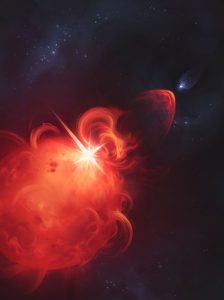
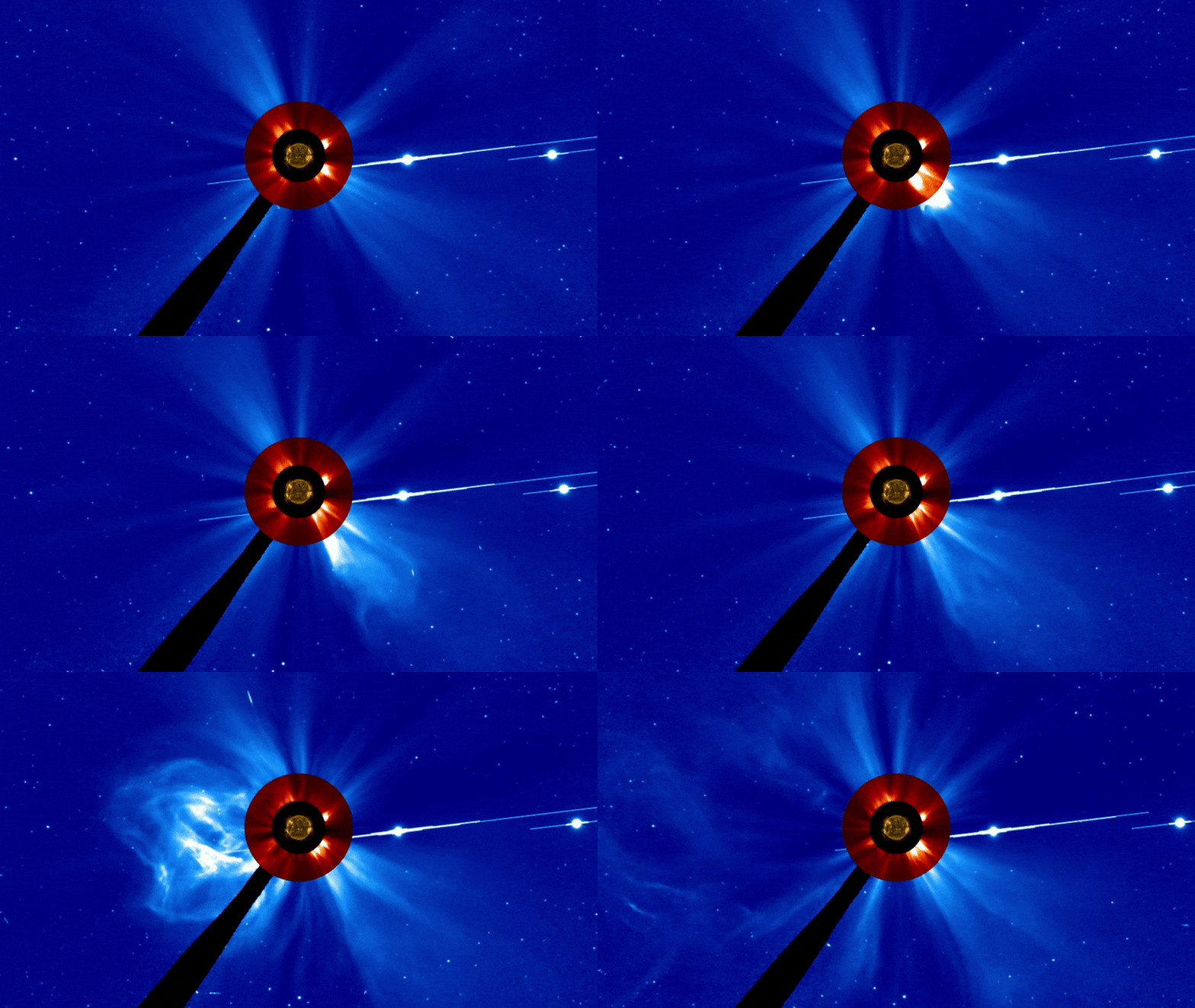
For the first time, astronomers have detected a giant stellar explosion from a star outside our solar system. The coronal mass ejection (CME) from red dwarf star StKM 1-1262 was dramatically more powerful than anything our sun produces, potentially devastating for any nearby planets.
The groundbreaking discovery, published in Nature, reveals space weather phenomena on an unprecedented scale. Unlike solar storms that create beautiful auroras on Earth, this stellar eruption could destroy planetary atmospheres.
Record-Breaking Stellar Explosion
The stellar storm erupted at 5.3 million miles per hour – a speed seen in only 1 of every 2,000 solar CMEs. Located 130 light-years away, the red dwarf star StKM 1-1262 unleashed energy thousands of times greater than our sun’s strongest outbursts.
“The star behaves like an extremely magnetized, boiling bucket of plasma. This burst is 10 to 100 thousand times more powerful than the strongest the sun can produce,” said study coauthor Cyril Tasse of the Paris Observatory. “This opens a window of extrasolar space weather.”
The dense, rapid material burst was powerful enough to strip away the atmosphere of any closely orbiting planet, turning potential habitable worlds into barren rocks.
Revolutionary Detection Method
Researchers used the Low Frequency Array (LOFAR) radio telescope and new analysis software called RIMS to identify the telltale radio signal. The technique monitored thousands of stars over time, catching the type II radio burst that occurs over minutes rather than milliseconds.
“This kind of radio signal just wouldn’t exist unless material had completely left the star’s bubble of powerful magnetism,” explained lead author Dr. Joe Callingham. “In other words, it’s caused by a CME.”
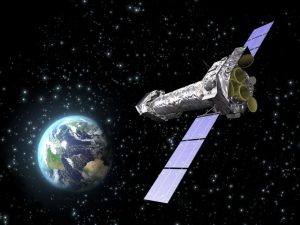
Combining LOFAR data with observations from ESA’s XMM-Newton mission provided crucial context about the CME’s motion and scale. Neither telescope alone could have confirmed the discovery.
Implications for Planet Habitability
Red dwarf stars like StKM 1-1262 present a paradox for astrobiologists. While they host most of our galaxy’s planets and often have worlds in the habitable zone, their violent activity threatens potential life.
The star has half our sun’s mass but rotates 20 times faster with a magnetic field 300 times stronger. Such conditions generate extreme space weather that could rapidly destroy planetary atmospheres.
“The protective magnetic field we have on Earth would not be able to withstand the pressure of the CME,” Callingham noted. “So even if the planet is in the perfect region around the star, its atmosphere would be lost quickly, leaving a barren rock behind.”
Future Research Directions
The discovery marks just the beginning of extrasolar space weather research. The upcoming Square Kilometre Array, scheduled for completion in 2028, will dramatically expand our ability to detect stellar explosions.
Researchers now aim to understand how small stars build and release such enormous energy, and what impact repeated CMEs have on nearby planets.
“This is only the beginning, and hopefully a taste of what’s to come,” said space weather expert Mark Miesch. “Hopefully this will inspire follow-up studies to verify this is what we think it is and to further characterize how frequent such events are.”