
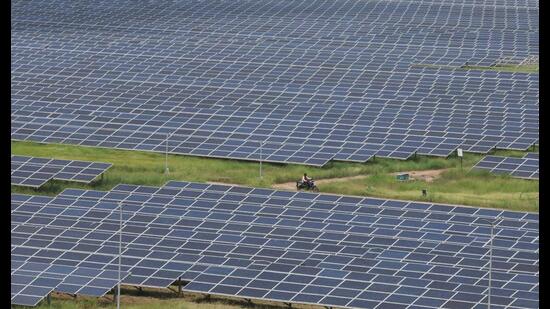
In 2024, Nirmal Das Swami, a farmer in Rajasthan, began harvesting the power of the sun. Nirmal installed a one-megawatt solar park on his land, enough to power his entire community. With access to steady, affordable, and clean energy, Nirmal’s income grew. Nirmal is part of a larger transformation happening in India. Boosted by the increasing economic viability of renewables, India is outpacing other major developing countries in scaling cost-effective clean energy. It is set to add more renewables to its grid than the US this year. Non-fossil fuel sources now account for 50% of its installed capacity.
India’s progress here is a result of three key factors — the government’s big bet on universal energy access, a willingness to experiment, and strong public-private-philanthropic partnerships.
First, the government recognised that access to electricity is essential for unlocking health, education, jobs, and opportunity. Today, the big development challenge — and opportunity — is access to power. As renewables became more affordable than fossil fuels, the government seized the opportunity. By 2018, India reached its goal of bringing electricity to every village. Last year, overall power output increased at its fastest pace since 2022.
Second, India has displayed a growing appetite for innovation, testing new technologies, taking risks, and accelerating implementation. For instance, the PM KUSUM subsidy scheme has helped farmers repurpose their land for solar plants. The country also introduced reverse auctions, encouraged local manufacturing, and incentivised non-fossil fuel energy.
The third factor is novel partnerships with businesses, philanthropies, and communities. Public-private-philanthropic models represent a sustainable approach to development in the 21st century, driving faster innovation and smarter risk-taking than any sector can achieve alone. Those partnerships have supported building and scaling solar grid systems across the country.
The Global Energy Alliance (GEA) — working with the Rajasthan government — deployed digital tools for farmers to lease their land to utilities for solar projects. Within two years, this added 183 MW to the previously-projected solar capacity and helped farmers transition approximately 14,000 agricultural pumps from diesel to solar.
But it’s still a long road to the government’s ambitious goal of 500 gigawatts of non-fossil capacity. Scaling battery storage and accelerating digital solutions will be key to ensuring the grid is more reliable, efficient, and resilient. At Mumbai Climate Week, the GEA launched the India Grids of the Future Accelerator, a platform bringing together utilities, technology leaders, investors, philanthropies and more to digitise India’s grid and bring distributed renewables to communities. This seeks to reach 300 million Indians, support 15 utilities to build digital twins, and enable expansion of 100 GW of new distributed renewables.
India’s big bet on universal, affordable, abundant energy is shaping how Africa, Latin America, and the Asia-Pacific regions approach their own energy transitions. One such example is Mission 300, led by the World Bank and African Development Bank, which aims to connect 300 million people across sub-Saharan Africa to electricity by 2030.
As the private sector, philanthropies, and other investors grow more interested in clean energy, bigger, more diverse coalitions connecting even more people to the 21st-century economy can be expected.
Rajiv J Shah is the president of The Rockefeller Foundation. The views expressed are personal


