
The only time my MP, or rather his PA, came of use was when I needed to urgently get a waitlisted train ticket confirmed 25 years ago. In my living memory, circle officers to sanitation officers have made more difference to my life than the series of MPs. MPs are lawmakers and their job is to make laws. But they do everything else, and do just one thing best — and that word begins with the letter C (the English one). So, what and how can the additional 307 MPs help achieve what our Tejasvi 543 MPs haven’t already? And why should a country struggling to grow bear the burden of 850 MPs in the Lok Sabha?
I ask these questions even as the NDA-led Centre pushes three bills that will add 50% additional seats in the Lok Sabha and help in reserving 33% of the overall seats without hurting any state or the male ego.
Well, I should know that Article 82 of the Constitution mandates adjustment of seats to maintain the sanctity of One Person, One Vote, One Value of every citizen. A major delimitation exercise, last done in the 70s, ensures that by adding seats and redrawing constituencies.
The One Person, One Vote, One Value is the very foundational block of democracy, I have been tasked to believe. But how do I believe in the intrinsic value of one vote when I have seen my native state Assam getting destroyed demographically, with illegal immigrants welcomed to boost electoral chances? With every such entry, the value of the vote of a citizen has been corroded. And the government has admitted that there are millions of them.
There has been so much noise about the north-south gain and loss in the delimitation process. But the northeast states have remained losers in India’s representative polity. Keep aside One Vote, One Value, ask if an MP from the northeast gets as much value (other than in close voting scenarios) as their counterparts from the Hindi heartland?
The Seven Sisters of the northeast send 24 Lok Sabha MPs — that’s 4.42% of the total strength. So, it will need some willing suspension of disbelief to visualise that a person casting their vote in an election in Tura has the same vote weightage as a voter in Varanasi?
Varanasi has been thrice-blessed. PM Narendra Modi’s constituency has seen an investment of over Rs 48,400 crore since 2014 through central government schemes. MPs otherwise have the MP Local Area Development (MPLAD) fund of Rs 5 crore a year to use for their constituency. The MPLAD fund — introduced in 1993 — remains mostly unused, and when used, it typically funds corruption. Activists have exposed the MPLAD fund misuse.
The MPs are lawmakers and their responsibility originally wasn’t to implement developmental projects but to represent their constituents and shape policies accordingly. There is an entire administrative and grassroots system in place to implement developmental schemes.
When it comes to functioning of Parliament and MPs debating policies, the records speak for themselves. Here’s a short one.
The 13th Lok Sabha (1999-2004) had 356 sittings. The 17th Lok Sabha (2019-2024) recorded 274 sittings. Before 2000, the Lok Sabha saw around 90 work days per year. By the 17th Lok Sabha, it has been reduced to 55 days. Parliament functioned for 62 days in 2025. Fewer sittings mean less time for debate, scrutiny, and lawmaking.
Important bills have seen little or no debate with sessions marred by disruptions. Parliament has been more often used for political grandstanding and slugfests instead of meaningful policy debates. Just 30% of Parliament’s time last year was spent on legislative business, like debating and passing of bills, according to PRS Legislative Research. This has resulted in the Centre turning into an ordinance factory board.
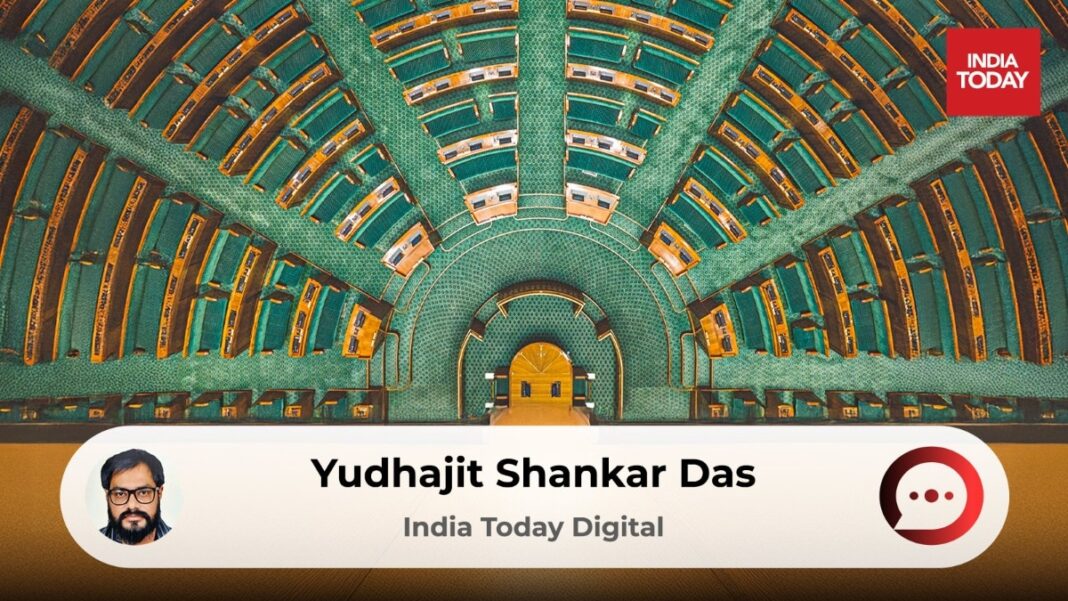
India now has a Parliament building that can accommodate more MPs. But more MPs also mean more C, more entitlement and more power with fewer voices speaking truth to it. Even as the cat gets fatter, the bodies that check institutional corruption haven’t been strengthened enough.
Politics is business and contesting an election needs investment. The Election Commission has capped expenditure on Lok Sabha polls at Rs 95 lakh per candidate. But there is no limit to what parties can spend to contest each constituency. That money will have to be recovered. Multiply the corruption by 307.
Then there are the wages and perks, which India Today highlighted last year in a report, MP means ‘More Pay’. The salaries of our parliamentarians have risen even as real wages of workers in India have stagnated amid rising inflation.
Even before the pay hike in 2025, every Lok Sabha MP took home an average annual salary of Rs 71.29 lakh, according to a 2018 ADR report, which took into account payouts from last four financial years. Going even by the old numbers, Rs 217 crore will be needed for the 307 new MPs.
We have a bigger building now to house the new MPs, but the hours of the day stand at 24. How will it be ensured that the 850 MPs, hoping they are willing to debate, get a fair chance to voice their opinion on the floor of the House?
This brings us to the basic question. What will be achieved by the addition of the 307 MPs?
The government suggests that the 50% proportional addition in Lok Sabha MPs for every state will lead to a 33% increase in seats, which would be reserved for women. Why can’t we reserve 33% from the existing number of seats? Why can’t political parties move beyond tokenism and give tickets to more women?
The answer might lie in the fragile male ego. That was duly acknowledged and highlighted by Law Minister Arjun Ram Meghwal when he told the Lok Sabha on Thursday that “no purush (man) or state will be harmed” by the delimitation exercise.
So, what justifies the increase in the number of seats? An India that has limited time to make use of the demographic dividend is hobbling at 6.5% growth rate. The demand of the hour is efficient policymaking for a Viksit Bharat by 2047. It is leaner muscle mass that helps in sprinting towards the finish line. India’s industries and people need policy boost, not a boost in the number of policymakers.
Honourable members hardly attend Parliament. Participating in the work of Parliament is rarer. The only difference it will make is that Parliament will have more members who can choose not to skip it. All of 307 more of them.
The current exercise is at best a case of supply-demand mismatch.


