Reading the inscrutable mind of Prime Minister Narendra Modi is always a hazardous exercise. Which is why it remains unclear why the BJP-led government chose this moment to revisit the implementation of the women’s reservation law, passed with much fanfare in 2023. Was it aimed at short-term electoral gains in West Bengal? A diversion from economic anxieties amid a volatile West Asia crisis? Or an attempt to reclaim the narrative and reinforce Modi’s projection as a champion of nari shakti?
Whatever the intent, the political consequences have been significant. What began as a debate over women’s representation has quickly reopened a far more contentious question: delimitation — and with it, the spectre of a North-South divide that India has long sought to contain.
Telangana Chief Minister Revanth Reddy has warned that any move to disadvantage southern states could trigger an “unprecedented agitation”. Tamil Nadu’s MK Stalin, in the midst of a high-stakes election, has struck a similar note. Is this political alarmism? Or a reflection of a deeper structural anxiety?
The uncomfortable answer is: both.
TRUST FACTOR MISSING?
Start with the numbers. Population growth in northern states has far outpaced that of the South over the past five decades. Tamil Nadu, Kerala, Andhra Pradesh and Karnataka invested early in public health, education and family planning, stabilising population growth well before much of the Hindi heartland.
If constituencies are redrawn strictly based on population — as the Constitution envisages — the South’s share of Lok Sabha seats will inevitably decline after the 2026 Census.
This is a demographic reality, not political rhetoric.
But delimitation itself is not illegitimate. It rests on the democratic principle of equal representation — one person, one vote. The freeze on parliamentary seats was always a temporary political compromise, not a permanent arrangement. Sooner or later, representation had to catch up with population shifts.
The real problem lies elsewhere: in politics, and in trust.
When Home Minister Amit Shah floated the idea of a 50% uniform increase across states in Lok Sabha seats, it could have been the basis of a workable compromise — expand the pie so that no region loses out in absolute terms. But the proposal came late, and sounded reactive. In a reform of this scale, consensus and credibility built through a painstaking outreach to all stakeholders matter.
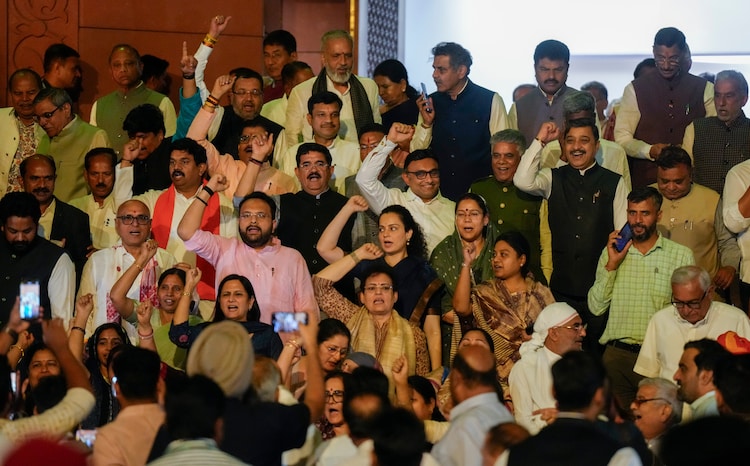
This is where the Modi government misstepped and got its timing wrong. A pre-emptive all-party consultation, involving chief ministers across regions, could have built trust and shared ownership. Instead, the impression — fair or otherwise — is of decisions being framed first and explained later. In a federal system, perception is power. And the perception of unilateralism feeds a deeper southern anxiety: that a numerically dominant North could, over time, reshape national priorities.
NORTH VS SOUTH BINARY
Yet, reducing this to a simple North versus South binary is both lazy and misleading.
Even as the South fears political marginalisation, it has quietly consolidated influence elsewhere. Economically, southern states are India’s growth engines, contributing disproportionately to GDP, exports and tax revenues. Cities like Bengaluru, Chennai and Hyderabad are deeply embedded in global innovation networks. If Parliament reflects population, the economy increasingly reflects performance—and here, the South leads.
Social indicators tell a similar story. On literacy, healthcare and human development, the South consistently outperforms much of the country. It now faces a paradox: the prospect of losing political weight because it succeeded where others lagged. That is not an easy argument to sell politically.
At the same time, India’s lived reality resists neat regional divides. Cultural and social integration is deepening in ways that politics often overlooks.
Consider the near-devotional following of MS Dhoni in Chennai through the Chennai Super Kings. Or the pan-Indian success of RRR, which transcended language barriers to become a shared cultural moment. Add migration flows — north Indians in southern tech hubs, southern professionals moving north — and the picture that emerges is of an India far more interconnected than its politics admits.
But cultural cohesion cannot substitute for political reassurance.
The BJP, to its credit, has made a concerted push to expand in the South — electorally and organisationally. Yet optics have limits. Symbolism — whether sartorial or rhetorical — cannot address a structural trust deficit. Prime Minister Modi dressed in a traditional mundu visiting the Gurvayur temple is a fine photo-op, but not enough to overcome deep-rooted apprehensions.
Because the unease over delimitation is not just about seats. It is about voice — about whether regions that have contributed significantly to India’s growth will retain commensurate influence in shaping its future.
That question demands more than reassurance. It demands imagination.
WILL A HYBRID MODEL SOLVE THE MUDDLE?
Can India evolve a hybrid model of representation — one that, while anchored in population, acknowledges performance, fiscal contribution or human development in some limited way? Any such idea will be contested. But refusing to engage with the question risks deepening the divide.
Ultimately, delimitation is not just a technical exercise in redrawing boundaries. It is a test of India’s federal compact. Mishandled, it could harden regional fault lines into political fractures. Managed with sensitivity, it could strengthen the Union by making it more inclusive and consultative.
The women’s reservation debate may have been the trigger. But it has exposed something deeper: a growing unease over how power will be distributed in the years ahead. This is not just about arithmetic. It is about trust. And in a country as diverse as India, once trust frays, no formula — however mathematically sound — can hold the system together.
Postscript: Revanth Reddy has suggested an alternative delimitation model — expand representation at the state and local levels rather than in Parliament. India, he argues, needs more MLAs and corporators to deliver better governance, not necessarily more MPs. It’s an idea worth debating — if only because it may be less combustible and polarising than reopening a North-South divide.
(The writer is a senior journalist and author.)