
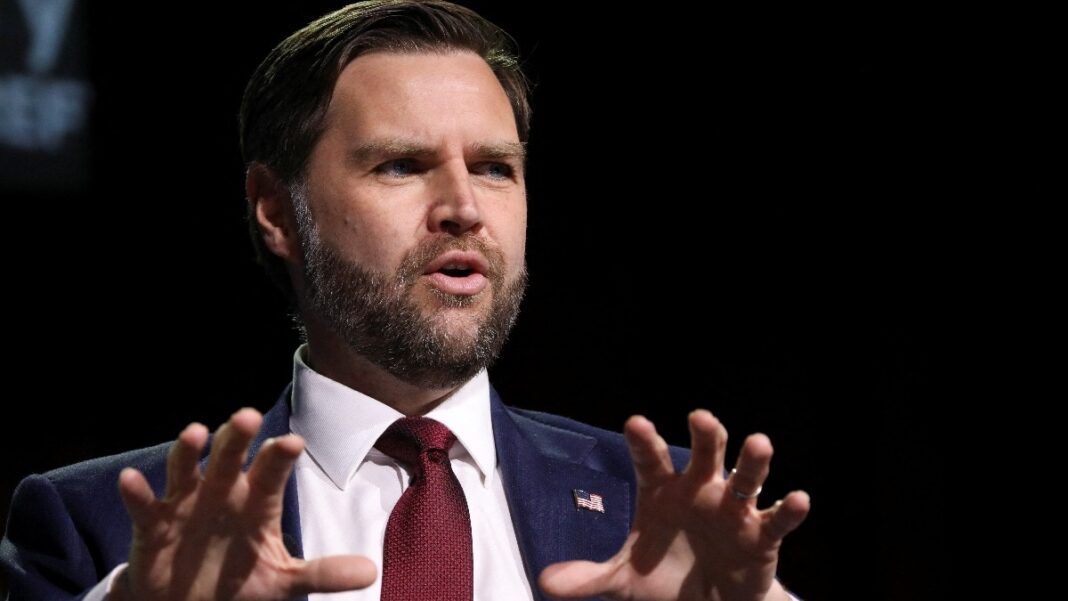
As the clock ticks down to the expiration of a fragile ceasefire between the United States and Iran, a sense of quiet anxiety hangs over the diplomatic efforts meant to prevent another round of devastating conflict. US Vice President JD Vance’s planned visit to Pakistan, which was supposed to breathe new life into high-stakes negotiations, has been put on hold after Iran failed to give a clear response to American proposals.
According to officials familiar with the situation, cited by The New York Times, the trip has not been fully cancelled but remains suspended for the time being, with the possibility of being revived at short notice. JD Vance had been scheduled to lead the American delegation to Islamabad on Tuesday, ahead of talks set for Wednesday — the very day the current ceasefire between Washington and Tehran is due to end.
IRAN YET TO COMMIT TO TALKS
Iran’s position remains unclear even as the deadline approaches. On Tuesday, Foreign Ministry spokesperson Esmail Baghaei told state television that Tehran had still not decided whether to send a delegation to Pakistan. He pointed to recent American actions, including the boarding of an Iranian oil tanker, as reasons for standing.
Baghaei called the boarding of the tanker and the earlier seizure of a cargo ship “piracy at sea and state terrorism,” which he said raised serious questions about Washington’s sincerity in the negotiations. “The aggression against Iranian ships and the continued pressure indicate the continuation of the opposing side’s contradictory behaviour,” he said.
However, two senior Iranian officials had privately revealed to The NYT that a delegation, possibly led by Parliament Speaker Mohammad Bagher Ghalibaf, was preparing to travel if JD Vance was present. This mixed messaging clearly shows the deep distrust that continues to shadow the talks.
TRUMP WARNS MILITARY IS RARING TO GO
US President Donald Trump struck a decisive tone in a CNBC interview on Tuesday. While expressing hope for a “great deal,” he made it clear he would not extend the ceasefire beyond the April 22 deadline. “I don’t want to do that. We don’t have that much time,” Trump said.
“I expect to be bombing because I think that’s a better attitude to go in with. But we’re ready to go. I mean, the military is raring to go,” he added.
Meanwhile, he also insisted the United States was in a strong negotiating position and described the naval blockade as a success. On social media, he accused Iran of carrying out “numerous violations” of the ceasefire. Iranian government spokesperson Fatemeh Mohajerani responded, saying: “We do not want to be attacked again, but if such attacks occur, we will definitely respond more firmly than before.”
TWO FLASHPOINTS DRIVING THE STALEMATE
. The future of Iran’s nuclear program remains a major point of disagreement. Trump has repeatedly said that Tehran must give up its stockpile of highly enriched uranium to prevent any path to a nuclear weapon. Iran, for its part, maintains that its program is for peaceful purposes and hopes to retain significant elements while seeking relief from sanctions.
Control of the Strait of Hormuz has also become a flashpoint. Iran’s decision to largely close the vital waterway has disrupted the flow of nearly 20 million barrels of oil per day. The United States has responded with its own blockade of Iranian ports, forcing over 28 vessels to turn around.
WILL DIPLOMACY PREVAIL BEFORE MIDNIGHT?
Pakistan, acting as mediator, finds itself in a delicate position. Information Minister Attaullah Tarar said the country remains in constant touch with Iranian officials and is still hoping for a positive reply. Security forces have been heavily deployed across Islamabad, with nearly 20,000 personnel on duty and parts of the city locked down in anticipation of high-level talks.
A Pakistani source involved in the arrangements told news agency Reuters there was still some momentum, yet the lack of clear commitment from Iran has created a palpable sense of waiting.
As Wednesday’s deadline draws closer, oil prices have climbed again amid fading optimism, while stock markets have turned lower.
With inputs from agencies


