
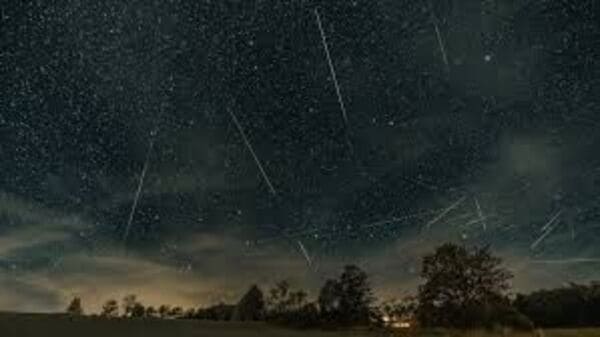
The Lyrid Meteor Shower is all set to give skywatchers an opportunity to spot fast-moving, bright shooting stars. Experts suggest understanding where and how to observe the sky can significantly increase the chances of seeing these meteors, according to Space.com.
The meteors appear to originate from the constellation Lyra, which rises in the northeastern sky and gradually climbs higher during the early morning hours. This makes the shower most visible to those who wake up before dawn.
Lyra can be identified by locating Vega, one of the brightest stars visible in the night sky at this time of year. Vega appears above the northeastern horizon shortly after sunset and continues to rise higher as the night progresses. Stargazing apps can also assist in identifying Vega and other celestial objects.
The Lyrid Meteor Shower is among the oldest known meteor showers, with records of sightings going back more than 2,500 years.
It peaks in India on the night of April 21–22.
To observe it, step outside after midnight and move away from tall structures and city lights. Allow your eyes about 15 to 30 minutes to adapt to the darkness, and avoid checking your phone during this time. It’s helpful to carry a lawn chair or sleeping bag and wait patiently for the meteors to appear. They will seem to originate from the constellation Lyra in the northeastern sky.
Lyrid Meteor Shower time in India
The Lyrid Meteor Shower can be observed across major Indian cities during the early morning hours, though visibility varies depending on local conditions.
In New Delhi, the ideal viewing window is between 2:30 am and 5:00 am. Visibility is expected to be moderate, but clearer views can be found on the outskirts, such as the edges of Gurugram or Noida, where light pollution is lower, according to multiple reports.
For Mumbai, the best time is also from 2:30 am to 5:00 am. However, coastal humidity and bright city lights may hinder visibility. Observers are advised to move towards less crowded beaches or outskirts like Navi Mumbai for a better experience.
In Bengaluru, the viewing window is slightly earlier, from 2:00 am to 5:00 am. The skies are generally clearer, especially in elevated areas like Nandi Hills, which offer improved viewing conditions, as per reports.
In Chennai, the best time is between 2:30 am and 5:00 am. Coastal haze may affect clarity, but open beach locations can still provide decent views.
For Kolkata, the same 2:30 am to 5:00 am window applies. High humidity and urban lighting may reduce visibility, though conditions improve outside the city.
In Hyderabad, the recommended viewing time is from 2:00 am to 5:00 am. Compared to coastal cities, the skies here are relatively clearer, offering better chances of spotting meteors.
Lastly, Pune also offers a viewing window from 2:00 am to 5:00 , with good potential for sightings, particularly in areas away from the city center.


