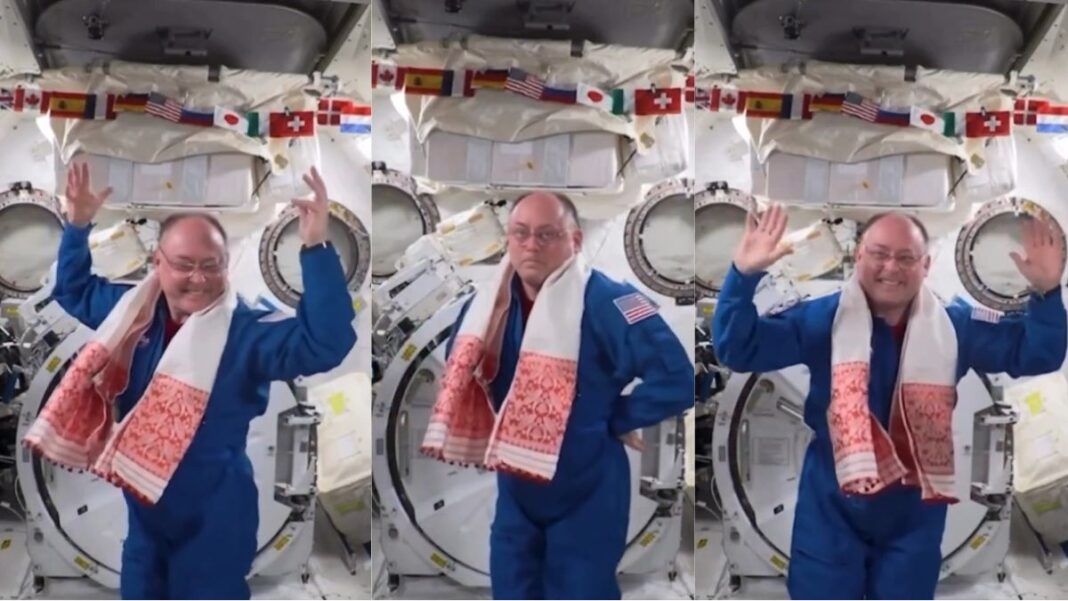
Every Rongali Bihu, a video finds its way back onto the internet.
A Nasa astronaut, draped in a white-and-red gamusa, the traditional Assamese towel that is as much a symbol of identity as it is a piece of cloth, can be seen swaying gently in the weightlessness of space, while a Bihu song is playing in the silence of orbit.
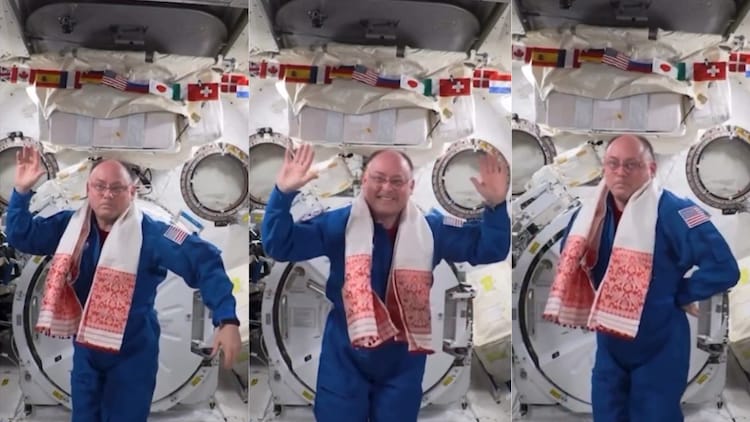
People share the video breathlessly, as though it were filmed last week. It was not. It is 22 years old. And honestly, it might just be the most beautiful thing to ever happen 400 kilometres above Earth.
This Rongali Bihu, Assam Chief Minister Himanta Biswa Sarma shared the clip of the astronaut performing Bihu on the International Space Station.
Moved by the footage, he wrote that it was wonderful to see “Bihu going global”, and linked the moment to Prime Minister Narendra Modi’s Bihu Binandia, a grand 2023 event in Guwahati where over 11,000 dancers and drummers performed Bihu together at Sarusajai Stadium, setting a Guinness World Record, with the Prime Minister in attendance.
The internet, however, was quick to point out a problem. The video is from 2004. In 2004, the Prime Minister of India was Manmohan Singh, and the Chief Minister of Assam was Tarun Gogoi, an X user wrote.
The fact-check was delivered with the precision of a well-aimed dhol beat. And yet, the video itself remains as magical as it ever was.
The internet fell in love with the video all over again.
WHO IS THE ASTRONAUT IN THE GAMUSA, PERFORMING BIHU DANCE?
The man in the gamusa is veteran Nasa astronaut Mike Fincke.
Across four missions and 549 days off this planet, Fincke sits fourth on the list of Nasa astronauts who have spent the most time in space.
He has walked in open space, repaired the space station with his hands, and commanded one of the most extraordinary human outposts ever built.
And once, in 2004, he wore a gamusa and performed Bihu.
That year, Fincke was living aboard the International Space Station as part of Nasa’s Expedition 9 mission.
The space station is a research laboratory the size of a football field, orbiting Earth at roughly 400 kilometres above the ground, travelling at 28,000 kilometres per hour, completing one full circle around the planet every 90 minutes.
The people inside it do not walk. They float. They live in microgravity, a condition where Earth’s gravitational pull is too weak to keep anything in place.
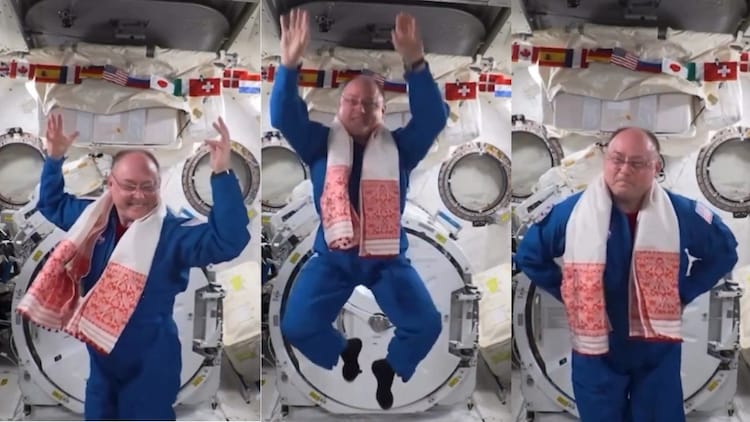
Microgravity is not the absence of gravity. It is what happens when you are falling around Earth so fast that you never quite hit it. Every movement becomes slow and deliberate. Every gesture stretches into something that looks, from the outside, almost like poetry.
It was in this world that Fincke wore his gamusa, pressed play, and danced.
For someone living in zero gravity, Fincke’s Bihu moves were flawless and perfect.
WHY DID A NASA ASTRONAUT PERFORM BIHU IN SPACE?
The answer is beautiful. Because the astronaut’s wife, Renita Saikia Fincke, is from Assam.
Fincke met Renita while training to be an astronaut, and she became, by all accounts, the quieter half of one of the more remarkable partnerships in the history of space exploration.

She is the reason he knows what a gamusa means. She is the reason he knew which Bihu song to play.
The dance was not a performance. It was not a cultural experiment. It was a husband, hundreds of kilometres above his wife’s hometown, finding a way to hold on to the place she calls home.
IS MIKE FINCKE STILL AN ASTRONAUT?
He is. But Fincke is not in space right now, and the story of how he came home this time is something else entirely.
As part of Nasa’s Crew-11 mission, Fincke had been living and working aboard the space station since August 2025.
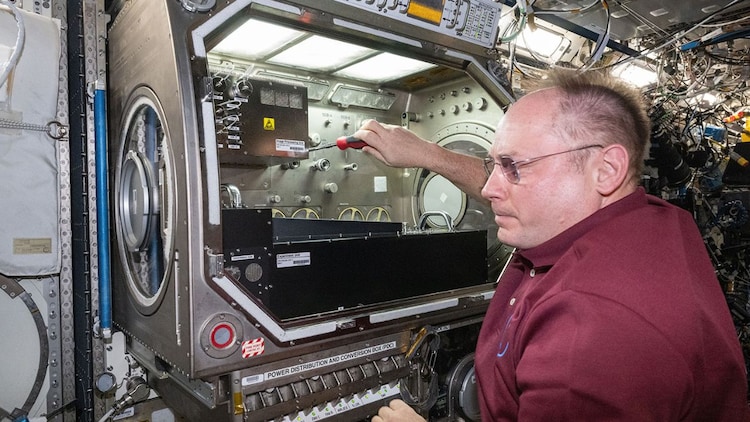
On January 7, 2026, the night before he and his commander were due to conduct a spacewalk, a walk outside the station in open space where no air exists and nothing stands between you and the universe but a pressurised suit, something happened.
Without warning, he could not speak. For around 20 minutes, the words simply would not come.
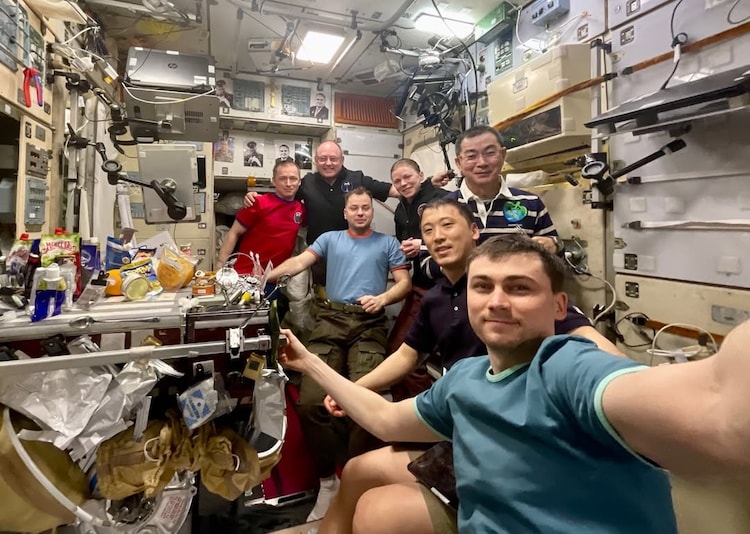
His crew mates responded immediately. Nasa’s flight surgeons, watching from Earth, stabilised his condition and made a decision that had never been made in 25 years of the station’s continuous human occupation.
They brought the crew home early. On January 15, 2026, Fincke and his three Crew-11 colleagues splashed down in the Pacific Ocean off the coast of San Diego, in what became the first medical evacuation in the history of the International Space Station.
He has since said he is recovering well, back at Johnson Space Center in Houston.
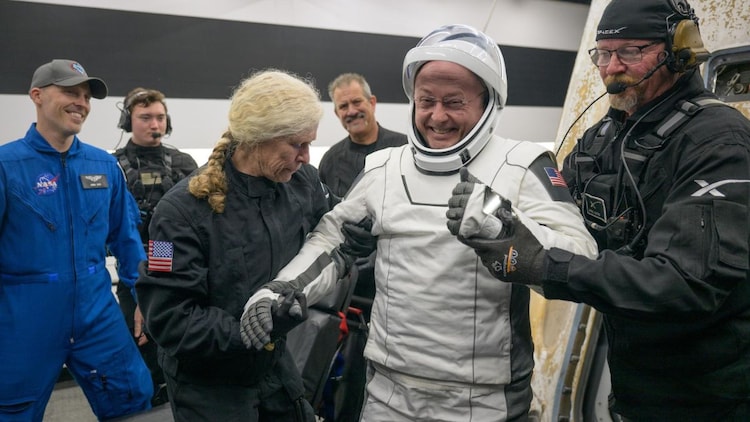
So this Bihu, the man who once carried Assam’s most beloved festival and dance form all the way to the stars is, very much, back on the ground.
But that clip has not gone anywhere. A gamusa floating in zero gravity. A Bihu song playing where no sound, except that of machines, should exist. A husband’s quiet, extraordinary love letter to a place called Assam.
Turns out, even 400 kilometres above Earth, home has a way of finding you. Because some dances are not just dances. Some dances are love, launched into orbit. And some things, it turns out, are simply beyond gravity’s reach.