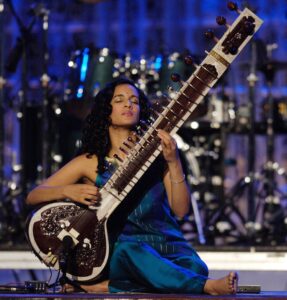
There is a moment, at the start of every sitar performance, when nothing has quite begun yet.
The sitarist settles the instrument against his knee. He plucks one string, not to play a melody, but simply to listen.
The note rises, spreads, and fades. He adjusts a tuning peg by a fraction, plucks again, and listens again. The audience waits.
What they are hearing in those few seconds is one of the most extraordinary sounds in physics.
A single plucked string that does not behave the way a plucked string should, a sound that opens and spreads before the music has even started.
Nobody in the concert hall is thinking about physics. But physics is there, doing something that took scientists until the early 20th century to fully explain.
Indian physicist and Nobel laureate CV Raman was among the first to study the acoustics of Indian stringed instruments, including the veena and sitar, publishing his findings between 1916 and 1921, with later scientists building upon his work.
Somewhere inside the sitar’s melody, if you know where to listen, is the sound of Persia.
THE NOTE THAT SHOULD NOT EXIST
Before we get to the sitar, three quick things are worth knowing, because they will make everything that follows feel obvious rather than mysterious.
When you pluck a string, it vibrates back and forth very rapidly, and that vibration pushes and pulls the air around it, sending invisible waves outward in all directions, the way a stone dropped in water sends ripples spreading across the surface.
When those ripples reach your ear, your brain experiences them as sound. Now, not all sounds feel the same.
Some feel high, like a whistle or a child laughing, and others feel low, like a foghorn or a man’s deep voice.
This quality of highness or lowness is called pitch, and it depends entirely on how fast the string vibrates. Fast vibration means high pitch, and slow vibration means low pitch.
A tone is simply a steady, smooth sound that has a clear pitch. When you hum, you are producing a tone.
A note is what musicians call a specific, named tone: do, re, mi, fa, so, la, ti. Each of these is a tone with a particular name and a fixed pitch that musicians everywhere in the world agree upon, and notes are the building blocks of all music.
So to put it plainly: pitch is the quality of highness or lowness, a tone is a smooth sound with a clear pitch, and a note is a named, specific tone that musicians use to build music.
Now pluck a guitar string and one clean note arrives: immediate, whole, and settled. The sitar, however, does not do this.
Pluck a sitar string and the note unfolds. There is a brief, spreading burst of sound at the start, almost like a sigh, before the note settles into its sustained ring.
It is like watching a flower open in fast motion: one moment there is nothing, and then there is everything.
Sitar players call this jawari, which translates roughly as “life of the note,” and it is the quality that makes the instrument sound almost human, as though it is thinking before it speaks.
Seasoned listeners will tell you that the sitar breathes, that it sighs, that it sounds, more than any other instrument on Earth, like a person trying to say something important and not quite knowing where to begin.
Jawari is not an accident, and it is not a flaw in the instrument’s design. It is the entire point, and it comes from one of the most cleverly engineered components in the history of musical instrument making: the bridge.
THE CURVED SURFACE THAT CHANGED EVERYTHING
Every string instrument has a bridge, which is the small, raised surface near the bottom of the instrument over which the strings pass.
On a guitar or a violin, this bridge is straight and flat, the string leaves it at one fixed point, and the note that comes out is clean and entirely predictable.
Here is something wonderful that most people never know. When you pluck any string, it never produces just one single, pure tone.
It secretly produces several tones at the same time: the main note you consciously hear, and hiding inside it, like whispers inside a shout, are several times much fainter, much higher tones ringing quietly alongside it.
You cannot always hear them individually, but your ear senses them together, and they are the reason a guitar sounds warm and rich rather than thin and plain. These hidden companion tones are called harmonics, or overtones.
Think of it this way. When a choir sings a single note in perfect unison, you hear one note, but the combined voices make it feel full and warm.
Harmonics do exactly the same thing for a single string. They are the invisible choir hiding inside every note, always present, always quietly contributing to the richness of the sound.
On most instruments, these harmonics ring out together all at once, blending into the background warmth. The sitar, however, does something entirely different.
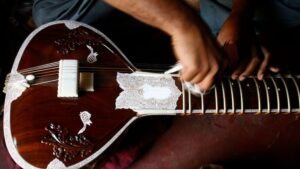
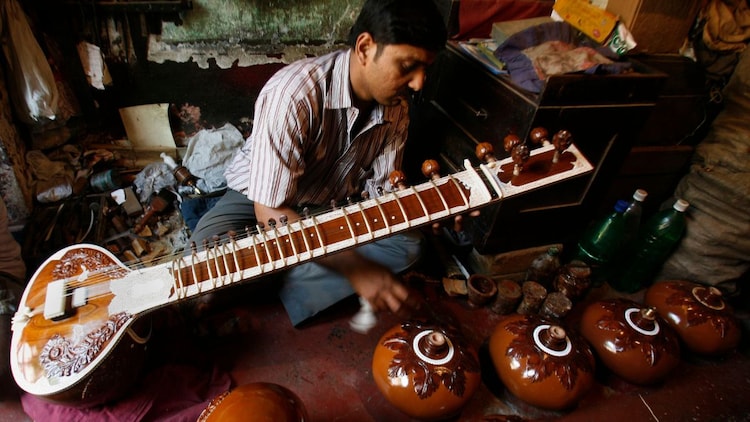
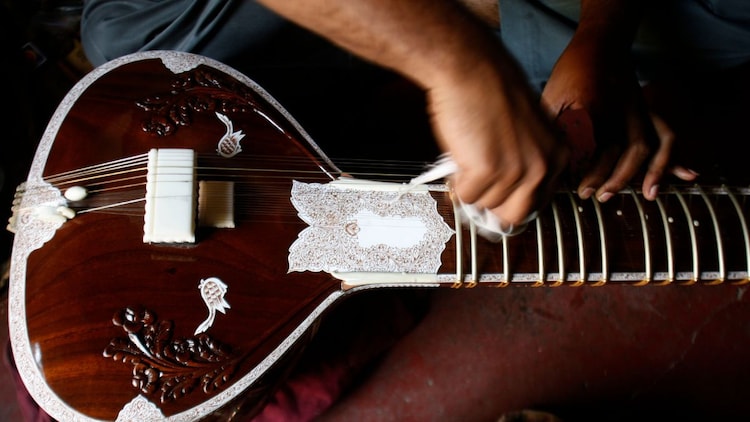
Its bridge is wide and gently curved, like a very shallow hill, usually carved from deer horn, bone, or ebony.
Because the bridge curves away gently beneath the string, the string does not leave it at one fixed point. Instead, as it vibrates back and forth, it grazes the curved surface at a slightly different spot each time.
Each slightly different spot briefly pushes one of those hidden harmonics to the front of the sound, like a spotlight suddenly landing on one singer in that invisible choir, and then the next vibration pushes a different harmonic forward, and then another.
They cycle through in rapid succession, like a shimmer of light moving across water, before the note finally settles into its sustained ring.
That sweeping cascade is the jawari. That is the bloom. That is the sigh that seasoned listeners describe when they try to explain what makes the sitar sound so uniquely alive.
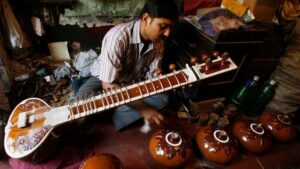
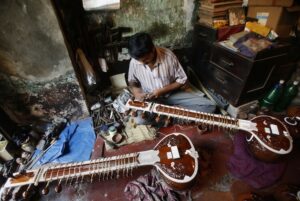
Master craftspeople who shape these bridges spend years learning to hear the difference between a curve that is right and one that is almost right, shaving bone by fractions and listening after every single stroke.
The science behind what they are doing was only formally explained by acoustic scientists in the early 20th century.
Acoustics, simply put, is the science of sound: how it is produced, how it travels, and how it behaves when it meets different surfaces and shapes.
The craftspeople had found the answer centuries earlier, working entirely by ear, guided by nothing more than an uncompromising dedication to the perfect sound.
As Jaideep Giridhar, former editor of the music magazines Rave and Time Out, explains, science and traditional craft have always moved along parallel tracks.
“A lot of science that has happened serves two purposes. One is to investigate things that have happened in the past, which might have come about as a result of experimentation, as a result of trial and error. You can apply this concept to anything from music to agriculture,” Jaideep Giridhar tells indiatoday.in.
The analysis of acoustics, he adds, “is not just about breaking down the acoustic characteristics of a particular instrument to the physics of it, but also to understand how the evolution happened.”
THE STRINGS THAT ONLY LISTEN
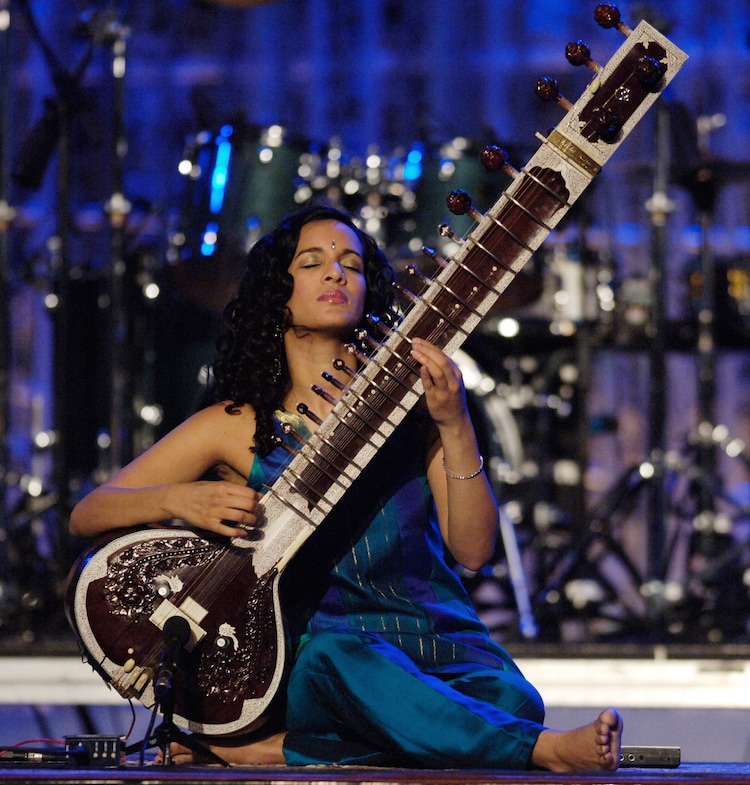
A modern sitar has between 18 and 21 strings, but only six or seven of them are ever played. The rest simply listen.
Beneath the main melody strings runs a second set of thinner strings, always tuned to the notes of the raga being performed.
To understand what comes next, it helps to know what a raga is. A raga is not a song. It is not a scale either, though it contains one.
Think of it as a musical personality: a specific set of notes, carefully chosen and arranged, that together create a particular mood or feeling.
Some ragas are meant to be played at dawn, others at midnight. Some evoke longing, others joy, others the stillness before rain. A raga is, in the most beautiful sense, a feeling given a musical shape.
Now, beneath the main melody strings of a sitar runs a second set of thinner strings, always tuned to match the notes of whatever raga is being performed. These are called tarab strings, a word that comes from the Arabic word tarab, meaning musical ecstasy or the deep emotional stirring that music produces.
They are also called sympathetic strings, for reasons that will become clear in a moment. No one ever plucks them. They are never touched by the player’s fingers or the plectrum. Yet they are never silent.
When a note is played on the main strings, the vibrations travel through the wooden body of the instrument and cause the tarab strings to hum softly in response, because they are already tuned to match those very notes.
Here is a simple way to picture it. If you sing a note loudly near a piano with its lid open, the piano string tuned to that same note will begin to hum back at you without anyone touching it.
This happens because both objects share the same frequency, which simply means they vibrate at exactly the same speed.
When two objects vibrate at the same speed, one can set the other humming without any physical contact at all, and scientists call this sympathetic resonance.
The word sympathetic here is not emotional but scientific, meaning one object responding to another because they share the same natural vibration.
The sitar’s tarab strings do exactly this for every note the player produces, and the result is a warm, ambient glow of sound that wraps around each melody note like a room humming gently in agreement. It is why the sitar never feels lonely.
Every note it produces seems to carry the whole raga inside it, and the instrument is always answering itself, always in conversation.
As Jaideep Giridhar explains, “The sitar is actually known as much now for the sympathetic strings that exist alongside the three primary strings. They are actually the ones that give it that particular character. It is an enveloping sound. It is not just three strings that are played, but there is something bigger than just three strings.”

A raga is the melodic framework of a Hindustani classical performance, a specific set of notes chosen and arranged to evoke a particular time of day, a season, or an emotional state.
Each raga has its own mood, its own rules, and its own identity, and when the sympathetic strings are tuned to the notes of the raga being played, the instrument becomes a whole world of sound rather than a single voice within one.
THE PERSIAN WORD HIDING IN PLAIN SIGHT
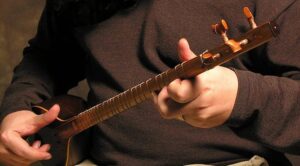
The word sitar is Persian, coming from sehtar, which means “three-stringed,” where seh means three and tar means string.
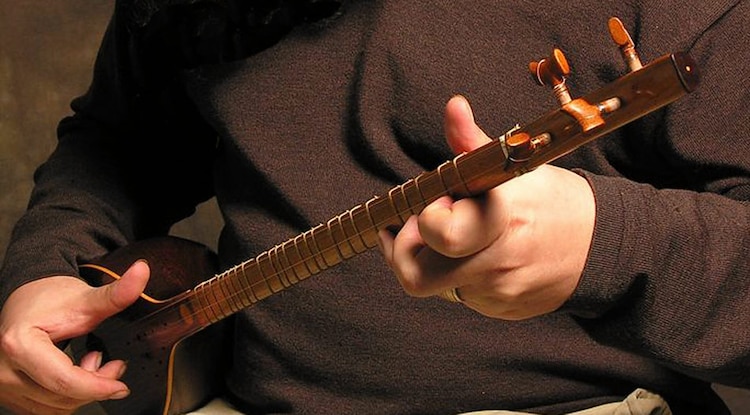
The ancestor of the sitar was the Persian setar, a long-necked lute played in the courts and Sufi shrines of Iran from at least the ninth century, which itself descended from the tanboure Khorassan, a pre-Islamic lute from the region spanning eastern Iran and Afghanistan today.
Some scholars also believe that as the sitar evolved on Indian soil, it absorbed elements from the veena, one of India’s oldest stringed instruments.
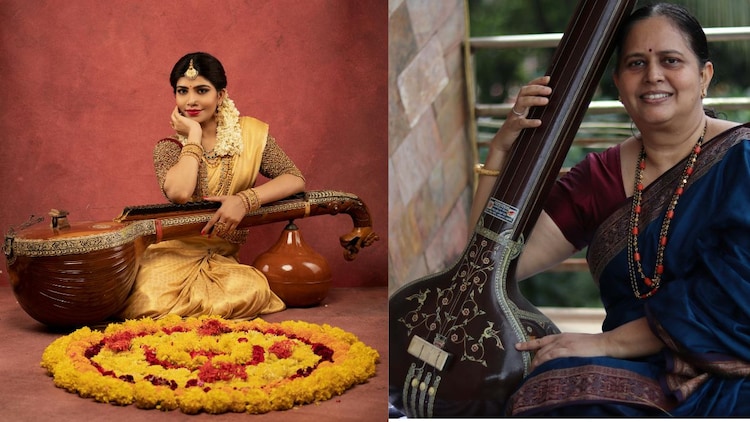
Whether the sitar owes its soul entirely to Persia or partly to India’s own ancient strings is a question musicologists still debate, but what is certain is that the instrument that emerged was unlike anything either tradition had produced alone.
The sitar and the veena are cousins who took very different paths. The sitar travelled north, absorbing Persian influences and finding its voice in the courts of the Mughal Empire, eventually becoming the defining instrument of Hindustani classical music.
The veena stayed south, its roots reaching back to the Rigveda, and today it remains the soul of Carnatic classical music, the classical tradition of South India.
Now, back to sitar. How did the Persian setar travel to India? The answer lies in two remarkable concepts from Islamic mysticism: siyahat and the Qalandariyya.

Siyahat means “spiritual wandering,” the physical journey a Sufi mystic undertakes as part of the path towards God, rooted in the idea that the road itself is a teacher and that movement is a form of devotion.
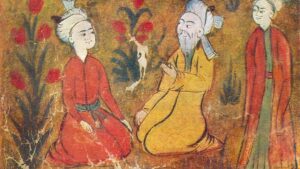
The Qalandariyya were wandering Sufi dervishes, nomadic mystics who travelled from Persia and Central Asia across the subcontinent carrying their faith, their poetry, and their music with them.
They were shaven-headed, deliberately unconventional, and almost always depicted with musical instruments in their hands, and they were, in the truest sense, the original travelling musicians.
As Jaideep Giridhar explains, “Sufi music, at least in its origins, is very nomadic music. The performer in all likelihood is just one person with a very rudimentary musical instrument, who would travel from place to place singing songs. The hero of the piece was the music produced by the human vocal cords. The instrument was a way in which you garnish it to enhance it.”
The sitar would have travelled, he says, “from Persia and Central Asia to all parts of the subcontinent as an accompanying instrument to people singing these vagabond songs, which would have been the Sufis.”
The sitar took its final form in the 18th century, when a Mughal court musician named Khusrau Khan developed it from the Persian setar, an earlier threestringed lute.
Masid Khan added more playing strings, Imdad Khan introduced the sympathetic strings, and Allauddin Khan, who would later teach Ravi Shankar, established the seven-string form most sitarists play today.
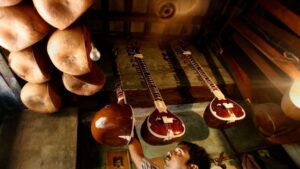
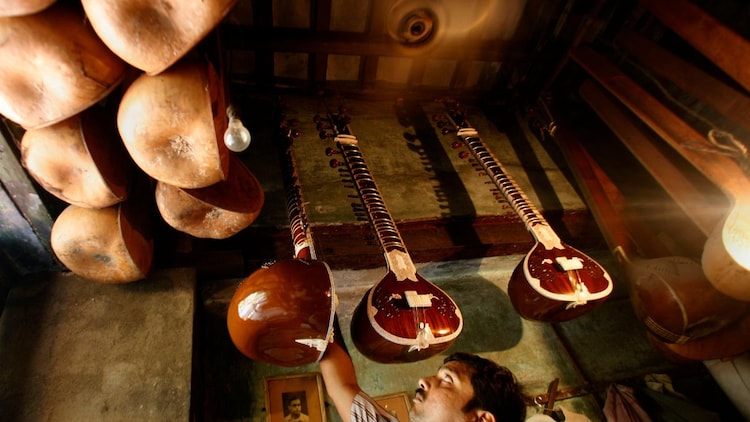
The neck was crafted from toon wood, a form of mahogany, or aged teak, with a gourd from Miraj in Maharashtra replacing the Persian instrument’s wooden bowl, and the bridges were carved from deer horn, bone, or ebony. Each material was arrived at through generations of trial and patient listening.
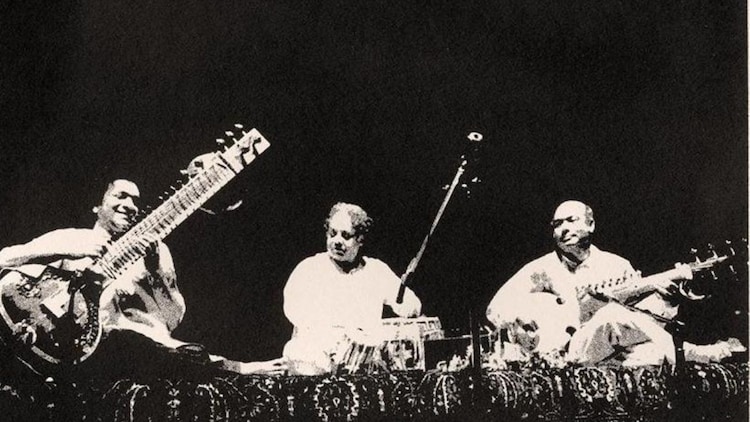
“I doubt very much that people figured out that this one particular kind of wood works the first time around,” says Jaideep Giridhar.
“They would have tried different kinds of woods based on availability, based on durability, based on how easy it was to work with that wood. But most importantly, they would have arrived at a wood which was the most percussive, the most conducive to this kind of music. And then they would have stuck with that,” he adds.
Instruments, he reminds us, are never frozen in time. “There are no instruments which are frozen in time. People will always, whether they are musicians or craftspeople, be trying to find innovations, whether just for the fun of experimentation, to develop a new kind of sound, or to address a very practical need.”
THE MAN WHO TOOK THE SITAR TO THE WORLD
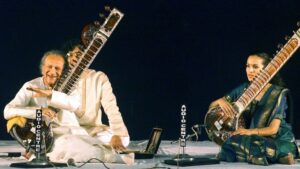
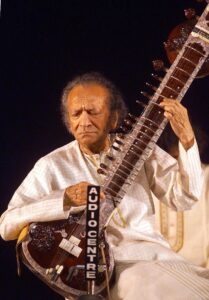
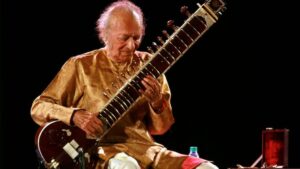
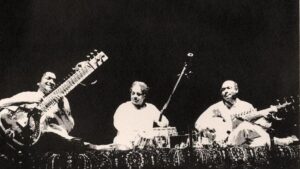
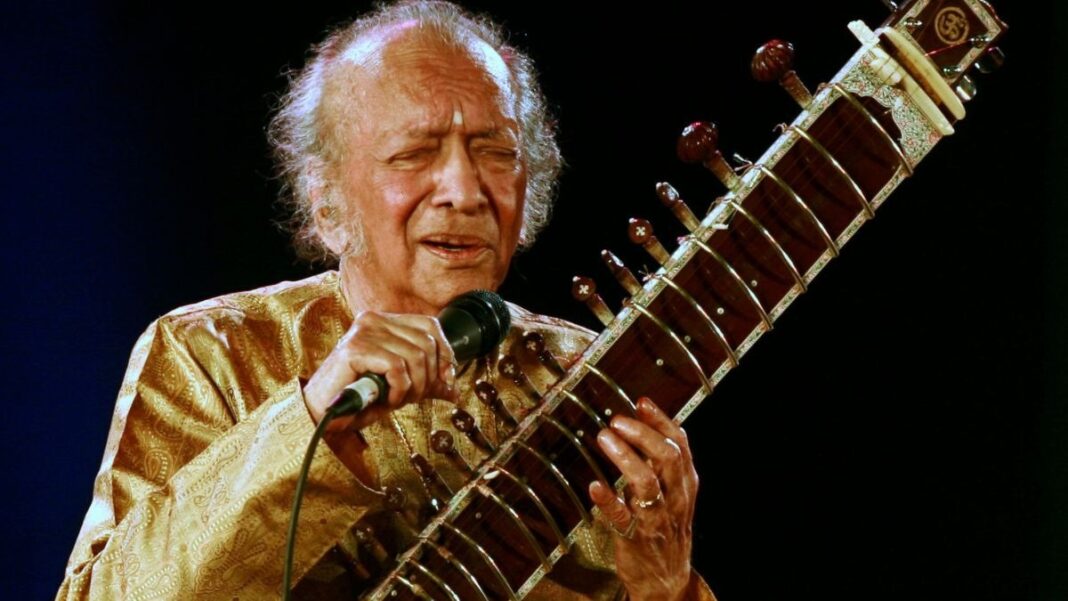
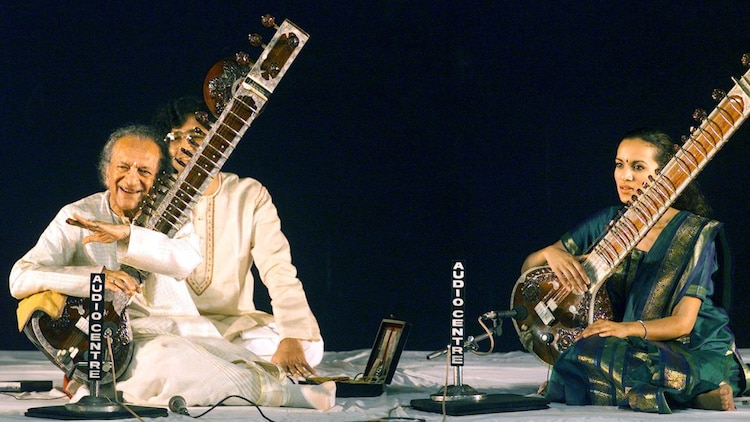
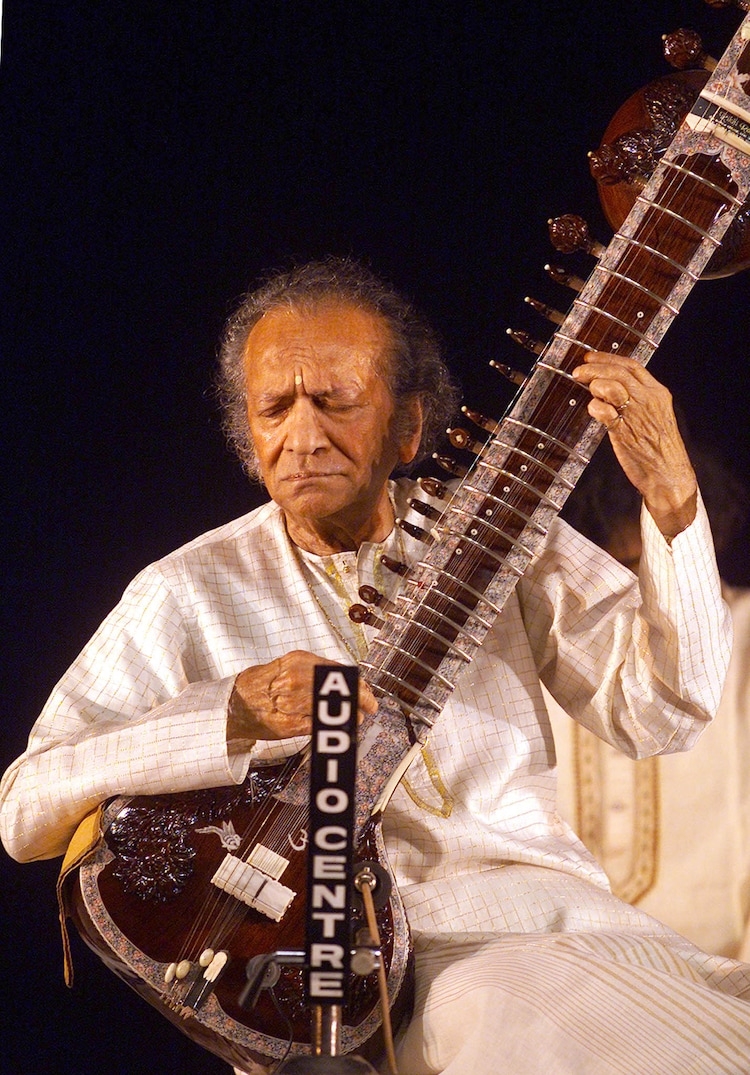
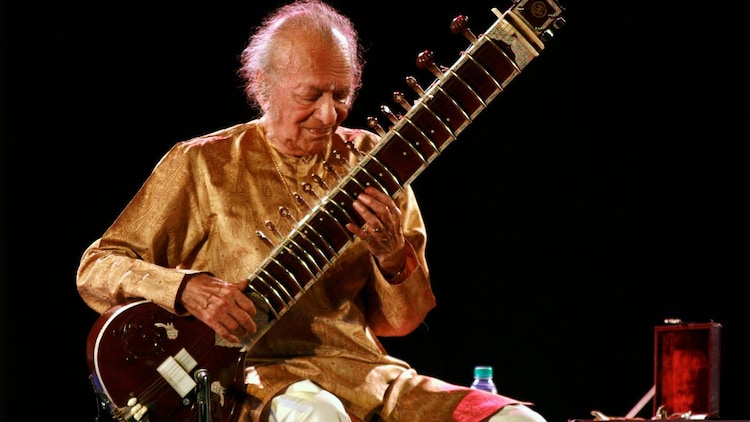
No one carried the sitar further from its origins than Pandit Ravi Shankar, arguably the greatest sitarist of the 20th century and quite possibly of all time.
Born in Varanasi on April 7, 1920, he trained under the legendary Allauddin Khan and spent decades mastering an instrument that, for most of its history, had never been intended as a solo voice.
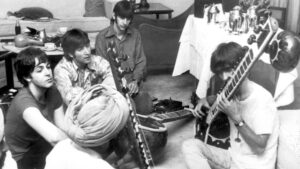
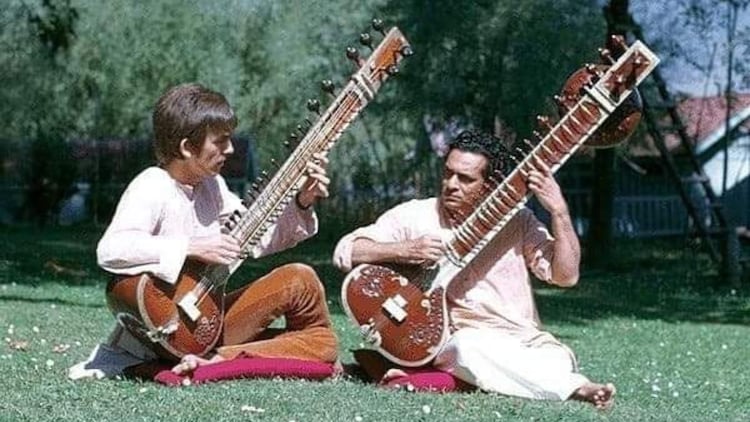
George Harrison, the lead guitarist of The Beatles, the British rock band that took the world by storm in the 1960s, first used the sitar on the band’s 1965 song Norwegian Wood, a revolutionary track from their album Rubber Soul.

It was the first time an Indian classical instrument had appeared on a Western pop recording, and it stopped people in their tracks.
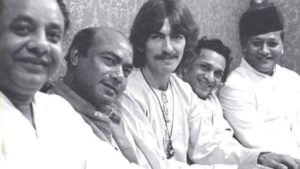
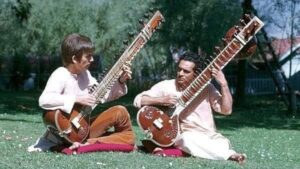
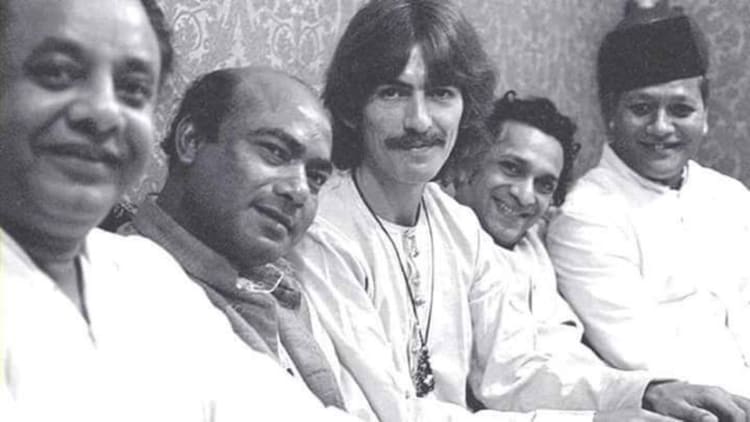
The following year, Harrison began formally studying the sitar under Ravi Shankar, travelling to India to learn the instrument from the master himself, and the association brought the sitar to audiences who had never encountered Indian classical music.
Suddenly, millions of people across Britain, America, and Europe were hearing that blooming, spreading sound for the first time, often without knowing what it was called or where it came from.
Ravi Shankar performed at the Monterey Pop Festival in 1967, one of the most famous music festivals in history, sharing a stage with Jimi Hendrix and Janis Joplin.
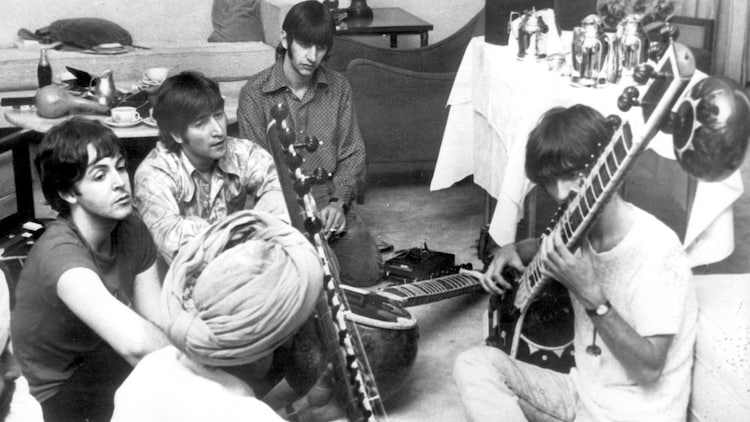
The audience, which had come for rock music, sat on the ground and listened in complete silence, and some wept.
He won five Grammy Awards across his lifetime, making him one of the most celebrated classical musicians in the history of recorded music.
Ravi Shankar did not change the sitar. He simply carried it to people who had not yet heard it, and let it do what it had always done.
The lineage continues today in Rishab Rikhiram Sharma, the fourth generation of the legendary Rikhi Ram family of sitar makers in Delhi, who has carried the instrument from concert halls to the White House, and from classical ragas to a generation that discovered the sitar on Instagram.
THE POET WHO LIVED BETWEEN TWO WORLDS
No account of the Persian roots of Indian music can overlook Amir Khusrau, even though he lived four centuries before the sitar took its final form.
Khusrau (1253 to 1325) was a poet, musician, and Sufi mystic at the court of the Delhi Sultanate, born to a Turkish father and Indian mother, fluent in Persian, Hindavi, Turkish, and Arabic.
He was a man who belonged everywhere and nowhere, and who made that position a source of extraordinary creative power.
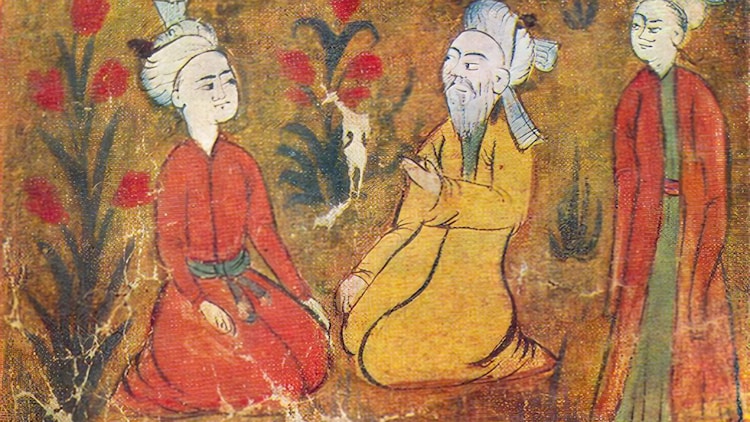
He fused Persian, Arabic, Turkic, and Indian musical traditions to create qawwali, the form of Sufi devotional music that remains one of the most powerful live musical experiences in the world.
He introduced the ghazal into India, a Persian poetic form of passionate, ambiguous longing that is today considered so deeply Indian that most people have forgotten it arrived from elsewhere.
Amir Khusrau and Tansen, the legendary musician of Akbar’s court, are, as Jaideep Giridhar puts it, among the most important figures of this synthesis of Indian and Persian cultures.
“There are two primary forms of Hindustani classical music,” he explains. “One is Dhrupad and the other is Khayal. Dhrupad is the older form. It was developed primarily as temple music, meant to be a direct communion with God, and it was meant to be evocative of a spiritual plane where the singer and the people participating could use it as a medium to converse with or be one with God. That was the primary purpose of Dhrupad.”
THE CONVERSATION THAT NEVER ENDED
Although introduced in the royal courts, the tabla and sitar became, as Jaideep Giridhar notes, “instruments that were integral to performances that happened outside of royal courts later, which could range from temples or satsangs to weddings, and eventually they also became a part of the country’s biggest pop-cultural phenomenon, which is Bollywood music.”
What the courts started, the dargahs continued, and the film studios completed.
The Persian influence did not travel in a straight line, but spread, deepened, and changed shape until it became something that no longer needed to announce itself, because it had become inseparable from the music itself.
No art form, Jaideep Giridhar says, is ever static. “Any art form that becomes calcified and set in stone is an art form that is going to die.”
The idea of an art form being universal, he adds, “primarily comes out of this notion that nothing really belongs to any particular community or any particular geography. It is an art form that can take inspiration from anywhere.”
When Ravi Shankar sat on the stage at Monterey in 1967 and a rock crowd fell silent, he was carrying all of that history in his hands: the jawari in every note, the Persian name on the instrument’s neck, and the ragas that Amir Khusrau had woven from two musical worlds seven centuries earlier.
The sitar remembers where it came from.
Physicists arrived late to explain it. Persia arrived centuries before. The craftspeople knew. The Sufis knew. Amir Khusrau knew. Seven centuries of history, plucked strings, and a sound the whole world recognises as India.
That is what a thousand years of conversation sounds like. And somehow, it has always sounded like home.