The sea has always been a place of stories. Of myths whispered between sailors, of ghost ships glowing at the horizon, of entire cities rising from the water before dissolving into nothing.
For centuries, these tales were explained away as the delusions of exhausted, superstitious men far from home.
As it turns out, they were seeing something real. They just did not have the science to explain it.
The phenomenon is called a Fata Morgana, and it is one of the most breathtaking things the natural world can produce.
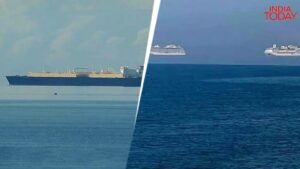
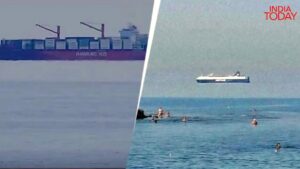
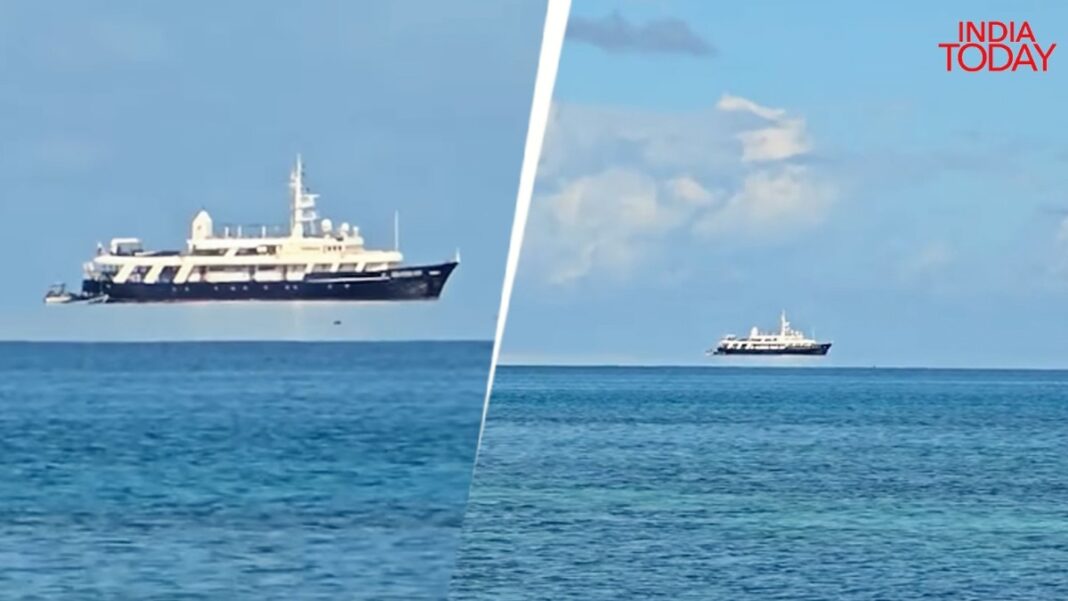
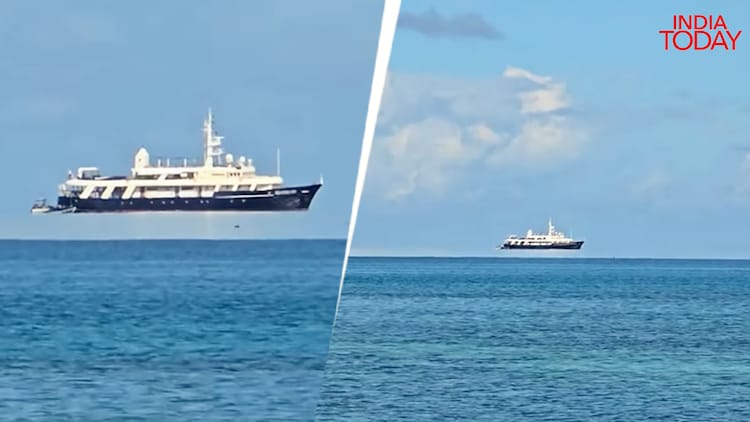
In videos currently sweeping across social media, large ships appear to float several metres above the ocean surface, suspended in the air with nothing beneath them but an empty, shimmering horizon.
People in the comments are convinced it is CGI, a glitch in the matrix, a government secret, or proof of something stranger still.
It is none of those things. It is light, bending through air. And the story of how it does that is more beautiful than any myth.
WHAT IS REFRACTION, AND WHY DOES IT MATTER?
Before the Fata Morgana can make any sense, you need to understand one fundamental truth about light: it does not always travel in a straight line.
When light passes from one medium into another, from water into glass, or from cold air into warm air, it bends. Scientists call this refraction. You have seen it your entire life without perhaps knowing its name. Place a spoon in a glass of water and look at it from the side.

The submerged half appears to shift edgeways, snapping into an impossible position. Nothing has moved.
The light carrying the image of the spoon has simply bent as it passed from water into air, and your brain, which always assumes light travels in a straight line, places the spoon somewhere it is not.
Now take that same principle, scale it up to the size of an ocean, and let the atmosphere do the bending.
WHAT IS A TEMPERATURE INVERSION?
On an ordinary day, the air closest to the Earth’s surface is warmer than the air above it. The Sun heats the ground, the ground heats the air sitting just above it, and warmth decreases as you climb higher. Pilots know this. Hikers know this. It is simply how the atmosphere works.
But over a very cold body of water, something unusual happens. The cold water chills the air sitting directly above it, creating a thin layer of cold, dense air right at the sea surface.

Above this cold layer, warmer and lighter air sits undisturbed. The atmosphere ends up arranged in precise reverse: cold below, warm above.
This is called a temperature inversion, because it inverts, or flips, the usual order of the atmosphere. It is the essential ingredient in everything that follows.
HOW DOES THIS MAKE A SHIP FLY?
Here is where physics becomes poetry. Stay with it, because this is the part that will change how you look at the horizon forever.
Light travels at different speeds depending on what it is moving through. Through warm, thin air, it moves quickly.
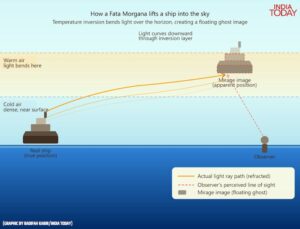
Through cold, dense air, it moves more slowly. When light crosses from warm air into cold air, it slows down and bends, curving downward towards the denser layer, much like a car that drifts to the left when its left tyres hit a rougher, slower patch of road.
Now imagine a large ship sitting on the ocean 40 kilometres away. That is well beyond the curve of the Earth, which means the ship is technically below your horizon.
Under normal conditions, you could not see it at all. The light bouncing off that ship would travel outward and upward, miss your eyes entirely, and disappear into the sky above you.
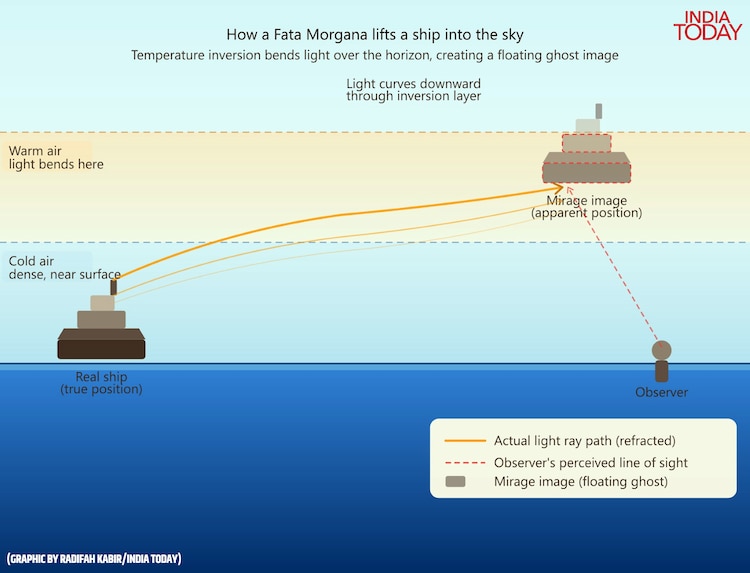
But in a temperature inversion, something extraordinary happens. As the light from that distant ship travels towards you, it enters the inversion layer, that sharp zone where cold air below meets warm air above.
The moment it crosses into this zone, it begins to bend. It curves downward.
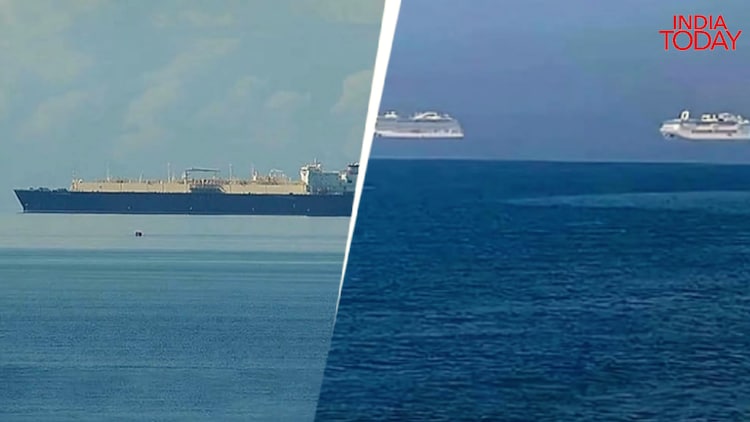
And if the temperature difference between the two layers is steep enough, the light curves so dramatically that instead of escaping into the sky, it bends all the way around the curvature of the Earth and arrives, against all expectations, at your eyes.
Here is the crucial part. Your brain has no way of knowing the light has taken a curved path. It always assumes light travels in a straight line.
So it traces the incoming light backwards along that imaginary straight line, extending it outward and upward into the sky, and concludes that the ship must be up there, floating high above the horizon.
The ship has not moved. Only its light has taken a detour. But to your eyes, and to your brain, the ship is flying.
WHY DOES THE IMAGE LOOK SO STRANGE?
A Fata Morgana rarely produces a clean copy of the real object. More often the image is stretched, squashed, flipped upside down, duplicated or stacked into tower-like shapes, all shimmering and shifting as though alive.
This is because the temperature inversion is rarely smooth and even. Different parts of the inversion bend light by slightly different amounts, acting like a series of mismatched lenses all operating at once.
One part of the ship gets magnified, another gets compressed, another gets inverted. The result is the extraordinary, castle-like apparition that so bewildered medieval sailors in the Strait of Messina, the narrow channel between Sicily and mainland Italy.
It is as though someone placed a warped fun-house mirror in the sky and asked it to reflect the sea.
THE FLYING DUTCHMAN AND THE FATA MORGANA
The legend of the Flying Dutchman, a ghost ship condemned to sail the oceans for eternity and glimpsed by terrified sailors as an omen of doom, is one of the most persistent maritime myths in history.
German composer and theatre director Richard Wagner composed an opera around it. English poet Samuel Taylor Coleridge invoked it in The Rime of the Ancient Mariner.
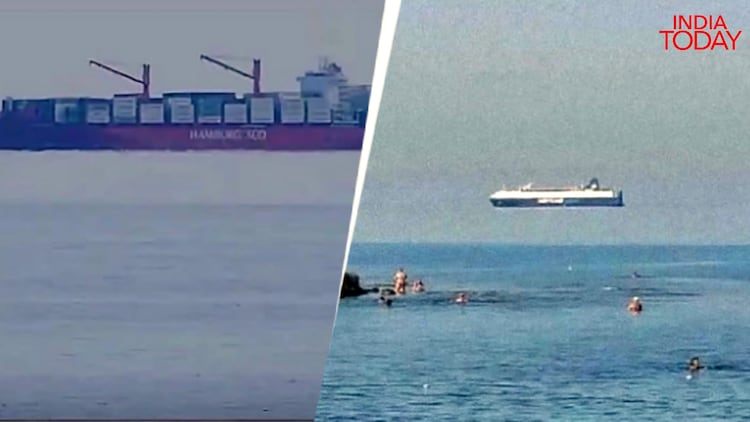
Many scientists and historians now believe the legend was born from real sightings of the Fata Morgana.
The conditions that produce the mirage, calm seas, cold water and stable windless weather, are precisely the conditions that made the open ocean feel most eerie to sailors of earlier centuries.
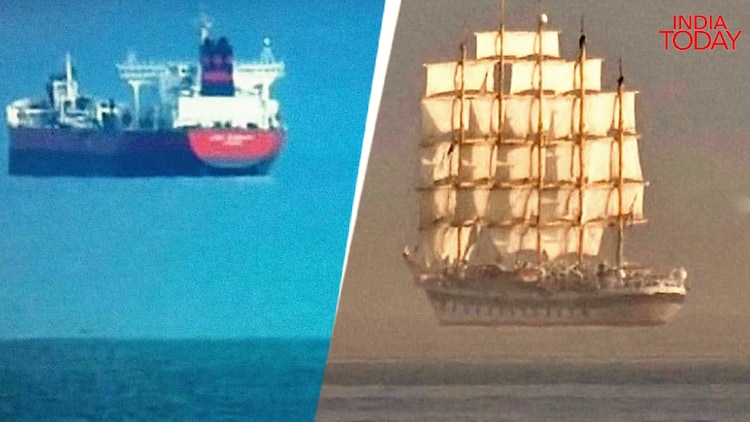
A ship materialising above the horizon, hovering, contorting and then vanishing, would have been a shattering experience for anyone with nothing but mythology to explain it.
The Flying Dutchman was not a ghost. It was a ghost image, produced by physics and read as a prophecy.
WHERE AND WHEN CAN YOU SEE THIS?
The Fata Morgana is most common over cold seas and large lakes. The Arctic and Antarctic oceans, the Great Lakes of North America, the coasts of Scotland and California, and the seas around Japan all produce regular sightings. It has also been recorded over deserts on still mornings.
The mirage rarely lasts long. Even a slight breeze or a modest rise in temperature can break the inversion and dissolve the illusion within seconds. What those viral videos capture is a fleeting moment of atmospheric precision, the sky holding perfectly still just long enough to perform its most spectacular trick.
There is nothing supernatural here. Only the atmosphere, doing what it does when the conditions are exactly right: something so astonishing that it looks, even to eyes that know better, like pure magic.
The sea has always been a place of stories. Some of those stories, it turns out, were true. They just needed a physicist and a science journalist to explain the tales to them properly.