
KID Capsule Survives ISRO PSLV Rocket Failure, Transmits Data

KID Capsule: The Lone Survivor of ISRO’s Failed PSLV Mission

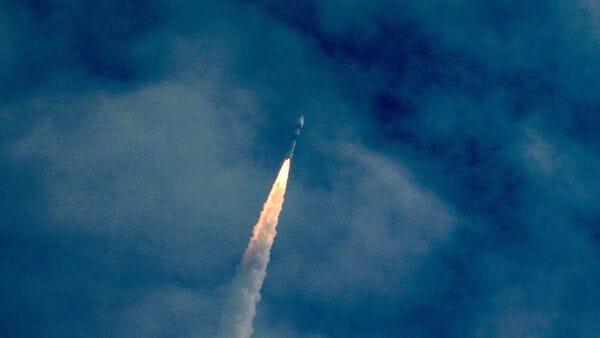
In a remarkable turn of events, a small Spanish experimental capsule survived a major rocket failure during an Indian Space Research Organisation (ISRO) launch. The Kestrel Initial Demonstrator (KID) capsule, built by Orbital Paradigm, separated from the malfunctioning PSLV C62 rocket and transmitted crucial data before crash-landing.

Key Takeaways

  • Lone Survivor: Orbital Paradigm’s KID capsule was the only payload to survive ISRO’s PSLV C62 mission anomaly.
  • Data Transmission: It transmitted 190 seconds of valuable re-entry data before contact was lost.
  • Technical Success: The capsule withstood extreme 28G forces and maintained safe internal temperatures.
  • Mission Failure: The PSLV rocket suffered a deviation in its flight path near the end of its third stage.

What is the KID Capsule?

The Kestrel Initial Demonstrator (KID) is an experimental space capsule developed by Spanish company Orbital Paradigm. It serves as a small-scale prototype for a future reusable capsule named Kestrel.

As a demonstrator, KID was a basic vehicle. It lacked its own propulsion system and parachutes and was not designed to be recovered after landing. Its primary mission was to separate from the PSLV rocket’s fourth stage, survive atmospheric re-entry, and transmit data during the process.

Insights from the Surviving Capsule’s Data

Despite the mission failure, KID’s brief operation yielded significant engineering data. The capsule transmitted for about 190 seconds after separating from the rocket approximately 18 minutes after liftoff—an event likely triggered by the launch anomaly.

The data revealed:

  • The capsule endured peak forces of around 28 Gs during its uncontrolled descent.
  • Its thermal protection system successfully maintained a payload bay temperature of about 30°C.
  • The exterior of the heat shield reached 85°C.

“To transmit the data it means KID had to separate undamaged from the launcher, switch on, and connect to the RF link,” said Orbital Paradigm CEO Francesco Cacciatore.

He explained the likely sequence: “The working theory we have is that KID fell back to Earth coupled to PSLV stage 4, and the thermal conditions triggered separation.”

While the data transmission marks a success for Orbital Paradigm’s first re-entry attempt, planned microgravity experiments were lost due to the rocket failure.

The PSLV C62 Mission Anomaly

ISRO’s PSLV C62 mission lifted off normally from Sriharikota, Andhra Pradesh. However, the agency soon reported an issue with the rocket’s third stage.

ISRO Chairman V Narayanan stated, “The PSLV is a four-stage vehicle with two solid stages and two liquid stages. The performance of the vehicle up to the end of the third stage was expected. Close to the end of the third stage we are seeing more disturbance in the vehicle and subsequently, there was a deviation observed in the flight path.”

The agency has initiated a detailed analysis of all mission data to determine the root cause of the failure.


Latest

Western disturbance to hit India, but plains to keep getting hot on Friday

Despite the incoming system, temperatures across north and central India are forecast to remain high. Meteorologists warn that the limited rainfall will not be

Send Grace and Rocky: Young stars like our Sun seen dimming outside Solar System

Planets orbiting such stars may have a better chance of retaining their atmospheres and developing conditions suitable for life.

Isro confirms 36 Indian rocket parts fell on Earth after launch in 2025

India is making considerable progress in ensuring that its satellites are not adding to the increasing levels of space debris. Instead, these satellites entered

Nasa flies close to Sun, uncovers new clue to how solar storms are born

The Parker Solar Probe has uncovered a surprising clue about how solar storms form, revealing new particle behaviour that could improve space weather prediction

Desert planets beyond our Solar System may be far less likely to support life

Scientists estimate that there are billions of planets orbiting stars outside our solar system, with more than 6,000 confirmed exoplanets discovered so far.

Topics

Who the freak needs these extra MPs?

India doesn't need 307 more MPs to crowd a bigger chamber. What India needs at this moment is the right policies to drive growth, and not more policymakers. It

Schools in Kerala, MP and other states change timings, declare holidays amid heatwave

States take action to safeguard students from extreme heat

Kendriya Vidyalaya students score 90%+ in CBSE, share success mantra

With CBSE declaring the Class 10 results, students across India are celebrating their scores and planning their next academic steps. At PM SHRI Kendriya Vidyala

Aadi Abadi factor: How delimitation, women voters shape Tamil Nadu poll narrative

Women voters emerge as pivotal in Tamil Nadu's heated election scene

Markets open flat as geopolitical tensions ease, but caution remains

The BSE Sensex was trading at 78,030.99, up 42.31 points or 0.05% at around 9:43 am. The Nifty 50, however, slipped marginally by 6.85 points or 0.03% to 24,189

Kerala SSLC Results in May, plus two on May 25, confirms education minister

Kerala SSLC and Plus Two Result 2026 dates have been officially announced, giving students clarity on when to expect their scores. The state has also rolled out

Who is Girija Ji? PM Modi meets veteran educationist after 30 years, praises her work

Prime Minister Narendra Modi’s Nagercoil visit blended politics and personal warmth as he reunited with veteran educationist Gomatam Veeraraghavan Girija afte

Lebanon ceasefire: Who said what? Bibi vows troops will stay; Trump hails talks ‘very exciting’ – How Iran reacts?

Iranian Parliament speaker Ghalibaf asserts that Lebanon must be included in any peace agreement between Iran and the U.S., emphasizing its importance for regio
spot_img

Related Articles

Popular Categories

spot_imgspot_img