Lost Medieval City Discovered Under Kyrgyzstan Lake

Key Takeaways

  • Archaeologists discovered a submerged medieval city beneath Lake Issyk-Kul in Kyrgyzstan
  • The city was a major Silk Road trading hub destroyed by a 15th-century earthquake
  • Findings include brick structures, burial grounds, and evidence of Islamic civilization

Scientists have uncovered what appears to be a real-life Atlantis – a submerged medieval city beneath Kyrgyzstan’s Lake Issyk-Kul. The discovery reveals an important Silk Road trading settlement lost to a catastrophic earthquake in the 15th century.

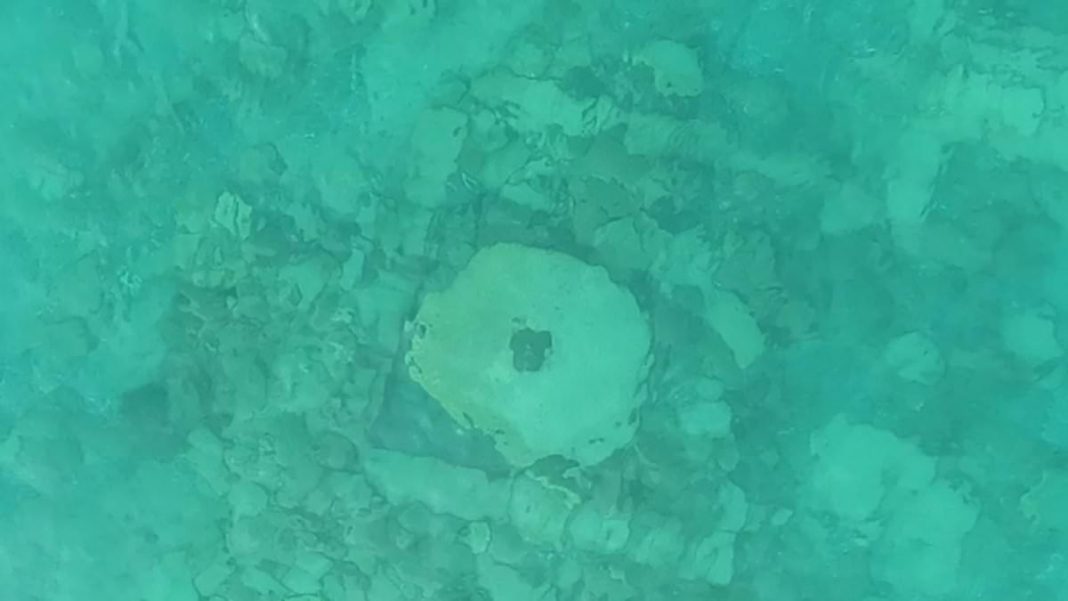
Russian and Kyrgyz researchers found the ancient city at remarkably shallow depths of just 3-13 feet near the lake’s shoreline. The underwater ruins include fired-brick structures, a medieval necropolis, large ceramic vessels, and evidence of public buildings that likely served as mosques, bathhouses, and schools.

The Lost City of Lake Issyk-Kul

Expedition leader Valery Kolchenko described the site as a ‘city or a major trading hub’ that met a tragic fate comparable to Pompeii. ‘According to our assessment, at the time of the disaster, the residents had already left the settlement,’ Kolchenko stated.

The city was part of the rich medieval settlement civilization that flourished along the Silk Road. Archaeological evidence shows it contained Muslim prayer houses, educational institutions, bathhouses, and possibly a grain-milling operation.

What Researchers Discovered

At the flooded Toru-Aygyr complex, archaeologists surveyed four underwater zones revealing:

  • Fired-brick structures including one with a millstone for grinding grain
  • Collapsed stone structures and wooden beams
  • A 13th-century Muslim necropolis with traditional Islamic burial practices
  • Round and rectangular mudbrick structures

The Russian Geographical Society, which funded the project, confirmed that ‘all this confirms that an ancient city really once stood here.’

The Tragic End of a Civilization

The city met its demise through a ‘terrible earthquake’ at the beginning of the 15th century. Kolchenko noted that ‘after the earthquake disaster, the region’s population changed drastically, and the rich medieval settlement civilization ceased to exist.’

Nomadic people eventually replaced the sophisticated urban civilization, and today the shoreline is dotted with small villages. Samples from the site have been sent for accelerator mass spectrometry dating to determine the precise age of the organic materials.

About Lake Issyk-Kul

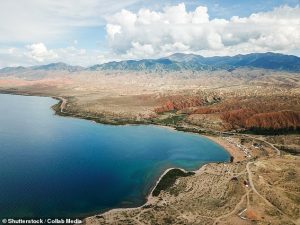
Lake Issyk-Kul is an enormous saline lake in the western Tianshan Mountains with a maximum depth of 2,192 feet, making it the world’s eighth-deepest lake. The mysterious lake has no known outflow, though some experts believe it connects to a local river via underground channels.

The lake has risen dramatically since medieval times, explaining why the ancient ruins now lie underwater. The discovery adds to our understanding of and medieval Central Asian civilizations.


Latest

Western disturbance to hit India, but plains to keep getting hot on Friday

Despite the incoming system, temperatures across north and central India are forecast to remain high. Meteorologists warn that the limited rainfall will not be

Send Grace and Rocky: Young stars like our Sun seen dimming outside Solar System

Planets orbiting such stars may have a better chance of retaining their atmospheres and developing conditions suitable for life.

Isro confirms 36 Indian rocket parts fell on Earth after launch in 2025

India is making considerable progress in ensuring that its satellites are not adding to the increasing levels of space debris. Instead, these satellites entered

Nasa flies close to Sun, uncovers new clue to how solar storms are born

The Parker Solar Probe has uncovered a surprising clue about how solar storms form, revealing new particle behaviour that could improve space weather prediction

Desert planets beyond our Solar System may be far less likely to support life

Scientists estimate that there are billions of planets orbiting stars outside our solar system, with more than 6,000 confirmed exoplanets discovered so far.

Topics

Who the freak needs these extra MPs?

India doesn't need 307 more MPs to crowd a bigger chamber. What India needs at this moment is the right policies to drive growth, and not more policymakers. It

Schools in Kerala, MP and other states change timings, declare holidays amid heatwave

States take action to safeguard students from extreme heat

Kendriya Vidyalaya students score 90%+ in CBSE, share success mantra

With CBSE declaring the Class 10 results, students across India are celebrating their scores and planning their next academic steps. At PM SHRI Kendriya Vidyala

Aadi Abadi factor: How delimitation, women voters shape Tamil Nadu poll narrative

Women voters emerge as pivotal in Tamil Nadu's heated election scene

Markets open flat as geopolitical tensions ease, but caution remains

The BSE Sensex was trading at 78,030.99, up 42.31 points or 0.05% at around 9:43 am. The Nifty 50, however, slipped marginally by 6.85 points or 0.03% to 24,189

Kerala SSLC Results in May, plus two on May 25, confirms education minister

Kerala SSLC and Plus Two Result 2026 dates have been officially announced, giving students clarity on when to expect their scores. The state has also rolled out

Who is Girija Ji? PM Modi meets veteran educationist after 30 years, praises her work

Prime Minister Narendra Modi’s Nagercoil visit blended politics and personal warmth as he reunited with veteran educationist Gomatam Veeraraghavan Girija afte

Lebanon ceasefire: Who said what? Bibi vows troops will stay; Trump hails talks ‘very exciting’ – How Iran reacts?

Iranian Parliament speaker Ghalibaf asserts that Lebanon must be included in any peace agreement between Iran and the U.S., emphasizing its importance for regio
spot_img

Related Articles

Popular Categories

spot_imgspot_img