
First Human Kiss Dates Back 21 Million Years, Study Reveals

Key Takeaways

  • First human kiss dates back 21 million years, study reveals
  • Ancient humans may have kissed Neanderthals as signs of affection
  • Kissing evolved between 21-16 million years ago in primates

The first human kiss originated much earlier than previously thought – around 21 million years ago – and our ancient ancestors may have even locked lips with Neanderthals, according to groundbreaking Oxford research.

Ancient Origins of Affection

While scientists knew Homo sapiens and Neanderthals interbred, new evidence suggests their interactions included romantic kissing beyond basic animal instincts. This challenges previous understanding of early human relationships.

Kissing presents an evolutionary puzzle since it spreads diseases without offering clear survival advantages. Yet researchers found it’s an ancient trait present in most large apes.

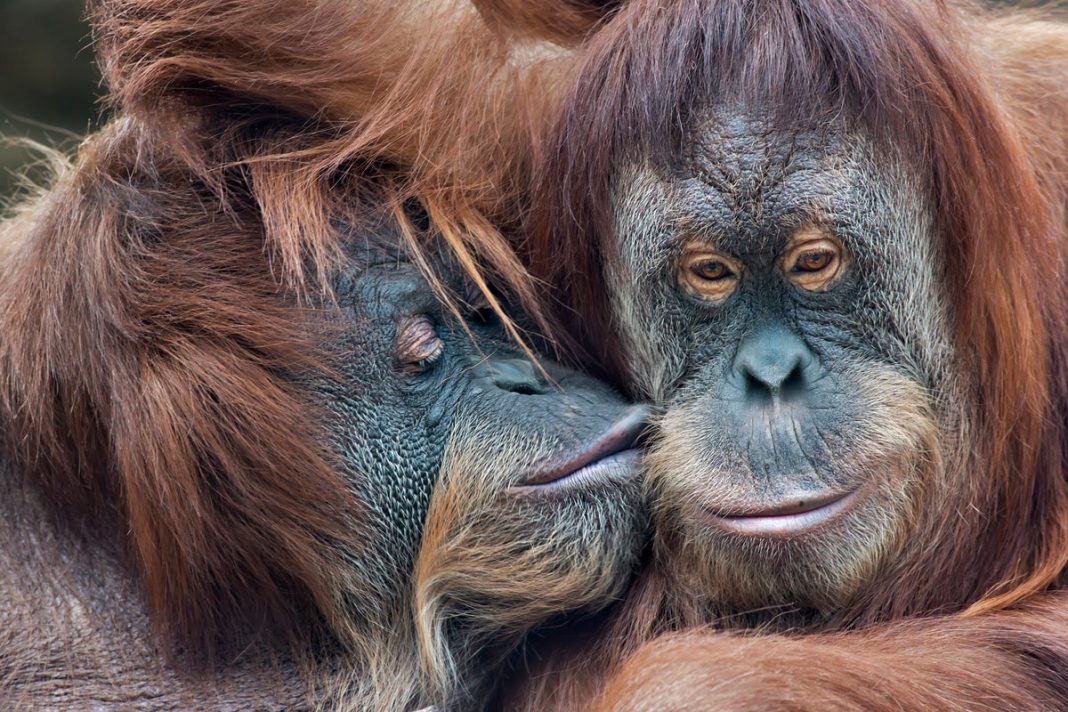
Humanity's first kiss dates back 21 million years and they may have kissed Neanderthals

“This is the first time anyone has taken a broad evolutionary lens to examine kissing, Dr Matilda Brindle, lead author and evolutionary biologist at Oxford’s Department of Biology, said. “Our findings add to a growing body of work highlighting the remarkable diversity of sexual behaviours exhibited by our primate cousins.”

Human-Neanderthal Connections

Homo sapiens and Neanderthals coexisted in Europe for 2,600-5,400 years before Neanderthals disappeared about 40,000 years ago. Previous studies showed shared oral microbes between species, indicating saliva transfer.

While this could have occurred through food sharing or chewing food for children, the latest research specifically points to kissing between humans and Neanderthals.

Researchers defined kissing as non-aggressive mouth-to-mouth contact excluding food transfer.

Chimpanzees, bonobos, and orangutang were all studied by researchers because they have been observed kissing

Evolutionary Mapping Method

The study examined European, Asian and African primates including chimpanzees, bonobos and orangutans – all observed kissing. Scientists treated kissing as an evolutionary trait and mapped it across the primate family tree.

Using complex models run 10 million times, researchers estimated the probability that extinct ancestors also engaged in kissing behavior.

Professor Stuart West, co-author and professor of evolutionary biology at Oxford said: “By integrating evolutionary biology with behavioural data, we’re able to make informed inferences about traits that don’t fossilise – like kissing. This lets us study social behaviour in both modern and extinct species.”

Origins and Limitations

Kissing may have evolved from grooming habits or mothers feeding their young. However, researchers caution that while the study explains how kissing evolved, it doesn’t reveal why animals kiss or the mechanism behind it.

The findings open new avenues for understanding and social behavior across species.

Latest

Western disturbance to hit India, but plains to keep getting hot on Friday

Despite the incoming system, temperatures across north and central India are forecast to remain high. Meteorologists warn that the limited rainfall will not be

Send Grace and Rocky: Young stars like our Sun seen dimming outside Solar System

Planets orbiting such stars may have a better chance of retaining their atmospheres and developing conditions suitable for life.

Isro confirms 36 Indian rocket parts fell on Earth after launch in 2025

India is making considerable progress in ensuring that its satellites are not adding to the increasing levels of space debris. Instead, these satellites entered

Nasa flies close to Sun, uncovers new clue to how solar storms are born

The Parker Solar Probe has uncovered a surprising clue about how solar storms form, revealing new particle behaviour that could improve space weather prediction

Desert planets beyond our Solar System may be far less likely to support life

Scientists estimate that there are billions of planets orbiting stars outside our solar system, with more than 6,000 confirmed exoplanets discovered so far.

Topics

Kendriya Vidyalaya students score 90%+ in CBSE, share success mantra

With CBSE declaring the Class 10 results, students across India are celebrating their scores and planning their next academic steps. At PM SHRI Kendriya Vidyala

Aadi Abadi factor: How delimitation, women voters shape Tamil Nadu poll narrative

Women voters emerge as pivotal in Tamil Nadu's heated election scene

Markets open flat as geopolitical tensions ease, but caution remains

The BSE Sensex was trading at 78,030.99, up 42.31 points or 0.05% at around 9:43 am. The Nifty 50, however, slipped marginally by 6.85 points or 0.03% to 24,189

Kerala SSLC Results in May, plus two on May 25, confirms education minister

Kerala SSLC and Plus Two Result 2026 dates have been officially announced, giving students clarity on when to expect their scores. The state has also rolled out

Who is Girija Ji? PM Modi meets veteran educationist after 30 years, praises her work

Prime Minister Narendra Modi’s Nagercoil visit blended politics and personal warmth as he reunited with veteran educationist Gomatam Veeraraghavan Girija afte

Lebanon ceasefire: Who said what? Bibi vows troops will stay; Trump hails talks ‘very exciting’ – How Iran reacts?

Iranian Parliament speaker Ghalibaf asserts that Lebanon must be included in any peace agreement between Iran and the U.S., emphasizing its importance for regio

‘Targeting of commercial shipping unacceptable,’ India calls restoration of safe navigation in Strait of Hormuz at UN

India's Ambassador Harish P raised concerns at the UN over threats to commercial shipping in the Strait of Hormuz, urging for safe navigation and calling for de

All-round Arshdeep Singh: Viral reels spiking Punjab Kings’ fanbase, says pacer

Arshdeep Singh took some credit for the spike in Punjab Kings' fan base, saying that his social media game is one of the reasons behind the increase in follower
spot_img

Related Articles

Popular Categories

spot_imgspot_img

