Tiny worms in a laboratory at the Indian Institute of Science (IISc) in Bengaluru are rewriting what we know about social networking. While humans use apps to connect, these microscopic creatures, known as Caenorhabditis elegans, use a complex internal chemical toolkit.
A recent study from the Centre for Neuroscience at IISc reveals that a single genetic tweak can turn solitary worms into a coordinated, swarming mob.
The findings, published in the Proceedings of the National Academy of Sciences (PNAS), offer a new window into how nervous systems tune group interactions across the animal kingdom.
WHY DO WORMS CHOOSE TO SOCIALISE?
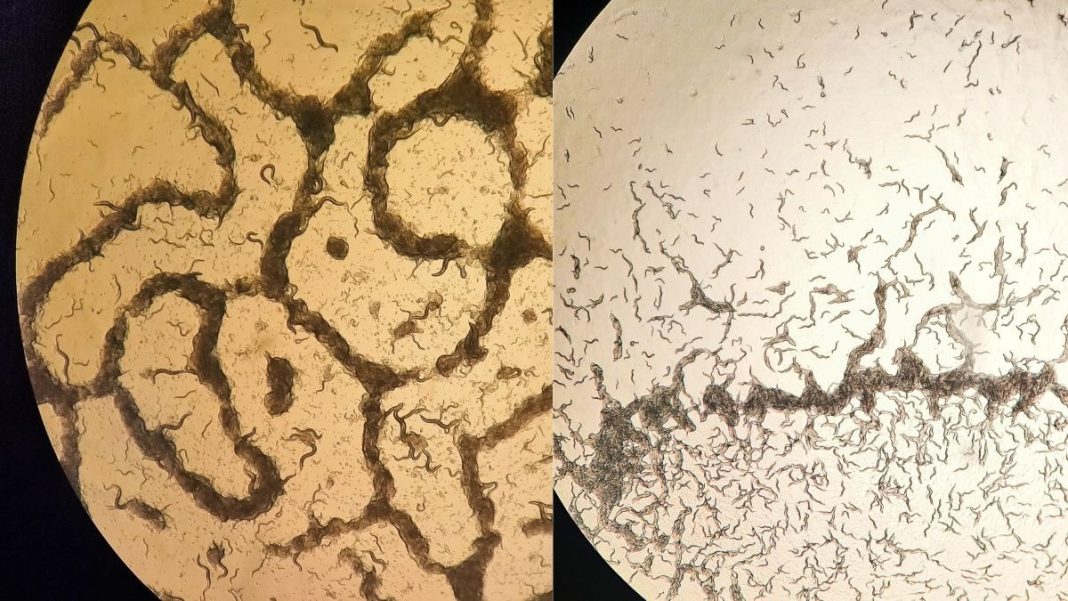
Usually, these worms are independent loners that spread out to find food. However, PhD student Navneet Shahi noticed something odd while studying mutants.
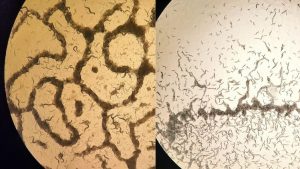
Instead of searching for nearby meals, the worms huddled together in massive groups.
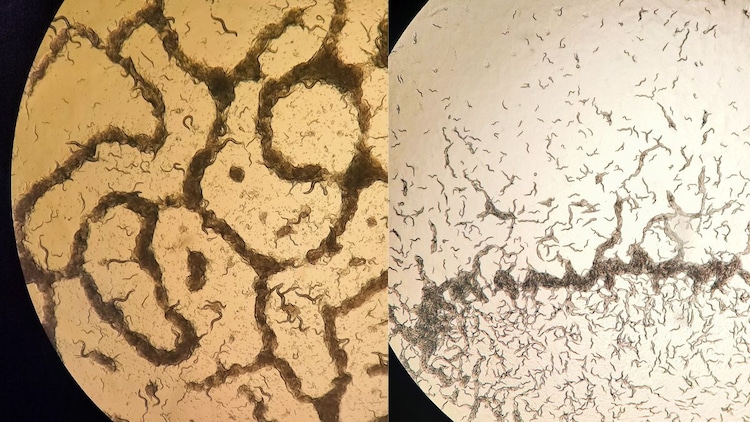
They were so committed to the crowd that they stayed clumped even when they began to starve.
By collaborating with physicists from Turkey, the team discovered this behaviour is self-emergent. Even a single worm can trigger a multi-generational social movement.
IS SOCIAL BEHAVIOUR HIDDEN IN OUR GENES?
The researchers used CRISPR (Clustered Regularly Interspaced Short Palindromic Repeats), a gene editing technology used to cut DNA in living organisms, to delete a gene called CASY-1.
This protein is a distant relative of calsyntenin, a protein found on the surface of neurons in humans, and which helps brain cells maintain and synthesise synapses necessary for memory and learning.
When this gene is missing, it disrupts a neuropeptide called pigment dispersing factor.
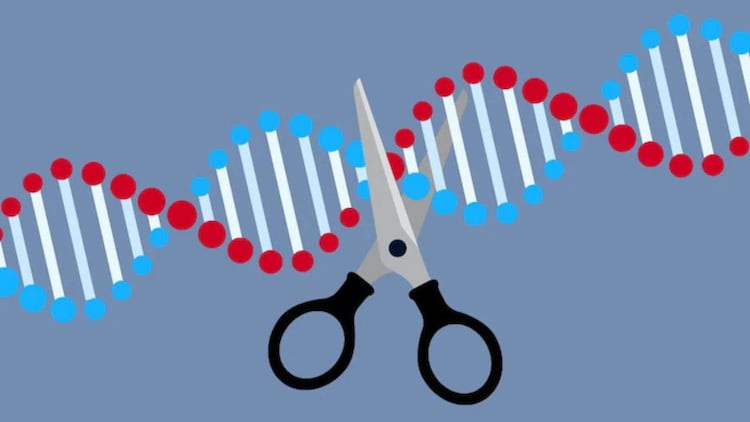
This disruption essentially takes the brakes off serotonin signalling. This means that removing the CASY-1 gene acts like a broken brake on a car, allowing serotonin levels to surge and uncontrollably drive the worms into a social swarming state.
Serotonin is the same chemical that regulates mood and socialising in humans.
Without the CASY-1 filter, the worms are driven into a permanent state of collective swarming.
CAN LIGHT CONTROL ANIMAL SOCIALISING?
To prove the genetic link, Professor Kavita Babu and her team turned to optogenetics, a biological technique that uses light to control the activity of neurons.
By using pulses of light, they could instantly activate or silence neurons to see if the worms would huddle or disperse in real time. The results were fascinating.
The study suggests that the molecular pathways governing social life are evolutionarily conserved.
This means the same chemical foundations that make locusts swarm or humans congregate might be active in these tiny worms.