Let’s start with this: …. .- .–. .–. -.– / — — .-. … . / -.-. — -.. . / -.. .- -.–
It probably did not make sense, but be assured that it will by the time you finish reading this.
Before the telephone, before the internet, before everything wireless, there was a single idea that a pulse of electricity, short or long, could carry a message across thousands of kilometres.
That idea was Morse code. And nearly two centuries later, it still works.
Today, on April 27, the world celebrates Morse Code Day and the birthday of Samuel Morse, the creator of the ingenious code.
It is therefore a good occasion to understand not just what Morse code is, but how it actually does what it does.
WHAT IS MORSE AND HOW DOES IT WORK?
The entire system rests on two signals; a short one, called a dot, and a long one, called a dash.
That is it. No alphabet, no numerals, no special characters, just two building blocks, arranged in different sequences to represent every letter and number.
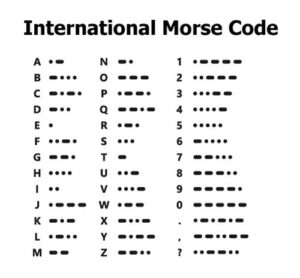
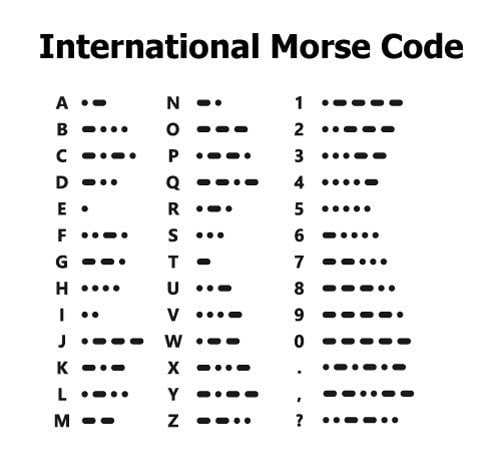
The letter A, for instance, is dot-dash. B is dash-dot-dot-dot. The letter E, which is the most common in English, is a single dot. The letter T is a single dash.
Basically, the more common the letter, the shorter its code. Morse designed it that way deliberately, so that frequently used letters could be transmitted faster.
But spacing matters as much as the signals themselves.
A short gap separates individual dots and dashes within a letter, while a longer gap separates letters from each other. An even longer gap separates words. In other words, silence is part of the language and pauses carry meaning just as much as pulses do.
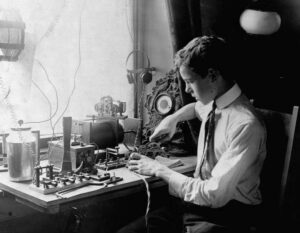
In practice, Morse code is transmitted by pressing a handheld key that opens and closes an electrical circuit. A short press is a dot. A longer press is a dash. On the receiving end, the pulses are heard as beeps, or seen as flashes of light, if transmitted visually.
The operator listens and transcribes, letter by letter.

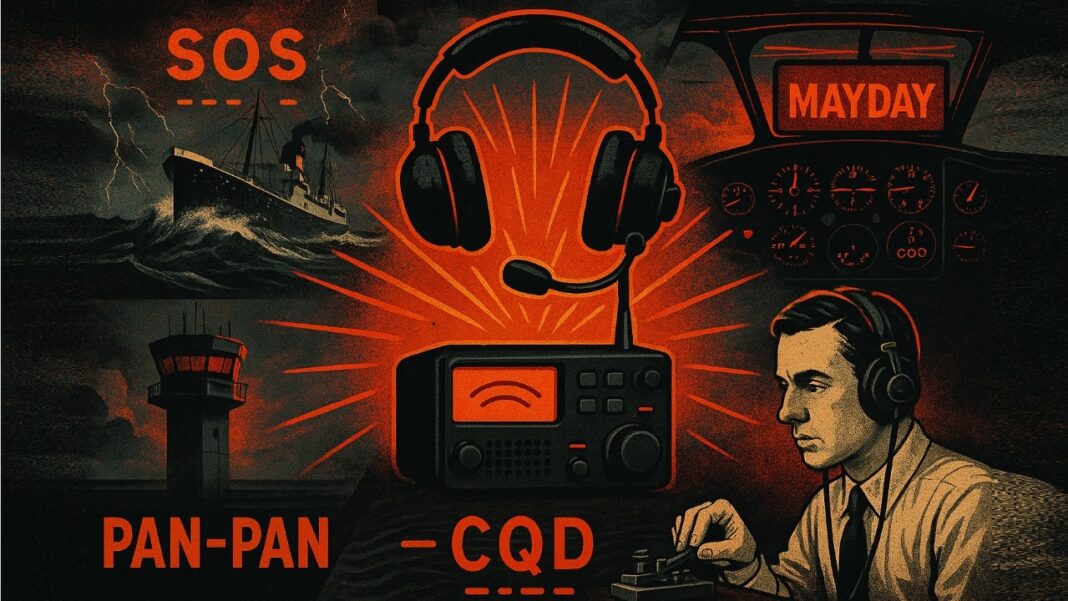
The most famous sequence in Morse is three dots, three dashes, three dots. That translates to SOS.
It was chosen not because the letters mean anything specific, but because the pattern is impossible to misread. It’s symmetrical, simple, and unmistakable even in the noisiest conditions.
WHO CREATED MORSE CODE?
Samuel Morse, an American artist turned inventor, developed the code in the 1830s alongside engineer Alfred Vail.
On April 24, 1844, the system sent its first long-distance message that read: “What hath God wrought.”
The message was sent across a wire strung between Washington and Baltimore.
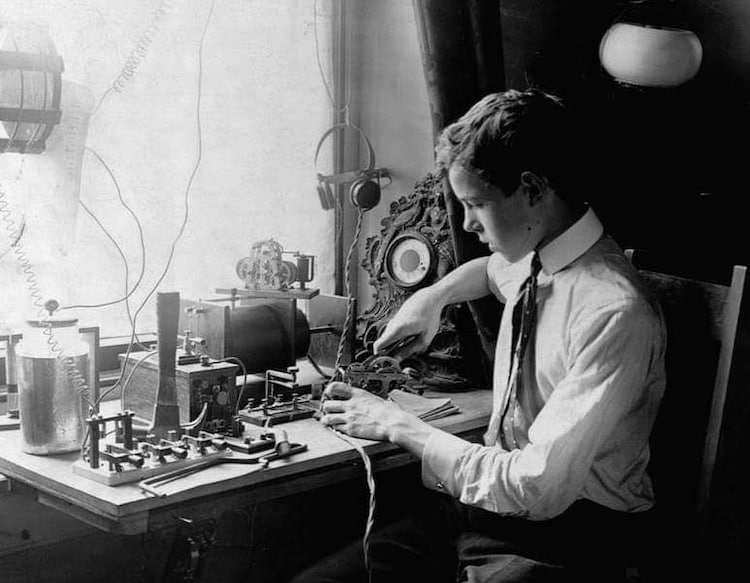
The timing was transformative. Messages that once took days by horseback now crossed hundreds of kilometres in seconds. Within decades, Morse code connected countries, coordinated railways, and linked continents via undersea cables.
By the late 19th century, it was the closest thing the world had to a global information network.
IS MORSE CODE STILL USED?
Morse code was officially retired from international maritime use in 1999. But it never fully disappeared.
Militaries still train operators in Morse because it functions where modern communications fail, like in low-bandwidth, high-interference conditions where voice and data transmissions break down.

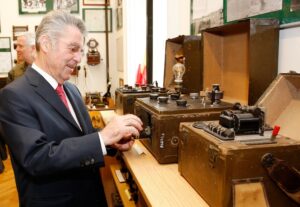
Amateur radio operators worldwide use it regularly in competitions and emergency drills.
In medicine, people living with severe physical disabilities, conditions like ALS or locked-in syndrome, have used Morse code, tapped or blinked with a single muscle, to communicate when every other method has failed them.
For those users, the dot and the dash are not a historical curiosity. It is a lifeline.
What made Morse code remarkable was not its technology but its logic. It is a system stripped to its bare minimum, where two symbols, arranged in sequence, are enough to say anything at all.
In a world drowning in data, that simplicity still commands respect and might continue to find ways to remain relevant.
Now that you’ve made it this far, were you able to make out what the first line meant? If not, it was: “Happy Morse Code Day.”