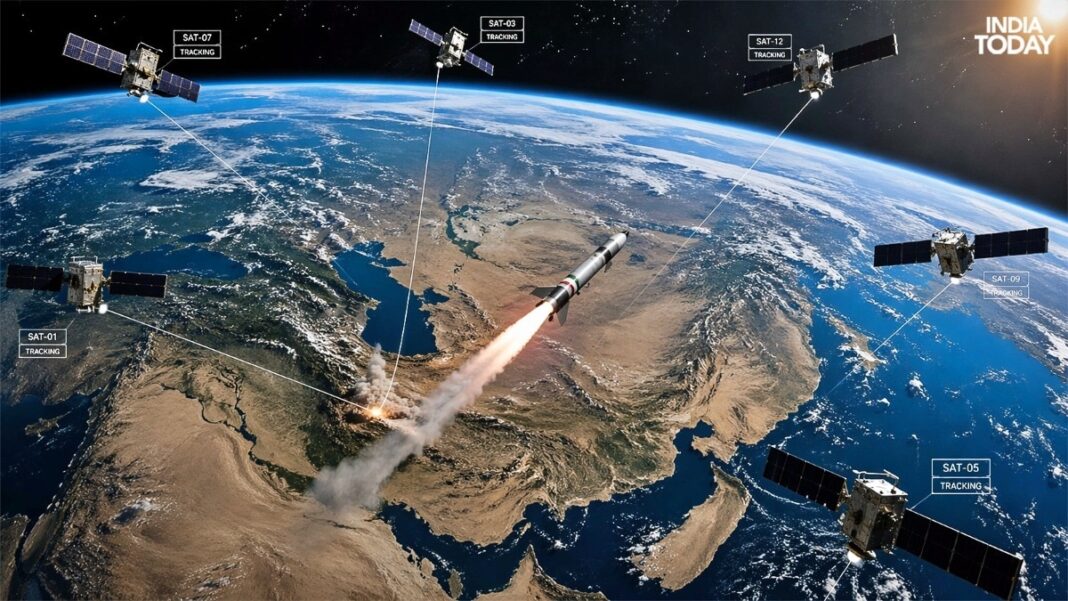
The current situation in the Middle East has once again demonstrated a reality that strategic planners have long anticipated but rarely seen so clearly in practice. Recent operations in the region, including the US military campaign against Iran, have revealed yet again how space capabilities can be used directly to achieve military objectives.
Satellite-enabled intelligence, surveillance and communications are no longer auxiliary tools. They are now among the first instruments deployed to shape the battlefield. In many ways, this represents a defining moment in the evolution of space as an operational domain of conflict.
Yet this transformation did not occur overnight. The foundations have been laid over the past several years, as space capabilities moved from the margins of military planning to the core of a state’s security and deterrence posture.
The war triggered by the Russian invasion of Ukraine offered the first large-scale demonstration of how space could influence a conflict in real time. Commercial satellite imagery revealed Russian troop build-ups well before the invasion began, dramatically shrinking the element of surprise.
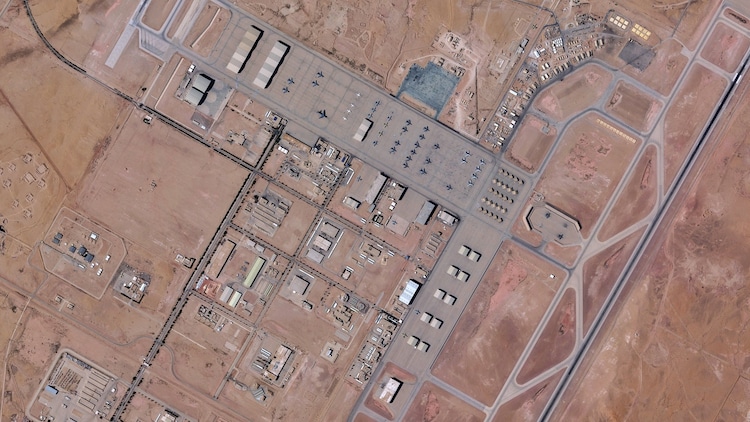
As the war progressed, satellite communications, space situational awareness (SSA) and Earth-observation systems became deeply embedded in operational decision-making, supporting everything from intelligence to battlefield coordination.
When a Russian cyberattack disrupted critical communications used by the Ukrainian government in the early stages of the war, the rapid deployment of Starlink terminals helped restore connectivity for Ukraine to maintain communications.
More recently, India’s Operation Sindoor served as a wake-up call closer to home. It highlighted the growing role of space domain awareness in conflict monitoring and information warfare, marking a turning point in public understanding of how space-based data can provide early insight into security developments on the ground.
The signals often appear in orbit long before they become visible on Earth. As reported, Maxar Technologies began receiving orders for high-resolution satellite imagery of Pahalgam in June 2024, just months after a Pakistani geospatial firm, later indicted by the United States, became its partner.
Such developments illustrate how satellite tasking patterns and data flows can reveal strategic interest in specific locations months before geopolitical tensions manifest on the ground.
This points to a critical insight: the role of space as a pre-conflict domain cannot be understated.
Satellite imagery requests, sensor tasking priorities, and orbital positioning patterns can all signal emerging strategic intent. Much like naval deployments or military exercises on Earth, orbital behaviour will soon serve as a tool of signalling and deterrence.
The implications are profound.
The more a nation can see from space, the better positioned it is to understand developments on the ground and act advantageously. In an era defined by data, visibility translates directly into power.
At the same time, space holds a unique position among military domains. Unlike land, sea, or air, it enables every other domain simultaneously. Navigation, communications, intelligence, surveillance, and reconnaissance together form the informational backbone of modern military operations.

Disable space capabilities, and the functioning of every other domain degrades significantly. Enable them effectively, and the advantages cascade across the battlefield.
For decades, countries have invested heavily in air power, naval fleets, and land forces. But the strategic balance of the future may depend less on the size of these assets and more on how effectively states leverage the orbital layer above them.
In this emerging environment, the modern space race is often misunderstood. It is commonly framed as a competition over launch capacity or the number of satellites in orbit. In reality, the critical advantage lies in awareness.
This is why space situational awareness is becoming foundational to national security. As the orbital environment grows more congested and contested, understanding activity in space will be as important as observing events on Earth.
The lessons from recent conflicts, from Ukraine to the Middle East, are clear. Space is no longer a distant or abstract domain reserved for exploration and communications. It is becoming the layer where strategic leverage is built long before crises unfold.
Looking ahead, the nations that move fastest to build resilient, sovereign space ecosystems will possess a decisive edge. Because in modern conflict, knowledge shapes power. And increasingly, that knowledge begins in orbit.
(This is an authored article, and the views expressed are of the authors.)