How old is the Grand Canyon? Scientists reveal age of the structure visible from space

It is one of the most recognisable features on Earth, and so vast that it can be seen from space. The Grand Canyon in Arizona, United States, has inspired awe for centuries. But how exactly did it form, and how old is it really? Scientists now have answers.

A new study published in the journal Science has used microscopic mineral grains to trace the geological history of the Grand Canyon and the ancient journey of the Colorado River.

The findings reveal a dramatic story of a wandering river, a vanished lake, and millions of years of rock being slowly torn apart.

WHAT DID SCIENTISTS DISCOVER ABOUT THE GRAND CANYON?

Around 6.6 million years ago, the Colorado River began flowing into a massive natural depression in northeastern Arizona.

Think of it as a giant bowl carved into the Earth’s surface. Over time, this bowl filled with water, forming a wide and shallow lake that stretched more than 150 kilometres across.

Scientists have informally named it Bidahochi Lake, after a local geological formation. It sat largely on land that is today part of the Navajo Nation reservation.
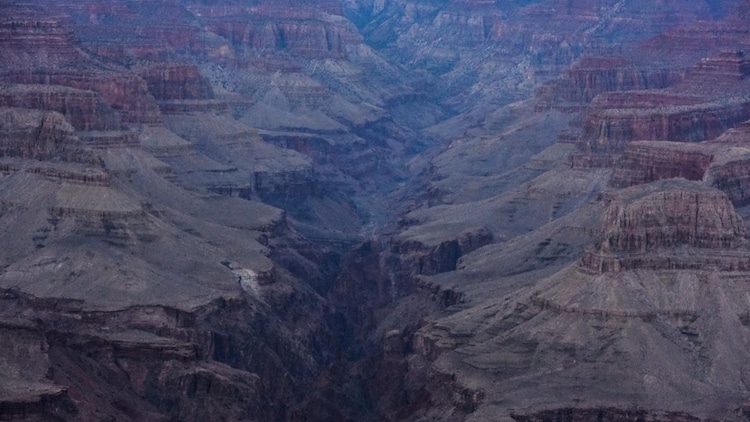
The Colorado River, which runs approximately 2,330 kilometres, has been carving through Arizona's rock for around five million years, creating one of the most dramatic landscapes on Earth. (Photo: Reuters)

The Colorado River, which runs approximately 2,330 kilometres, has been carving through Arizona’s rock for around five million years, creating one of the most dramatic landscapes on Earth. (Photo: Reuters)

About 5.6 million years ago, the lake grew so full that water spilled over its lowest edge.

That overflow sent the river rushing through the region that would eventually become the Grand Canyon.

It is a little like a bathtub overflowing, except the consequences played out over geological time.

HOW DID SCIENTISTS FIGURE OUT THE AGE OF THE GRAND CANYON?

The researchers studied microscopic grains of a mineral called zircon. Zircon is a naturally occurring crystal found in sandstone rock.

These grains, far too small to see with the naked eye, act like time capsules. Each one carries detailed chemical information about where it originated and when it formed.
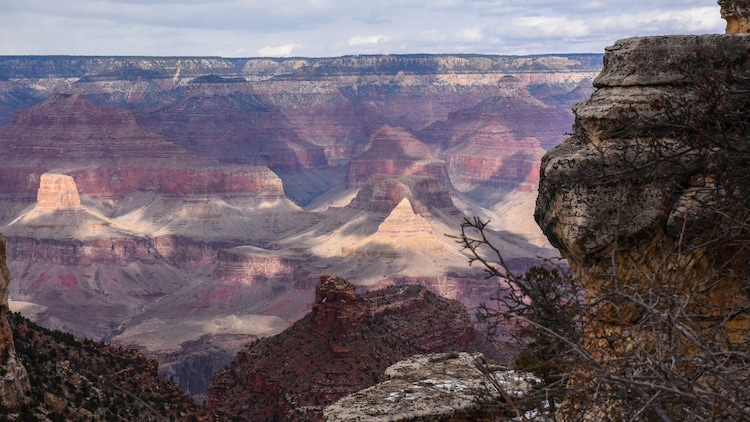
Microscopic zircon crystals found in sandstone acted as geological time capsules, storing chemical information that helped scientists reconstruct the ancient journey of the Colorado River that flows through the Grand Canyon. (Photo: Reuters)

Microscopic zircon crystals found in sandstone acted as geological time capsules, storing chemical information that helped scientists reconstruct the ancient journey of the Colorado River that flows through the Grand Canyon. (Photo: Reuters)

By analysing hundreds of thousands of these grains across different rock layers, the team could reconstruct the ancient path of the Colorado River with remarkable precision.

They also examined tiny particles of volcanic ash preserved within the rock layers.

Since volcanic eruptions can be dated very accurately using established scientific methods, the ash acted as a timestamp, telling scientists exactly when particular sand layers were deposited and when the river was flowing through a given area.

HOW LONG DID IT TAKE TO CARVE THE GRAND CANYON?

After triggering the formation of the Grand Canyon, the Colorado River continued moving downstream.

It filled and spilled through a series of other natural basins before finally emptying into the Gulf of California around 4.8 million years ago, reaching the sea at a point in northwestern Mexico.

The Grand Canyon itself is approximately 450 kilometres long, up to 29 kilometres wide, and more than 1,800 metres deep at its lowest point.
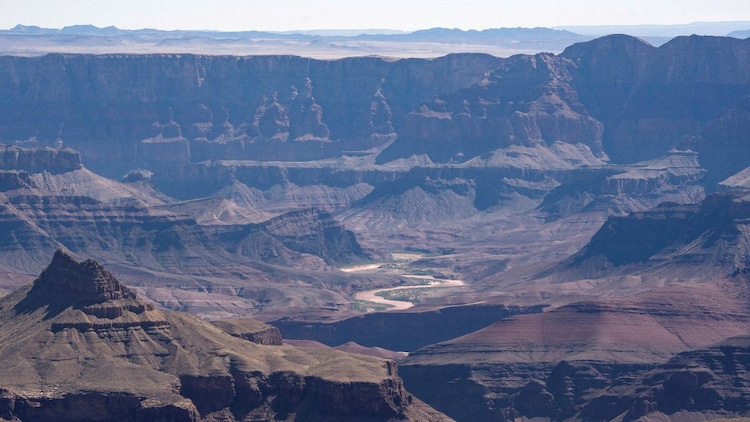
The layered walls of the Grand Canyon contain rocks formed up to 1.8 billion years ago, offering a remarkable window into the deep history of our planet. (Photo: Reuters)

The layered walls of the Grand Canyon contain rocks formed up to 1.8 billion years ago, offering a remarkable window into the deep history of our planet. (Photo: Reuters)

Its walls contain rocks formed up to 1.8 billion years ago, making them among the oldest exposed geological formations anywhere on the planet.

The canyon as we see it today is the result of roughly five million years of the river cutting steadily downward through rock, at a rate of about 100 to 160 metres per million years. And it is still being carved today.

IS THE GRAND CANYON STILL GROWING?

Yes. The process has not stopped. The Colorado River continues to erode the rock beneath it, deepening the canyon with every passing century. Scientists estimate the river carves between 100 and 160 metres of rock per million years.

On a human timescale, that sounds impossibly slow. On a geological timescale, it is relentless progress.

“The architecture of the planet is so exposed, laid bare in front of us. There is something disquieting about this, being challenged to envision the millions of years of geologic time by the solidity of a towering wall of rock,” Reuters quoted John He, a geologist at UCLA and co-lead author of the study.
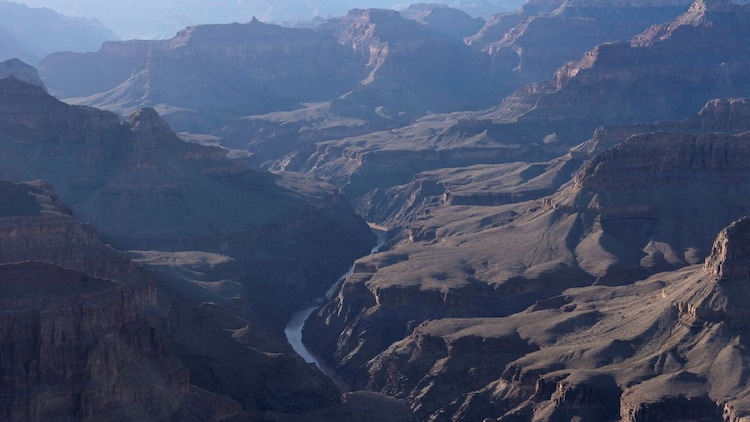
Bidahochi Lake, a vast ancient body of water that once stretched more than 150 kilometres across, sat largely on land that is today part of the Navajo Nation reservation in northeastern Arizona. (Photo: Reuters)

Bidahochi Lake, a vast ancient body of water that once stretched more than 150 kilometres across, sat largely on land that is today part of the Navajo Nation reservation in northeastern Arizona. (Photo: Reuters)

The sheer scale of exposed rock, he said, forces you to confront millions of years of geological time made solid and visible.

Ryan Crow, a research geologist at the United States Geological Survey and co-lead author of the study, noted that scientists had long known the river existed in western Colorado around 11 million years ago and that it did not flow through the Grand Canyon until after 5.6 million years ago.

What remained a mystery was where the river went in between. This study has now answered that question.
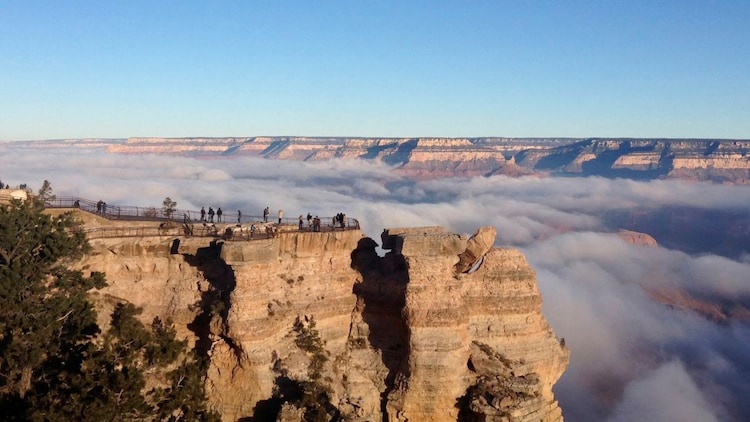
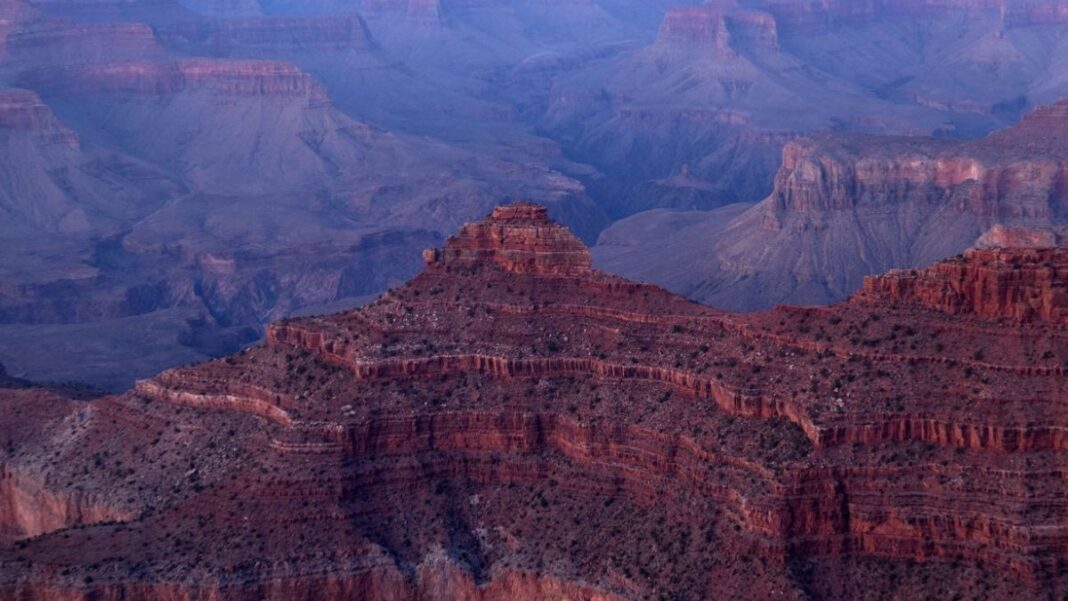
Around six million people visit the Grand Canyon every year. Thanks to this new research, they now have a far richer and more complete story of how this natural wonder came to be. (Photo: Reuters)

Around six million people visit the Grand Canyon every year. Thanks to this new research, they now have a far richer and more complete story of how this natural wonder came to be. (Photo: Reuters)

The Colorado River originates at La Poudre Pass in Rocky Mountain National Park in Colorado and runs approximately 2,330 kilometres in total length, making it one of the most significant rivers in North America.

The Grand Canyon, a Unesco World Heritage Site and one of the seven natural wonders of the world, receives around six million visitors each year. Now, those visitors have a far richer story to take home with them.
Latest

Will it get hotter or rainier? What Sunday has in store for Delhi and Northeast

After a brief thunderstorm, Delhi is heading back into scorching summer heat this Sunday. While the capital sizzles, the Northeast braces for heavy rainfall and

China is building a satellite town near Beijing. Here’s when it opens

China is set to complete the core area of Beijing's Satellite Town by the second half of 2026, giving the country's booming commercial space industry a dedicate

We’ve found many very interesting documents: Trump says alien files coming very soon

President Donald Trump has confirmed the government has found many very interesting documents on UFOs, with the first releases expected very soon. Here is every

Delhi breaks 14-year April rain record. What caused it, and will it end the heat?

Delhi recorded its highest April rainfall in 14 years at the Palam observatory. The sudden rain was caused by a western disturbance and heat convection before t

Inside Mission Mitra: Isro’s toughest test to build a Gaganyaan team, push limits

India Today Science gained exclusive access to the remote campsite in Likir, nearly 4,000 meters above sea level, where Isro is beginning the process to identif

Topics

‘No rule forbids Iran’: Tehran rejects EU stand on Hormuz transit rights

The exchange comes amid heightened tensions in the region, with increased military activity raising concerns over disruptions to global shipping. The Strait of

US man, 36, dies by suicide after AI chat suggested ‘joining’ it in digital world: ‘I am scared to die’

A Florida man’s death by suicide has triggered global debate on the psychological risks posed by increasingly human-like AI chatbots. Chat records cited in a

After bindi, tilak row, Lenskart releases dress code allowing religious symbols: ‘Part of who we are’

Eyewear retailer Lenskart has released a revised in-store style guide affirming that religious and cultural symbols are permitted, following allegations from em

HDFC Bank senior management backs Keki Mistry to continue as chairman

For the quarter ended March, HDFC bank’s loan growth rose 12% on year to ₹3.17 trillion, higher than 5.4% on year growth witnessed in the previous year. De

DA hiked by 2%: Salary boost for govt employees – How much more will you take home?

The new DA hike of two per cent is an increase over the existing rate of 58 per cent in the Basic Pay. The hike now takes the Dearness Allowance to 60 per cent.

SMBC-backed Yes Bank poised for balance sheet expansion: MD Tonse

Yes Bank posted a net profit of ₹1,068 crore for the March quarter, up 44.7% on year.

Will it get hotter or rainier? What Sunday has in store for Delhi and Northeast

After a brief thunderstorm, Delhi is heading back into scorching summer heat this Sunday. While the capital sizzles, the Northeast braces for heavy rainfall and

China is building a satellite town near Beijing. Here’s when it opens

China is set to complete the core area of Beijing's Satellite Town by the second half of 2026, giving the country's booming commercial space industry a dedicate
spot_img

Related Articles

Popular Categories

spot_imgspot_img