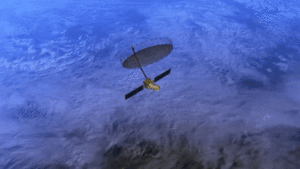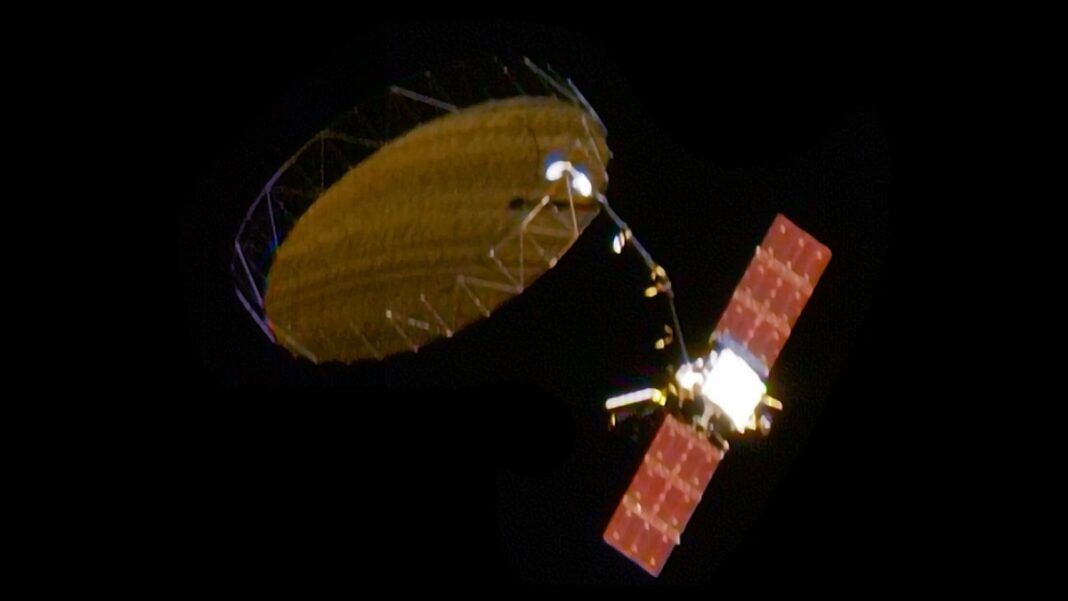
In a major demonstration of growing space traffic management capabilities, Indian Space Research Organisation has revealed that it carried out 18 collision avoidance manoeuvres (CAMs) across its satellite fleet, including critical interventions involving NISAR and Chandrayaan-2.
The details were shared in Isro’s latest Space Situational Awareness (SSA) report.
The agency analysed over 1,50,000 conjunction alerts issued by the Combined Space Operations Center under USSPACECOM for its Earth-orbiting satellites. Using more precise orbital data from operational flight dynamics, Isro identified credible threats and acted accordingly.
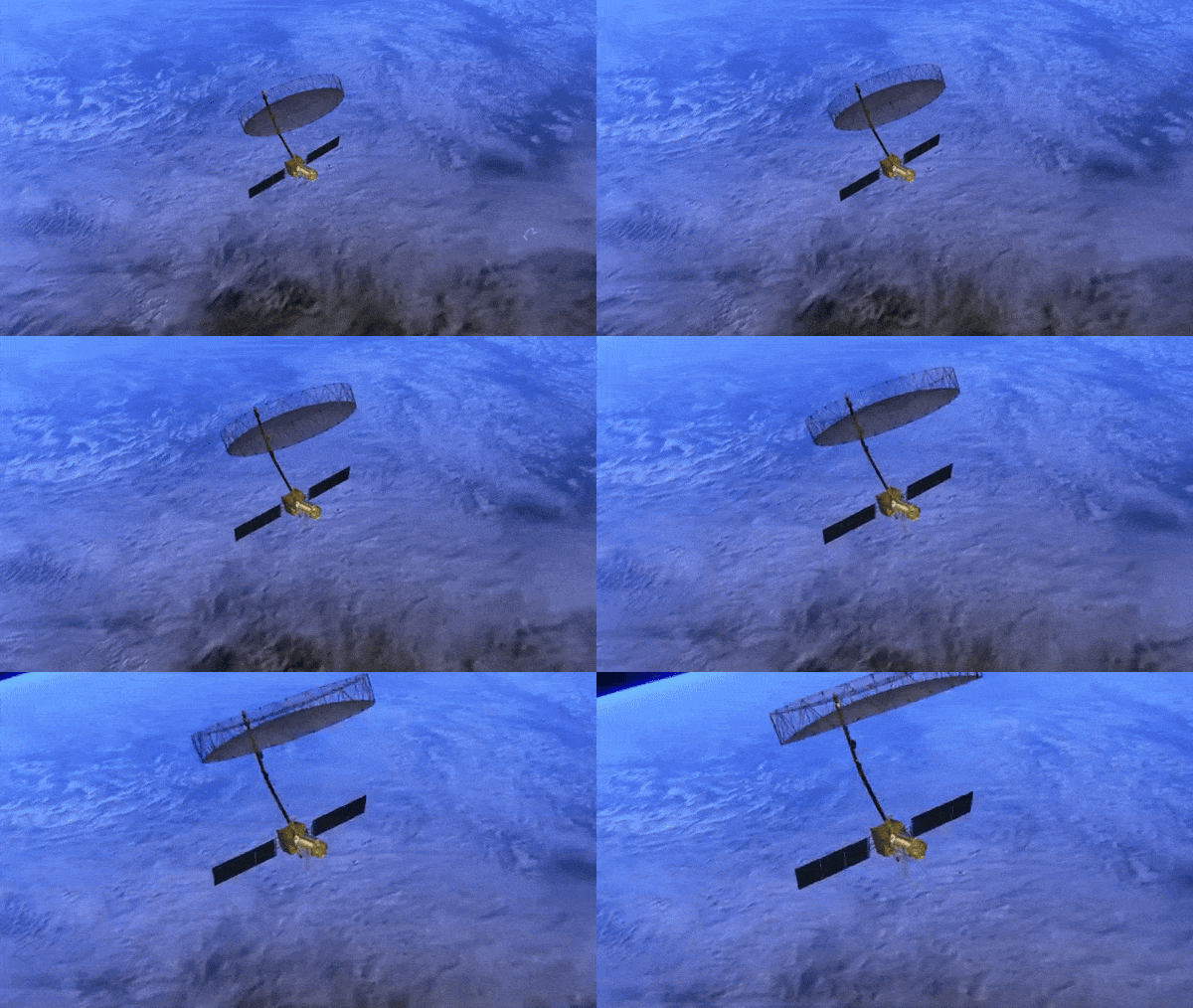
Out of the total manoeuvres, 14 were carried out in Low Earth Orbit (LEO), including one involving NISAR, classified by Nasa as a “Risk Mitigation Manoeuvre.”
Four manoeuvres were executed in the Geostationary Orbit (GEO) regime. Isro highlighted that, wherever possible, collision avoidance actions were integrated into routine orbit maintenance manoeuvres to minimise fuel usage and operational disruptions.
Beyond Earth orbit, Isro also addressed conjunction risks in deep space.
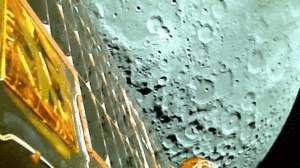
The Chandrayaan-2 orbiter required two specific adjustments to its manoeuvre plans in 2025, on January 1 and July 24, due to potential close approaches with Nasa’s Lunar Reconnaissance Orbiter.
In total, 16 orbit manoeuvres were executed for Chandrayaan-2, with risk mitigation strategies applied similarly to Earth-orbiting missions.
The report points to the increasing complexity of space operations. Isro revised as many as 82 manoeuvre plans for LEO satellites to prevent post-manoeuvre close approaches with other objects.
In GEO, two manoeuvre plans were similarly adjusted. These proactive revisions ensure that actions taken to avoid one risk do not inadvertently create another.
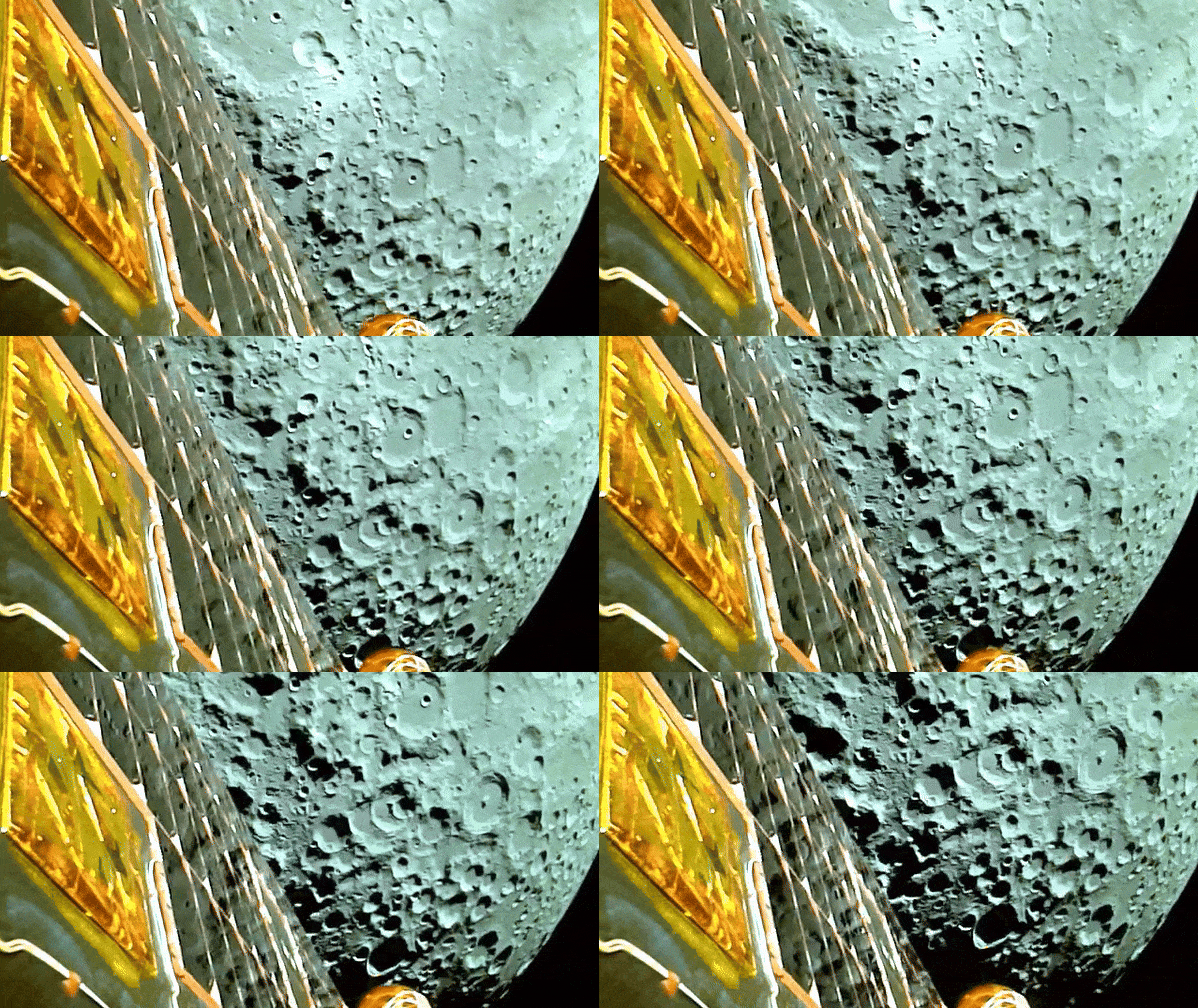
Coordination played a key role in ensuring mission safety. For Chandrayaan-2, Isro worked closely with Nasa, which facilitated communication with private lunar operators such as Firefly Aerospace, Intuitive Machines, and iSpace during their missions in lunar orbit.
The SSA report also highlighted Isro’s continued efforts in responsible space operations. At the end of its mission, the IRNSS-1D satellite was safely moved to a graveyard orbit about 600 km above the geostationary belt and passivated, marking the first disposal of an Indian satellite from an inclined geosynchronous orbit.
Meanwhile, multiple Indian space objects re-entered Earth’s atmosphere in 2025 due to natural decay, including TES and POEM-4. Two stages from the SSLV-D3 mission and debris from PSLV-C3 also re-entered, bringing the total number of Indian objects deorbited during the year to 12.
With satellite congestion rising rapidly, Isro’s latest report highlights not just operational vigilance but also its evolving capability to manage space traffic safely across Earth orbit and beyond.