
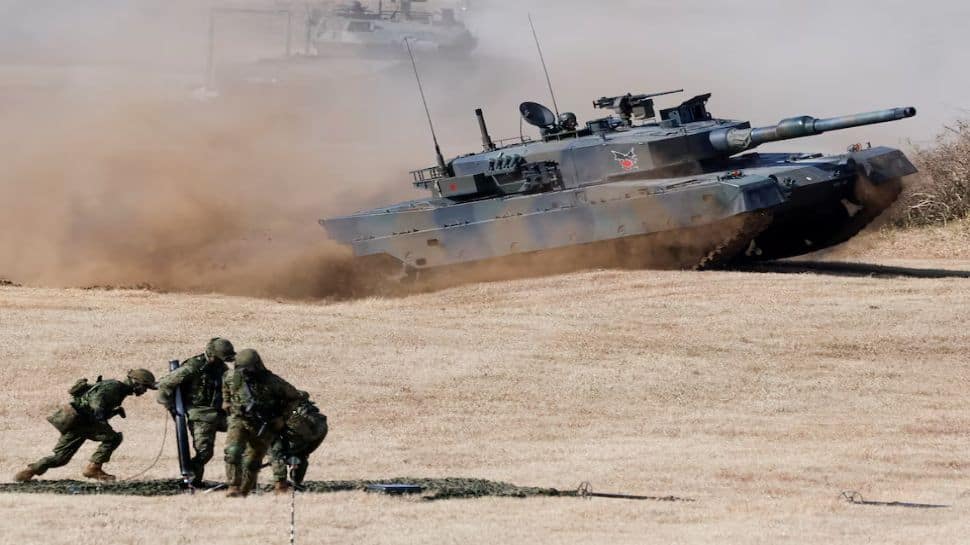
Tokyo: Japan is preparing to send its troops to the Philippines for large-scale war training, something it has not done in 81 years. The development comes as countries around Taiwan increase their military preparedness and expand cooperation in the region.
The upcoming Balikatan military exercise will see Tokyo joining Washington and Manila in a wide-ranging training programme covering land, sea and air operations. This time, Japan is not sending a small humanitarian unit. It is instead deploying a large and multi-service force equipped with missiles, air defence systems and warships.
A different kind of deployment
The country has traditionally sent small military contingents overseas for disaster relief and humanitarian missions. This year’s deployment shows a departure from that approach.
According to a report by Asia Times, Japan is sending around 1,400 troops trained for amphibious operations and capable of fighting on land as well as at sea. The deployment will also include three warships, including a destroyer.
In addition, naval forces and ground troops will also participate with their weapons and equipment.
This makes it one of the most extensive overseas combat training exercises involving Japanese forces since the World War II.
Missiles, air defence and live combat training
Japanese forces are not only participating in drills. They are bringing advanced military equipment with them.
Experts say the deployment resembles training carried out by US Marine forces. Japanese troops will take part in exercises using anti-ship missiles, air defence systems and missile defence platforms. The exercise will also include a sinking drill using Type-88 surface-to-ship missiles targeting an old vessel.
Japan’s air force is also joining the exercise with transport and amphibious aircraft. This is notable because its air force has often avoided joint combat training along with ground and naval forces in overseas settings.
The training will also include dogfight exercises at 30,000 feet, where pilots will simulate aerial combat scenarios.
What the three countries will practice
The Balikatan exercise will cover a wide range of operations across land and sea. The participating forces will practise counter-landing live fire drills intended to respond to potential amphibious assaults.
Maritime strike training will prepare forces for retaliatory operations at sea. Integrated air and missile defence exercises will test coordination between different services. The programme will also include joint medical operations to simulate wartime emergency response.
These exercises aim at improving coordination among the three countries in case of regional tensions.
Taiwan and Island disputes in background
The exercise comes as China increases military activity near Taiwan and disputed islands in the region. Taiwan and Japan’s southern islands have both witnessed rising tensions in recent years, with Beijing asserting claims in these areas.
Military experts see these exercises as preparation for potential conflict scenarios involving island defence and maritime security.
Japan’s changing military approach
Since the World War II, Tokyo has largely followed a defensive security strategy. Overseas deployments were limited and usually centred on humanitarian roles. The decision to send combat-trained troops for joint war exercises indicates a change in how Japan approaches regional security.
Experts believe participation in joint exercises with foreign militaries will help improve coordination and operational confidence for Japanese forces.
The Balikatan exercise therefore appears to be more than routine training. It shows how Japan, along with the United States and the Philippines, is expanding military cooperation as tensions rise across the Indo-Pacific.


