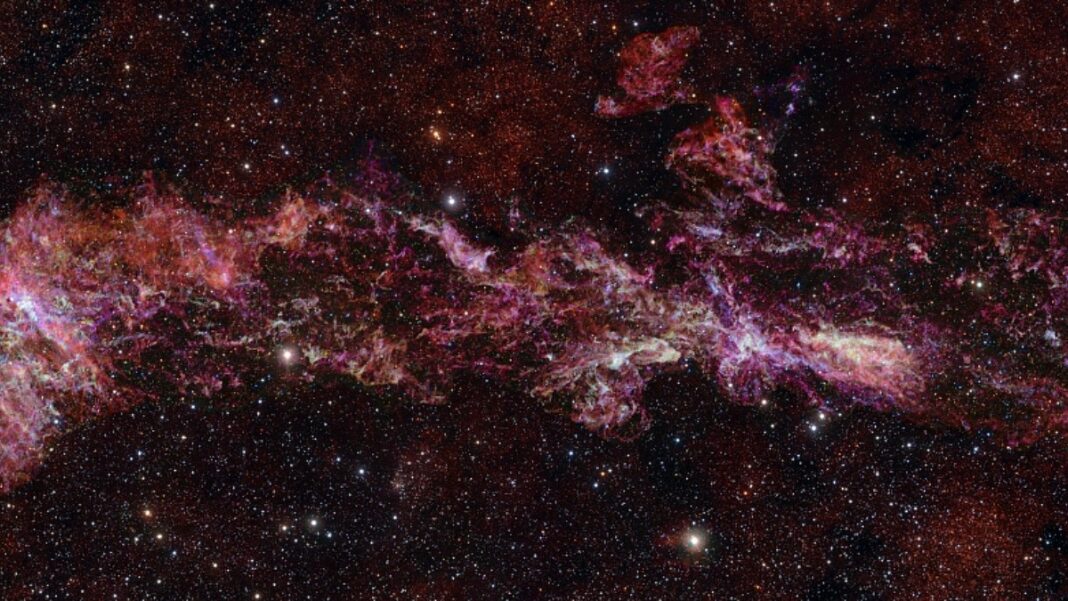
Biggest 3D map of the universe ready, 47 million galaxies mapped

In a stunning milestone for science, astronomers have just finished the biggest 3D map of the universe ever created.

The cherry on top is the fact that they wrapped up the long, intricate process a full year early.

The project, called DESI, offers an unprecedented look at how galaxies and stars are spread across space and time, promising fresh clues about one of cosmology’s biggest puzzles. The mystery behind the force is called dark energy.

HOW WAS 3D MAP OF UNIVERSE CREATED?

DESI stands for Dark Energy Spectroscopic Instrument.

It sits on the Nicholas U Mayall 4-metre telescope at Kitt Peak National Observatory in Arizona, US. DESI is a super-smart camera with 5,000 tiny fiberoptic eyes that lock onto distant objects every 20 minutes.
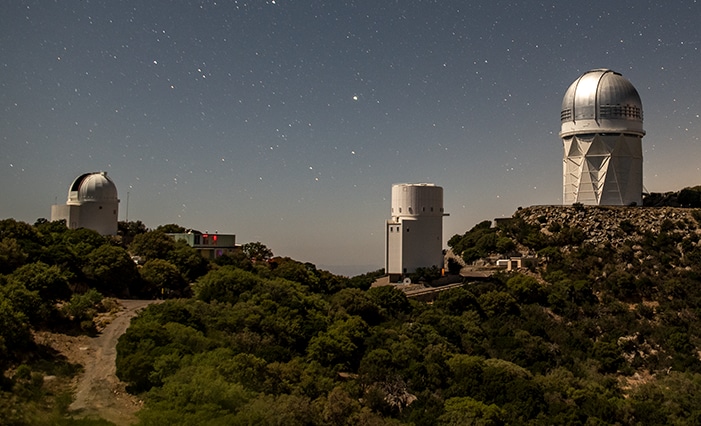
DESI at work in Arizona. (Photo: US Department of Energy)

DESI at work in Arizona. (Photo: US Department of Energy)

Starting in May 2021, it spent five years collecting light from galaxies, the glowing hearts of faraway galaxies called quasars, and stars.

The result of the long, tedious endeavour is now a map of more than 47 million galaxies and quasars, which beat the original goal of 34 million. Also mapped were around 20 million stars.

The map covers 14,000 square degrees of sky, roughly one-third of the entire celestial dome. By studying how their light has stretched over billions of years, the map traces cosmic history back 11 billion years.
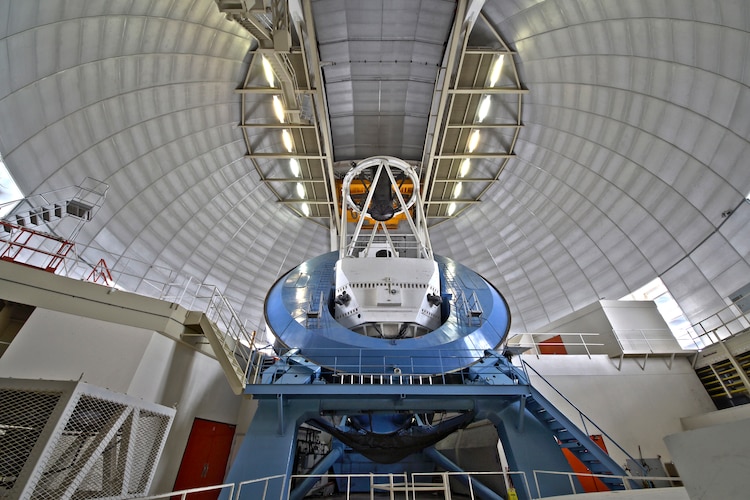
An image showing the internal section of DESI. (Photo: US Department of Energy)

An image showing the internal section of DESI. (Photo: US Department of Energy)

HOW WILL THE UNIVERSE’S MAP HELP?

Most people know the universe is expanding after the Big Bang.

But about 25 years ago, scientists discovered something surprising. They discovered that this expansion is speeding up and the driver of the acceleration is dark energy, an invisible force that makes up roughly 70 percent of the universe.

DESI’s map can now help scientists and researchers understand dark energy better by letting them measure how galaxies clustered together at different times.

Early data from the first three years already hinted that dark energy might not be constant, that it could be changing as the universe ages.
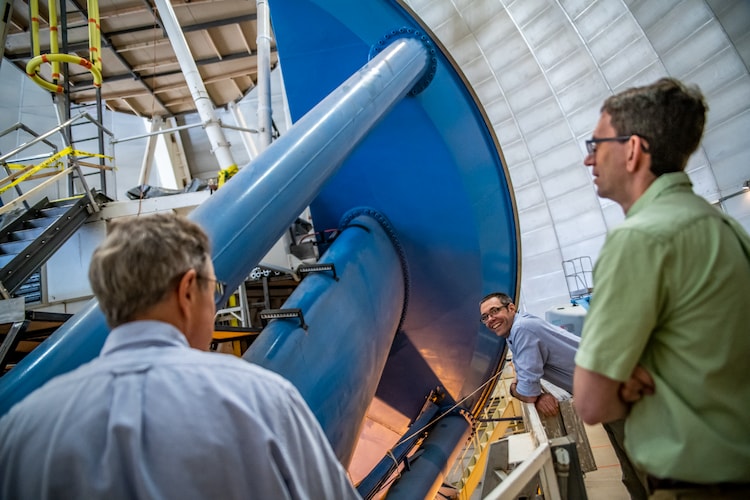
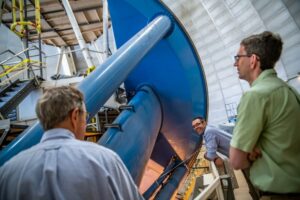
David Sprayberry, Site Director for DESI, give a tour of the facility. (Photo: Marilyn Sargent)

David Sprayberry, Site Director for DESI, give a tour of the facility. (Photo: Marilyn Sargent)

The full five-year dataset, which contains six times more objects than all earlier surveys combined, will test that idea more precisely and help predict the universe’s ultimate fate.

Despite achieving this remarkable feat, the instrument is not planning to stop.

DESI plans to keep observing through 2028, expanding the map by another 20 percent and filling in tricky areas near the Milky Way.

Scientists expect the first big results on dark energy in 2027, with more discoveries rolling out soon after.

“This moment feels like sitting on the edge of my seat,” said NSF NOIRLab astronomer Stephanie Juneau.
Latest

Western disturbance to hit India, but plains to keep getting hot on Friday

Despite the incoming system, temperatures across north and central India are forecast to remain high. Meteorologists warn that the limited rainfall will not be

Send Grace and Rocky: Young stars like our Sun seen dimming outside Solar System

Planets orbiting such stars may have a better chance of retaining their atmospheres and developing conditions suitable for life.

Isro confirms 36 Indian rocket parts fell on Earth after launch in 2025

India is making considerable progress in ensuring that its satellites are not adding to the increasing levels of space debris. Instead, these satellites entered

Nasa flies close to Sun, uncovers new clue to how solar storms are born

The Parker Solar Probe has uncovered a surprising clue about how solar storms form, revealing new particle behaviour that could improve space weather prediction

Desert planets beyond our Solar System may be far less likely to support life

Scientists estimate that there are billions of planets orbiting stars outside our solar system, with more than 6,000 confirmed exoplanets discovered so far.

Topics

Lebanon ceasefire: Who said what? Bibi vows troops will stay; Trump hails talks ‘very exciting’ – How Iran reacts?

Iranian Parliament speaker Ghalibaf asserts that Lebanon must be included in any peace agreement between Iran and the U.S., emphasizing its importance for regio

‘Targeting of commercial shipping unacceptable,’ India calls restoration of safe navigation in Strait of Hormuz at UN

India's Ambassador Harish P raised concerns at the UN over threats to commercial shipping in the Strait of Hormuz, urging for safe navigation and calling for de

All-round Arshdeep Singh: Viral reels spiking Punjab Kings’ fanbase, says pacer

Arshdeep Singh took some credit for the spike in Punjab Kings' fan base, saying that his social media game is one of the reasons behind the increase in follower

Pope Leo after clash with Trump over Iran war, says world ‘ravaged by a handful of tyrants’

The remarks come as the pontiff continues an 11-day visit to Africa, using his platform to advocate for peace and international cooperation.

New York loses nearly $74 million for not revoking 33,000 illegal licenses for immigrant truckers

New York loses nearly $74 million for not revoking 33,000 illegal licenses for immigrant truckers

Jet fuel shortage: Why Iran war could disrupt flights in Europe within weeks

Europe could run out of jet fuel within six weeks due to Iran war disruptions, risking flight cancellations, rising energy prices and broader economic fallout,

Virginia’s ex-Lieutenant Governor kills wife then himself amid divorce proceedings

A tragic end to a politically and personally tumultuous life

Vinod Kambli is fine: Wife addresses health speculation

Former cricketer Vinod Kambli’s wife Andrea Hewitt has dismissed speculation around his health, stating that the former India batter is “fine”. Her statem
spot_img

Related Articles

Popular Categories

spot_imgspot_img