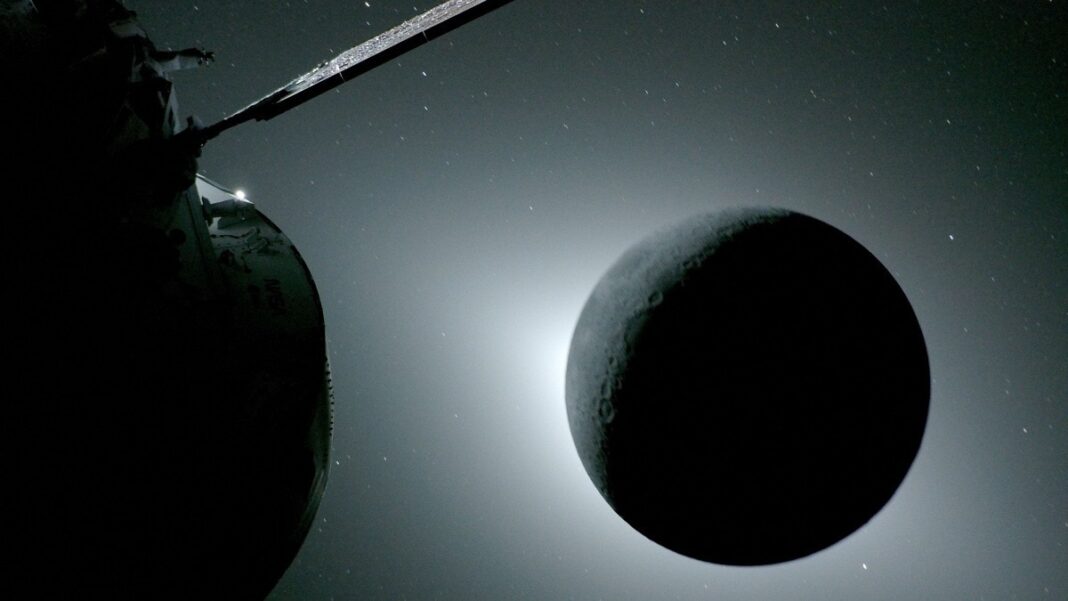
A new study has shed fresh light on one of the Moon’s biggest mysteries, its polar ice, revealing that it has been building up gradually over billions of years rather than forming in a single event.
Scientists have long known that water ice exists at the Moon’s poles, trapped in regions that never receive sunlight. These permanently shadowed areas remain extremely cold, allowing water molecules to stay stable. While researchers had mapped where this ice is located, the timeline of its formation remained unclear, until now.
Using data from the Lyman-Alpha Mapping Project (LAMP), researchers analysed ultraviolet light reflected from stars to study the distribution of ice. Their findings show a strong link between how much ice is visible on the surface and how long a region has remained in permanent darkness.
The study, published in Nature Astronomy, found that younger shadowed regions, formed around 100 million years ago, contain a higher proportion of exposed ice compared to older regions. In fact, about 3.4% of the surface in these younger areas shows exposed ice, suggesting that ice is constantly being formed, buried, and lost over time.
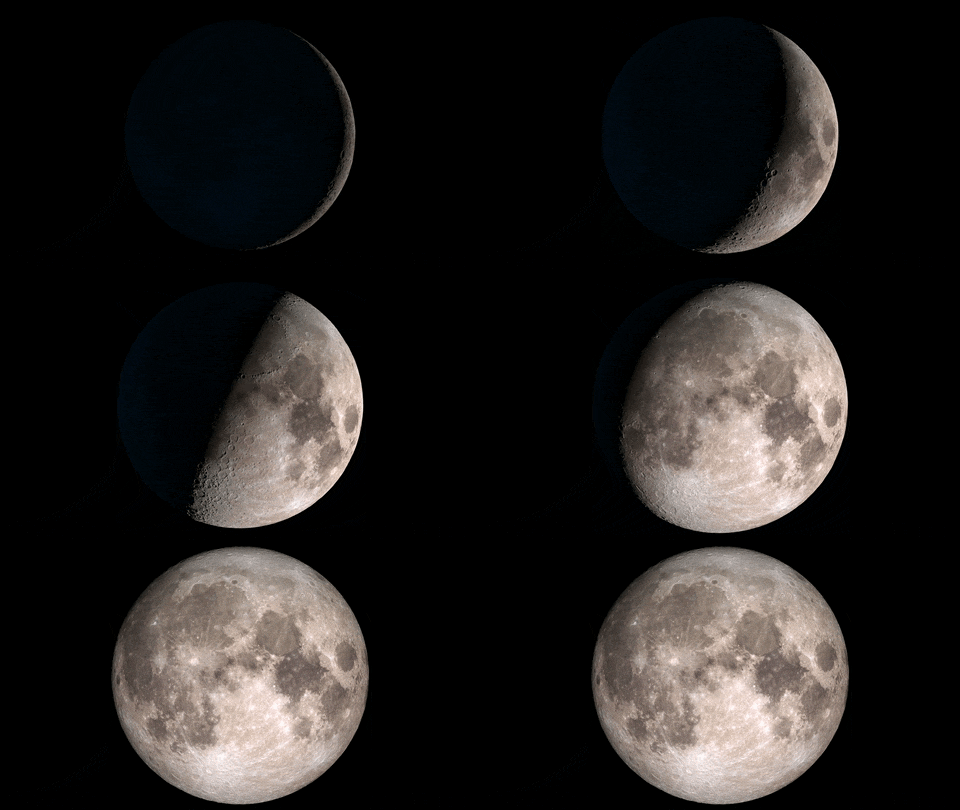
This discovery ties closely to the Moon’s changing tilt. Over billions of years, the Moon’s obliquity has gradually decreased, causing permanently shadowed regions at the poles to expand. As new shadowed areas formed, they began trapping water, adding to the Moon’s ice reserves.
The results support a model in which water is delivered to the Moon by comets or asteroids, gets buried under lunar soil, and is slowly lost due to environmental processes. Importantly, these processes appear to occur over timescales similar to the age of the shadowed regions themselves.
Rather than pointing to a single dramatic event, such as a massive comet impact, the findings suggest that the Moon’s polar ice has accumulated in a steady, ongoing manner for at least the past 1.5 billion years.
The research has significant implications for future lunar exploration. Understanding how ice forms and persists on the Moon is critical for missions aiming to use it as a resource for drinking water, oxygen, or even rocket fuel.
As space agencies prepare for long-term human presence on the Moon, these insights offer a clearer picture of where to find accessible ice, and how reliable those reserves might be.