
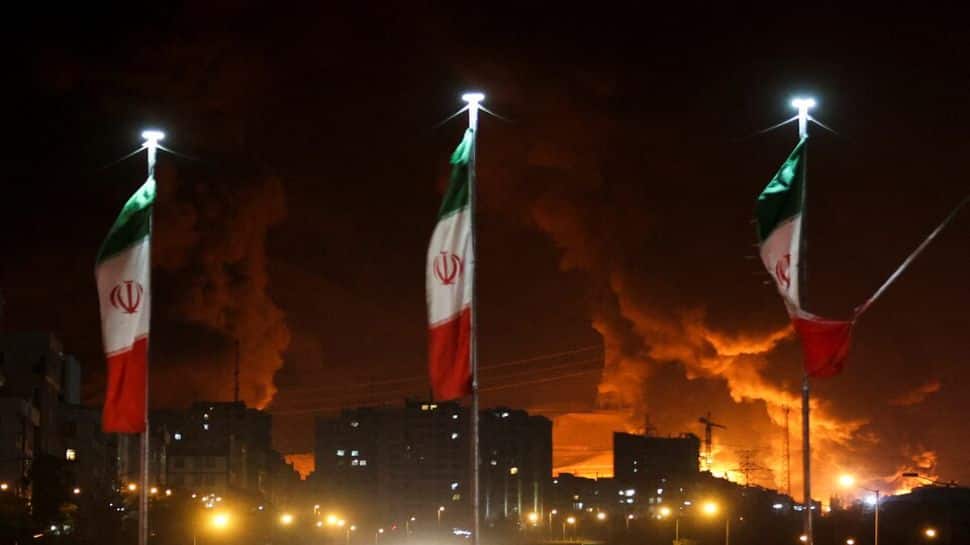
US-Israel-Iran War: Even if the United States and Iran reach a full ceasefire, energy supply pressures across several countries are likely to continue for an extended period. The war that began with US and Israeli strikes on Iran on February 28 has disrupted oil and gas flows, and experts say the full impact is yet to be felt.
An end to hostilities is not expected to bring fuel prices back to earlier levels in the near future. Before the war, oil and gas were available at lower costs, businesses were expanding and household incomes were improving in many economies. That environment has become harder to restore as supply chains, production sites and government budgets have all been affected.
Oil shortage beginning to show
Crude shipments from the Persian Gulf usually take about one to one-and-a-half months to reach buyers. With the war conflict in its sixth week, shortages are beginning to surface in parts of the international market, especially after disruptions around the Strait of Hormuz, which has faced major shipping constraints during this period.
Experts warned that April conditions could be worse than March even under stable assumptions. They said losses could double, adding pressure on inflation and slowing economic growth. In tougher scenarios, they said, some countries may have to introduce energy rationing.
Oil prices have risen, even as tankers continue to deliver cargo loaded before the conflict began. As fresh shipments decline, prices are likely to stay elevated even if shipping routes reopen soon. Under normal conditions, restoring full supply could take around one to one-and-a-half months.
Data from the US Energy Information Administration suggests the shortage could last several months and may continue into late 2026.
Oil markets could recover faster if stability returns to the Middle East, especially as producers like Saudi Arabia can increase output relatively fast. The gas market, however, is facing a more complex situation.
Gas market under pressure
Before the conflict, many countries were increasing their dependence on liquefied natural gas (LNG) to reduce reliance on pipelines. This change accelerated after Russia used pipeline supplies as leverage during the 2022 energy crisis, pushing importers to diversify sources.
Gas was increasingly seen as a cheaper and cleaner alternative to coal, and demand had been rising consistently. The Iran war has now exposed vulnerabilities in that strategy.
Before the military confrontation, Qatar supplied around 21 percent of international LNG and roughly 17 percent of total gas demand. Analysts say there are limited alternatives capable of replacing such a large share in the short term.
The crisis has affected confidence in international gas supply chains. The LNG was promoted as a flexible and dependable option, but markets have now been hit first by the Russian gas shock in 2022 and then by disruptions tied to Qatar’s supply network.
Unlike oil, LNG supply cannot be scaled up so soon. Qatar has limited alternate export routes, and damage to infrastructure has further complicated deliveries. The country has also paused expansion plans, raising concerns that gas prices could continue to be high for months.
Damage to production infrastructure
Reopening shipping lanes is only part of the challenge. Restoring damaged production sites will take longer and require major investment.
International Energy Agency data shows more than 40 oil and gas facilities across the Middle East were hit during the war. One of the worst affected areas was the Ras Laffan Industrial City, where missile strikes damaged nearly 17 percent of capacity at a major gas liquefaction plant.
Qatari officials have said that such specialised equipment cannot be replaced fast, with repair timelines stretching between three and five years.
Damage has also been reported in United Arab Emirates, Kuwait and Iraq, where refineries and oil fields were affected. Repairs are expected to take months and cost billions of dollars. Funds that were earlier meant for capacity expansion are now being diverted to rebuilding.
Governments under budget pressure
Before the war, Gulf producers were planning to expand output to meet rising international demand. Countries, including Saudi Arabia, UAE, Iran and Qatar, may now need to channel spending into rebuilding energy infrastructure and improving security around important facilities.
Importing nations are also likely to face higher costs as governments increase investment in alternatives such as nuclear, solar, wind, battery storage and coal. Subsidy spending for households and industries may also rise.
Unlike earlier shocks during the COVID-19 period and the Russia-Ukraine war, many governments now have less fiscal space. Inflation is already high, debt levels have increased, and growth is slower, limiting room for policy support and making interest rate cuts more difficult.
At the same time, strategic reserves have been heavily drawn down, reducing the buffer available for future supply disruptions.
Strategic reserves running low
Western economies released around 400 million barrels of oil from strategic reserves to stabilise markets. During the war, about 10 to 12 million barrels per day from the Middle East failed to reach international markets. Reserve releases helped bridge part of that shortfall by adding roughly three to four million barrels daily.
These reserves can only sustain supply for about four to five months. After that, countries will need to rebuild stocks.
US President Donald Trump had earlier criticised former President Joe Biden for tapping reserves during the Russia-Ukraine war and had promised to refill them, though that process is incomplete.
Replenishing reserves while prices are high could add further pressure to markets and extend the duration of the crisis.
Disruption risk
The perception of the Middle East as a stable energy supplier has weakened over time. Shipping risks and insurance costs have increased, adding to long-term pricing pressures.
The US Energy Department has said that oil prices may now include a lasting risk premium. Concerns are not limited to the Strait of Hormuz. The Red Sea also faces security risks.
International response to the crisis has so far been measured. While the 1970s oil shock led to inflation, falling living standards and political instability, present conditions could be even more difficult if disruptions persist.
He added that Asia has been the most affected so far, with risks likely to extend to Europe and other regions. AS experts’ assessment, the world may be moving into one of the largest energy stress periods in recent history.


