Spanning around 1.3 square kilometres, the Gobi Desert is Asia’s largest desert. It stretches across northern China and southern Mongolia, bordered by the Altai mountains to the west and the greater Khingan mountains to the east. The desert covers 30 per cent of Mongolian land.
On hearing the word desert, the first thing that comes to our mind is an ocean of sand, hot climate, camels and cactus. The Gobi Desert is way beyond that stereotype.
The climate of the Gobi Desert is one of its most defying features. Unlike other deserts, the Gobi Desert experiences extreme climate conditions with scorching summers with temperatures going up to 40 degrees Celsius, and freezing winters dropping to – 40 degrees Celsius.
It experiences minimal rainfall, only enough to re-energise the scattered vegetation. Frequent dust storms also play a significant part in affecting the global climate by spreading tiny particles (aerosols) in the air. This challenging climate makes the Gobi Desert one of the harshest environments on earth.
A LAND OF DRAMATIC CONTRASTS
Deserts are often imagined as vast stretches of golden sand, but the Gobi Deserts tell a very different story.
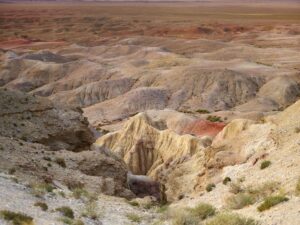
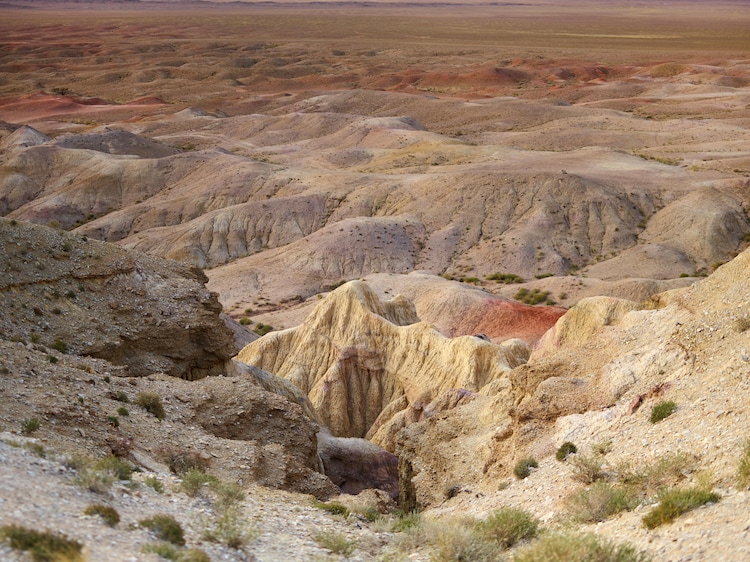
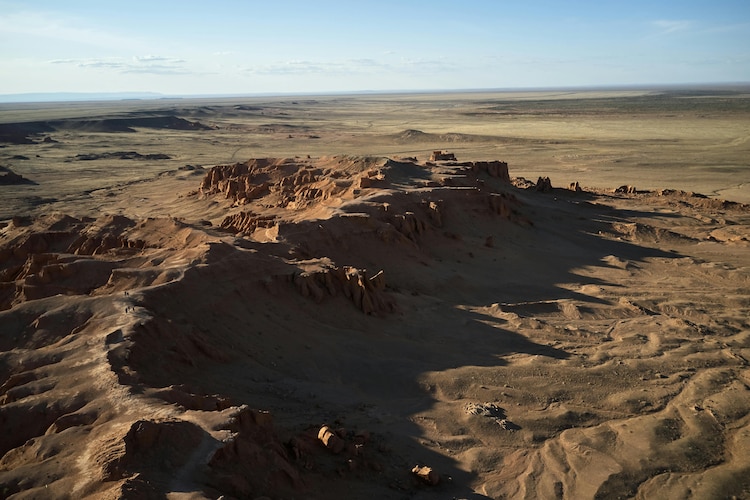
Unlike regular deserts, mainly made of sand dunes, the Gobi is largely made up of rocky plains and gravels shaped by strong winds and extreme temperatures.
These surfaces are hard and compact, formed by wind erosion removing finer particles.
The landscape of the Gobi is both harsh and diverse. It includes mountains, cliffs, dry basins and limited sand dunes that rise dramatically in certain regions.
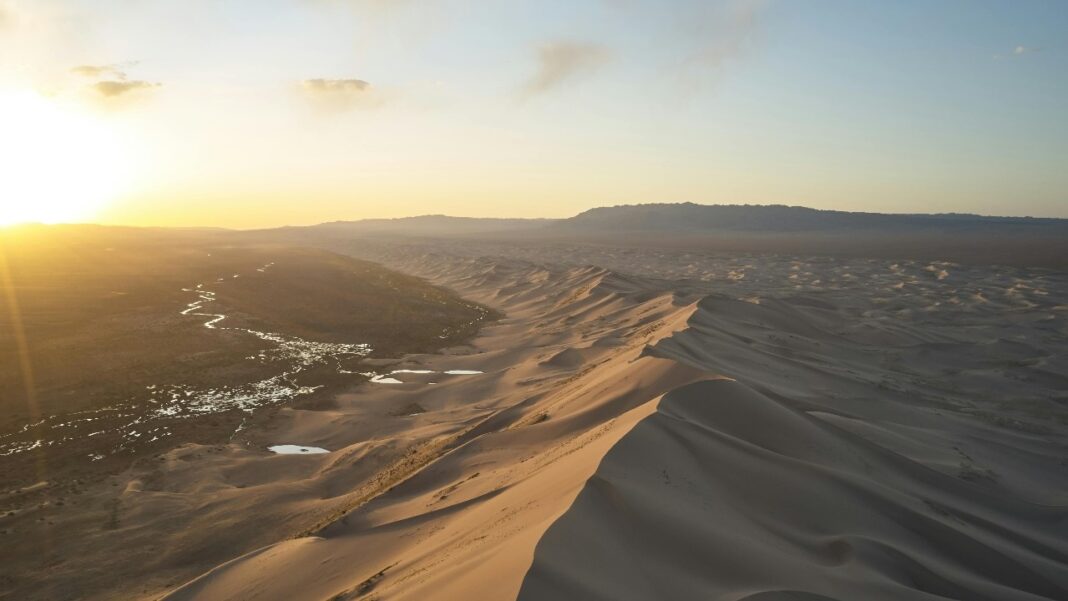
One of the most remarkable features is the towering Khongor Sand Dunes, which rise up to 300 meters and extend over 100 kilometers.
Often called the “Singing Dunes” because of the sound produced when the wind blows. These impressive formations are a major attraction for tourists.
Far from being a uniform stretch of barren land, the Gobi Desert is a patchwork of distinct regions, each shaped by its own climate and terrain. The Gobi is not flat, it includes several rugged highland areas.
Comes first is the Gobi Lakes Valley desert steppe, found between the Gobi Altai and Khangai mountains. These mountains create a microclimate and trap limited moisture, allowing some vegetation and wildlife to survive.
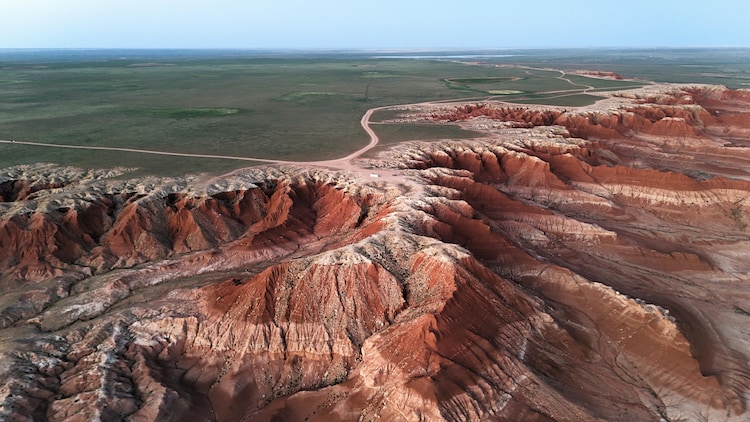
The second is the eastern Gobi Desert steppe, which lies across Inner Mongolia in China and is surrounded by grasslands and nearby plateaus.
Third is the Alashan plateau semi-desert, made up of dry basins and low mountains, located between several mountain ranges and the Tibetan plateau.
The Dzungarian Basin semi-desert, which covers parts of Xinjiang and extends into southeastern Mongolia, comes fourth.
And finally, the Tian Shan mountain range forms a natural boundary, separating the Gobi from the nearby Taklamakan Desert.
FIVE INTERESTING FACTS ABOUT THE GOBI DESERT
Fossil paradise
The Gobi Desert is well known for significant fossil discoveries, making it one of the richest fossil sites. Out of all the fossils of Tarchia Tumanovae, which is a species of armoured dinosaur stands out.
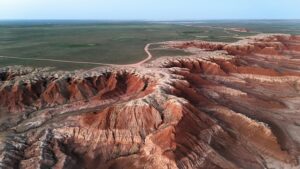
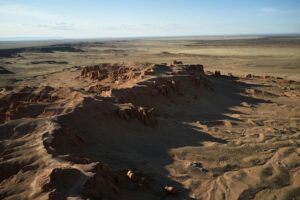
At flaming cliffs, scientists found the first dinosaur eggs, proving that dinosaurs laid eggs. Fossils of species like Velociraptor and Protoceratops also have been discovered, helping us better understand prehistoric life.
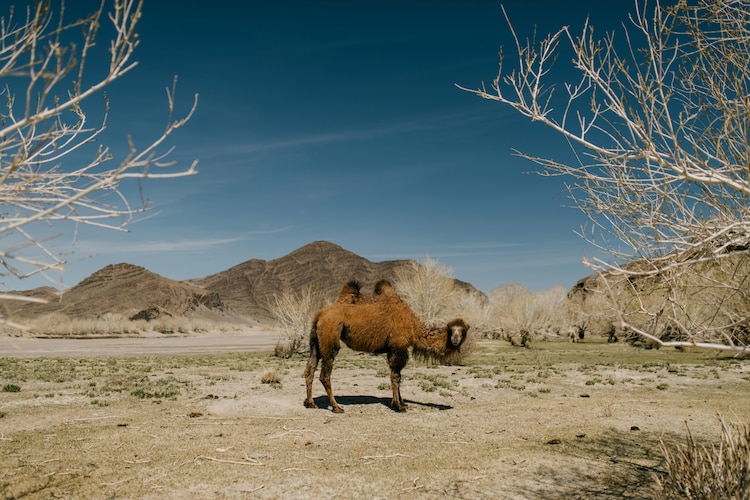
Supports unique wildlife
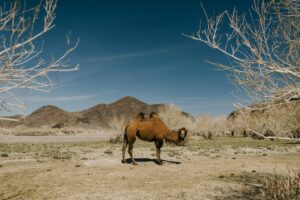
Despite its harsh conditions, the Gobi Desert supports a surprising range of wildlife. Animals like the Bactrian camel and snow leopard have adapted remarkably well, developing thick fur to survive freezing winters and the ability to conserve water for long periods.
The desert is also home to rare species such as the Gobi bear and the Mongolian wild ass, along with gazelles and desert foxes.
These animals rely on sparse vegetation and have evolved to endure extreme temperatures, scarce water, and limited food, making the Gobi a unique example of life thriving against all odds.
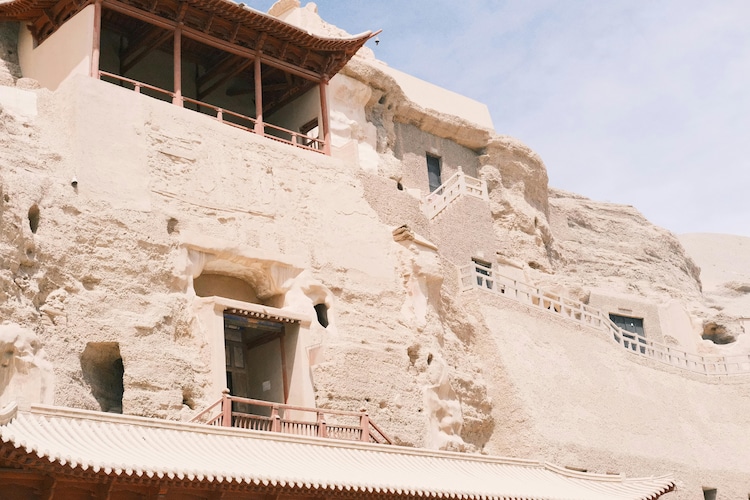
Historic Importance
The Gobi Desert is not only a natural wonder but also rich in history. During the Silk Road, it played a key role in connecting East and West, allowing the exchange of goods, cultures, and ideas.
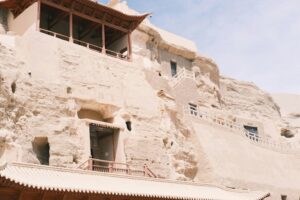
Sites like the Mogao Caves (UNESCO World Heritage Site) reflect this legacy, with their vast collection of ancient art and manuscripts that gave an idea about the cultural and commercial activities of that time.
Another important site is the Khamariin Khiid Monastery, founded in 1820. It was a spiritual centre and is still culturally important today, surrounded by sacred sites and traditional Ovoo stone cairns which add to the Gobi’s historic heritage.
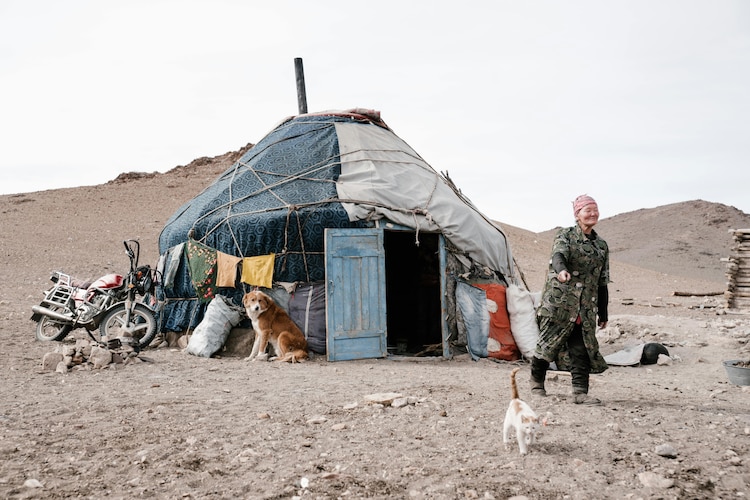
Nomadic life
The common assumption is that Gobi might have no humans living in it because of its extreme climate conditions, but this is not true.
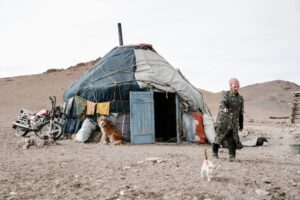
The nomadic Mongolian herders are an important part of life in the Gobi Desert. They move a few times each year with their animals to find better grazing land.
They live in traditional gear, which is easy to set up and carry. Their livestock, including the Bactrian camel, goats, sheep, and horses, help them survive in the harsh desert, with the Bactrian camel especially suited to the desert environment.
This lifestyle shows how people have adapted to the Gobi’s tough conditions for many years.
Has a Marine past
Parts of the Gobi Desert are believed by geologists to have once been covered by the ancient sea. Evidence for this comes from the discoveries of fossilised coral, sea lilies and shell imprints, especially in the Gobi-Altai Province.
These marine fossils suggest that millions of years ago, the region had a very different environment, with shallow seas supporting diverse life forms.
Over time, due to major geological changes such as the uplift of land and shifting tectonic plates, the sea disappeared, and the area gradually transformed into the dry desert seen today.
This ancient marine past adds another layer to the Gobi’s unique geological history.
The best time to visit is between May and September, when the weather is mild and suitable for travel.
The Gobi Desert offers several unique places to explore. The Khongor Sand Dunes are famous for their size and “Singing Dunes” sound, while the Flaming Cliffs are known for red rocks and dinosaur fossil discoveries.
Visitors can also explore the Gurvan Saikhan National Park, the icy canyon of Yolyn Am, and the spiritual Khamariin Khiid Monastery.