Cows, silver jars, and many priests – this is how the Maharaja of Jaipur began his journey to London in 1902 aboard the ship Olympia, but only after ensuring that the vessel had never touched beef.
Maharaja Sawai Madho Singh II had to travel to London following the demise of Queen Victoria, when King Edward VII invited him, along with several Indian rulers, to attend the coronation ceremony. Deep-rooted religious beliefs turned what could have been a routine royal visit into something far larger.
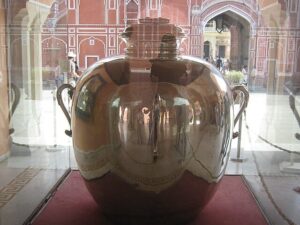
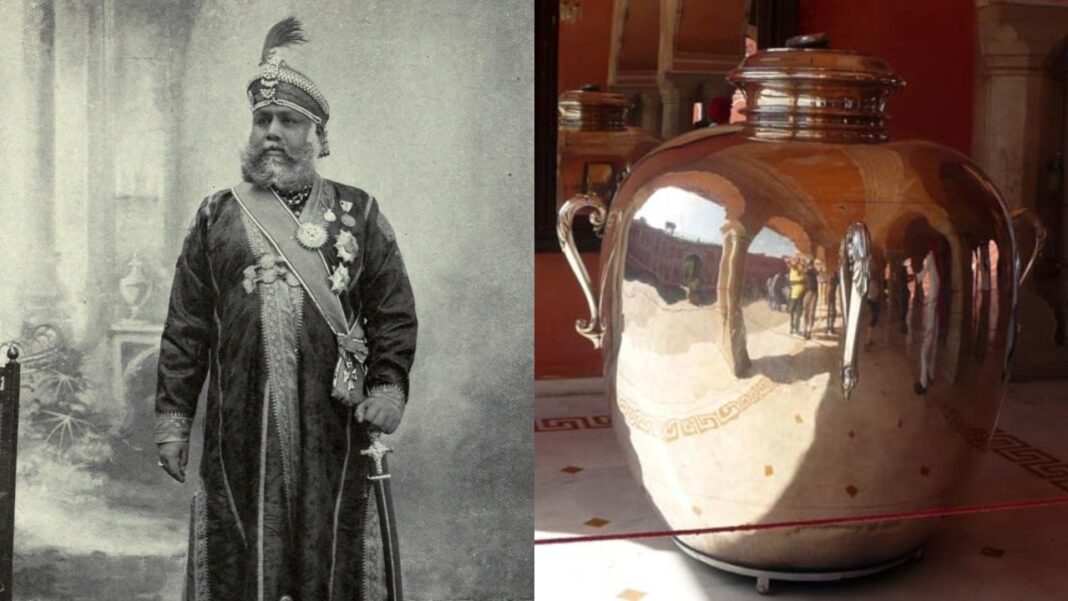
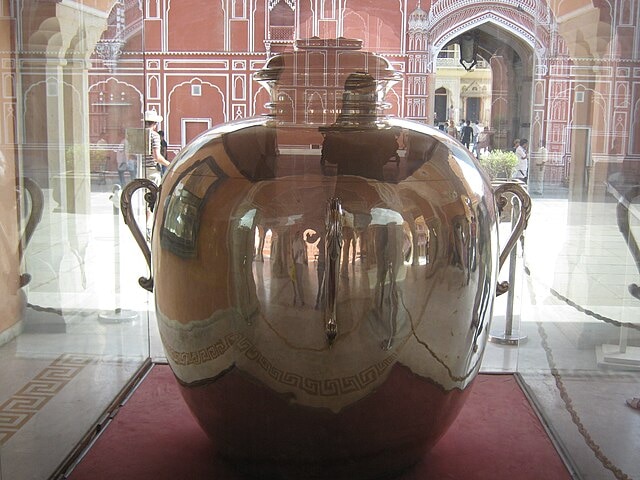
Today, when a visitor walks into the City Palace of Jaipur, the experience follows a series of pauses — first at the artefacts, and then at a massive jar, the largest in the world, recorded in the Guinness World Records and made entirely of precious silver metal.
The jar weighs around 345 kg, stands 5 feet 3 inches tall, and has a circumference of nearly 15 feet, capable of carrying up to 4,200 litres of water.
The world’s largest silver jar has stood at the entrance of the Palace for over a century. Three such jars were made in original, carrying with them the story of a Maharaja of Jaipur who once took Ganga water to London.
“In the summer of 1902, when the maharajah of Jaipur set sail to attend the coronation of King Edward VII in London, parked in his steamer was a team of Indian cows. The cow, venerated by orthodox Hindus, had for generations now enjoyed a place of eminence in the overseas retinues of high-born ‘natives’,” writes Manu S Pillai in Gods, Guns and Missionaries.
INVITATION TO THE CORONATION
When Jaipur’s Maharaja Sawai Madho Singh II received an invitation from King Edward VII to attend the coronation ceremony, he decided to bring the world’s largest silver urns to London, not as objects of display but as a part of a solution to a problem that refused to be ignored.
The three life-size urns were made from 14,000 silver coins over three years of heavy labour by the palace silversmiths, and were ready by 1894.
Why the huge silver urns were created remains a mystery. But the Maharaja used the jars to undertake a perilous journey across the sea which would test his fate.
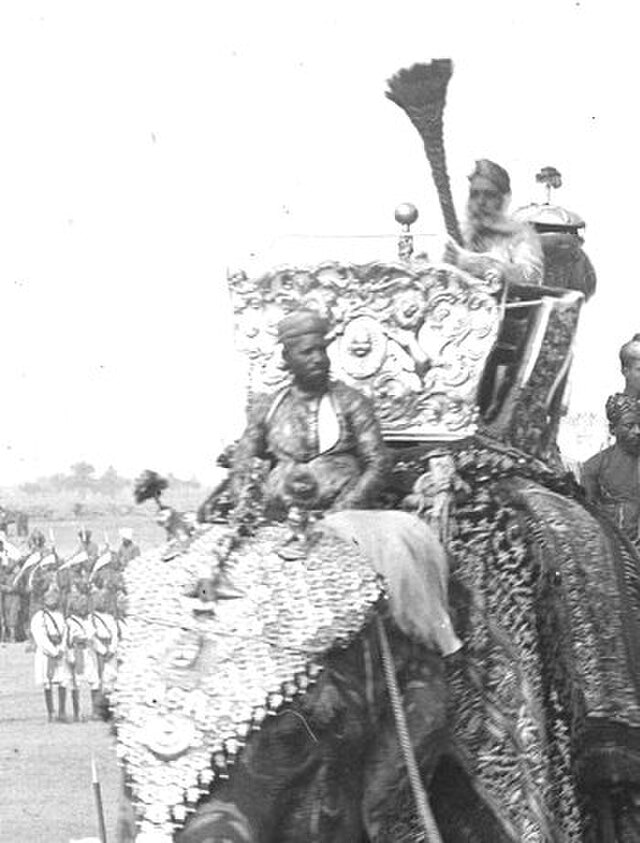
The popular Hindu belief at the time was that crossing the sea, or the kala pani, could damage one’s caste status and ritual purity. This pushed the Maharaja’s Hindu priests and royal advisors to find a way to balance religious tradition with the expectations of King Edward VII of England.
The proposed three-month visit, along with the need to preserve his faith, was not easy for the Maharaja, his courtiers, or the priests to agree upon.
After prolonged discussions and consultations with the priests, conditions were set for the journey: no meat would be cooked on board, idols would travel with him placed on soil from Jaipur, every meal would be offered to the gods before consumption, and most importantly, he would drink only Gangajal during the journey.
As the time for departure approached, just two days before sailing, the selected vessel, untouched by beef in any form, a condition that narrowed choices but eventually led them to Olympia, a newly built ship yet to make its first voyage, was purified with Ganga water, while priests performed rituals, chants were recited, and prayers were offered to Lord Varuna to ensure a calm passage.
THE JOURNEY BEHIND THE CORONATION
The journey did not come cheap. Chartering the ship for the full voyage, along with a month-long halt in the UK, cost the Jaipur ruler Rs 1.5 million, a figure that would stand close to Rs 750 million today, and yet, despite the scale of the expense, he chose to travel alone as the sole passenger on board.
The ship sailed from Bombay in 1902. Life onboard followed its own rhythm, with six suites in use.
The most luxurious suite was set aside for Gopalji, the family deity of the Jaipur royals, whose idol travelled with the Maharaja.
The second one was reserved for the Maharaja himself, while a third was sanctioned for the royal priests of Jaipur.
A fourth was given to a close relative, known as a ‘Tazmi’ Sardar, and the remaining two suites were shared among other members of the entourage.
No prayers and all the rituals performed did not defy the toughness of a sea journey, and the fear of the Maharaja turned real when Varuna (the sea) did not stay calm for long.
As the ship moved through the Red Sea, a storm hit, forcing the priests to advise the Maharaja to release one of the silver urns into the waters in the hope that the gesture would ease the waves.
Finally, after overcoming the waves and defying the odds, the King of Jaipur reached England. The British, seeing the two silver jars, too large to be seen as ordinary, could not believe their eyes.
King Edward VII hosted the Maharaja of Jaipur along with other Indian rulers. At court, he presented a finely crafted sword set with diamonds shaped like a lotus, edged with emerald details.
However, the Maharaja himself did not attend the coronation ceremony, as he could not be present in an area where beef was being consumed. Instead, he chose to stay and eat food prepared in his own camp.
Jaipur chroniclers note that King Edward VII later made a personal visit to the Maharaja’s camp to see the two jars, as curiosity about the massive vessels drew him to the Jaipur ruler’s quarters.
After spending long nights in England, Maharaja of Jaipur finally touched the home soil.
The Maharaja’s voyage endures as a story about the unyielding dance between faith and duty.
One of the two remaining jars, now Guinness-certified giants at Jaipur’s City Palace, stands as a silent sentinel to a ruler who carried his traditions across oceans without compromise.