Our lungs resemble the branches of a tree in nature: The synergy explained

There are certain similarities between humans and what’s around them. These similarities exist but often go unnoticed, and so does the synergy between us and nature.

A recent viral post on social media platform X (formerly Twitter) sparked curiosity about this synergy, comparing a tree’s structure to the human respiratory system. But it’s not just a cool visual. It’s rooted in science that explains efficiency in nature.

This pattern, seen in everything from blood vessels to river deltas, shows how the natural world optimises energy use.

To understand why these designs repeat across living things and what it means for our planet, we must look at a principle created centuries ago.

A human lung is seen during a lung transplant procedure. (Photo: Reuters)

A human lung is seen during a lung transplant procedure. (Photo: Reuters)

WHY DO BRANCHES AND LUNGS LOOK ALIKE?

Murray’s Law is a principle in biology that explains how branching networks in nature, like blood vessels, tree branches, or river systems, are organised for maximum efficiency.

Simply put, it says that the thickness of a parent branch and the thickness of its child branches follow a precise mathematical relationship, ensuring that whatever flows through them, be it blood, water, or nutrients, travels with the least possible effort and energy.

Think of it like a well-designed highway system.

The main road is wide, but as you move into smaller lanes, the total carrying capacity stays roughly the same. Nothing is wasted. Nature, it turns out, is an excellent engineer.
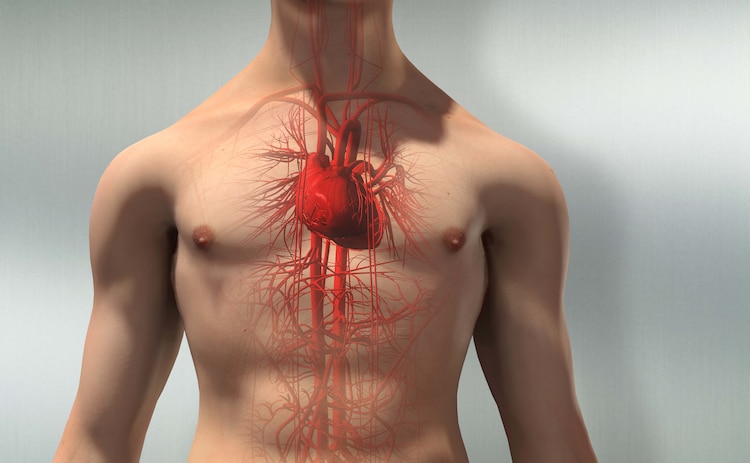
An illustration showing the human heart and the cardiovascular system. (Photo: Getty)

An illustration showing the human heart and the cardiovascular system. (Photo: Getty)

In 1926, physiologist Cecil D Murray figured out this pattern.
It’s why our lungs branch 23 times to create 480 million tiny air sacs, delivering oxygen efficiently.

Even Leonardo da Vinci spotted this back in 1508 while sketching realistic trees. He noted branches get thinner in a specific way to look natural.

Today, scientists see the same rule in brain networks and even galaxy clusters, spanning huge scales. It’s like the universe’s shortcut for saving energy, making complex systems work smoothly without waste.
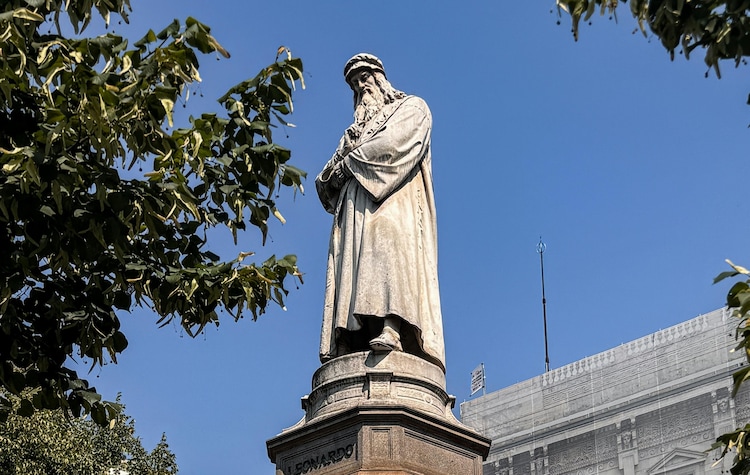
A statue of Leonardo da Vinci beside trees in Milan, Italy. (Photo: Pexels)

A statue of Leonardo da Vinci beside trees in Milan, Italy. (Photo: Pexels)

ARE TREES LIKE LUNGS?

The relation between trees and lungs also go beyond principles and theories. They both play significant roles in the physical world and are connected.

Trees release the oxygen we inhale, while we exhale the carbon dioxide they need. Both are interconnected.

Rainforests are often also referred to as the lungs of the planet, as they are tasked with absorbing pollutants and helping the planet and its residents breathe easier.

Trees and humans are clear partners in this gas exchange, reminding us of our deep ties to nature.

These complex but also simple relationships between humans and the world around us aren’t just a topic of curious discussion. It’s also a call to protect the world around us, especially after knowing it contains a small part of us.

Latest

Rain, snow and thunderstorms expected across several regions on Wednesday

The weather system may bring thunderstorms, lightning and gusty winds reaching 30-50 kmph across parts of Jammu and Kashmir on March 10 and 11.

US-Iran conflict: The war you can’t see, until you look from space

India Today's OSINT team looks into Nasa's satellite imagery and remote sensing data to reveal the toxic smoke plume over Iran.

Nasa satellite launched 14 years ago to crash on Earth on Wednesday

Van Allen Probe A was launched on August 30, 2012, along with its twin spacecraft Van Allen Probe B, as part of a Nasa mission to study the Van Allen radiation

Tipsy traveller: Interstellar comet 3I/Atlas is loaded with alcohol

The observations revealed that the comet contains extraordinarily high levels of methanol compared with hydrogen cyanide, a pattern rarely seen in comets formed

Nasa to reveal when Artemis-II will launch to the Moon after multiple delays

Four astronauts are set to travel farther from Earth than any human in over 50 years. Nasa's critical review on March 12 will tell us if that's still on track.

Topics

IRCTC may halt train meals amid LPG shortage, tells vendors to switch cooking methods

IRCTC has also directed all it licensees to adopt to switch to alternative methods for cooking at railway food centres.

Iran’s new Supreme Leader Mojtaba Khamenei ‘safe and sound’ despite war injuries: President’s son

The new supreme leader is the son and successor of the Islamic Republic's longtime ruler, Ayatollah Ali Khamenei, who was killed in US-Israeli strikes on Iran o

Uttar Pradesh to make registration mandatory for Ola, Uber and other app-based ride services

Uttar Pradesh government makes registration mandatory for app-based ride services like Ola and Uber to improve passenger safety, driver verification and regulat

Nvidia CEO Jensen Huang to everyone: Here’s what changed about AI in 2025 and what it means in 2026

Tech News News: Nvidia CEO Jensen Huang said the direction of artificial intelligence (AI) in the coming years will depend on how quickly the technology is buil

Trump announces ‘historic’ $300 billion oil refinery in Texas with Reliance backing amid West Asia conflict

The Middle East conflict has severely disrupted global oil and gas supplies. Iran's strikes in the Strait of Hormuz have nearly halted tanker traffic through th

US turned down Ukraine’s anti-Shahed drone tech months before Iran war

During a closed-door meeting at the White House on August 18 last year, Ukrainian President Volodymyr Zelenskyy offered interceptor drones and related technolog

Aaron Edwards: 5 things about NYPD cop who tackled Emir Balat amid Jake Lang protest row

A photo of NYPD officer Aaron Edwards went viral where he was seen jumping a barricade to tackle Emir Balat before he could throw an IED.  

We will continue: Israel refuses to set timeline for end of Iran war

Israel’s foreign minister said the war with Iran will continue until Israel and its allies decide the moment is right to stop, stressing there is no fixed tim
spot_img

Related Articles

Popular Categories

spot_imgspot_img