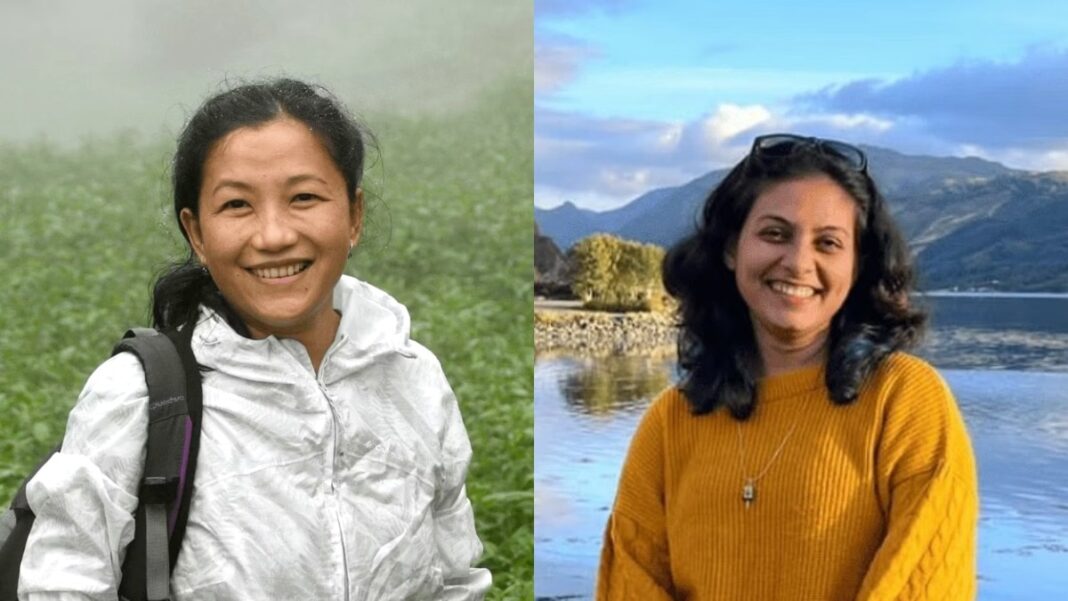
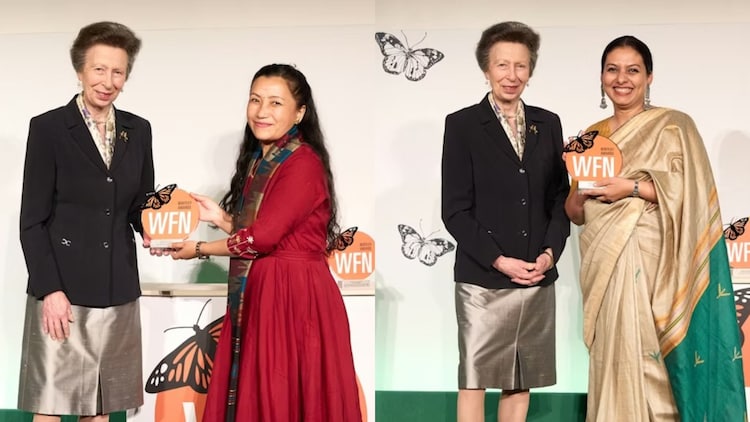
Two Indian women working far from the spotlight have just taken centre stage globally. At the 2026 Whitley Awards, often called the ‘Green Oscars’, Parveen Shaikh and Barkha Subba were among six winners honoured for their work in protecting endangered species.
The award, given by the UK-based Whitley Fund for Nature, recognises grassroots conservation efforts and comes with funding, training, and global visibility. But beyond the ceremony in London, their real work is unfolding in rivers and forests back home.
SAVING A BIRD THAT SKIMS RIVERS
Parveen Shaikh has been working to protect the Indian skimmer, a striking river bird known for its unique way of catching fish by slicing the water surface with its beak.
Once found across parts of South Asia, the bird is now hanging by a thread. Habitat loss, pollution, sand mining, and river projects have pushed it to the edge. Today, India holds more than 90% of its remaining population.
What makes Shaikh’s work stand out is her approach. Instead of relying only on research, she built a network of local “nest guardians” along the Chambal river. These community members monitor nesting sites, protect eggs, and prevent disturbances.
The results are visible. Nest survival has nearly doubled, and the local population has grown sharply over the past few years. Many guardians now refer to the birds as “our birds”, a small shift in language that signals a deeper change in ownership.
With the new award, her team plans to expand this model to the Ganga basin and experiment with safer nesting methods.
PROTECTING A ‘LIVING FOSSIL’ IN THE HILLS
In the Darjeeling hills, Barkha Subba is fighting a quieter battle. Her focus is the Himalayan salamander, a rare amphibian that has survived for millions of years but is now rapidly losing its habitat.
Wetlands are shrinking due to tourism, construction, and land-use changes. Out of dozens of breeding sites, only about 30 remain. Many are not even protected.
Subba’s work goes beyond species tracking. She is restoring wetlands, removing invasive plants, and working with local communities, tea garden workers, and authorities to protect key habitats.
Her project also includes disease monitoring, especially for a deadly fungal infection that has wiped out amphibian species worldwide.
At the heart of her approach is community ownership. Over 200 people are being trained to take part in conservation, linking ecology with livelihoods and local culture.
WHY THIS MOMENT MATTERS
The Whitley Award is not just recognition. It brings £50,000 in funding and global attention, both of which can be game changers for projects that often struggle for resources.
At a time when environmental loss is accelerating, these stories offer a different narrative. Conservation is not only about governments or large organisations. It is also about local people stepping in, protecting what they see every day.
From sandbars in the Chambal to wetlands in Darjeeling, the work of these two women shows how change can start small and still make a global impact.
And for once, the spotlight is exactly where it should be.