

Despite sustaining heavy losses at sea, Iran’s offensive in the ongoing West Asia conflict continues to rely heavily on projectile saturation, particularly through the use of Shahed 136 drones. These loitering munitions have emerged as a central component of Tehran’s strike pattern, repeatedly testing the air defence networks operated by the United States and its regional allies.
Western media reports suggest that Iranian strikes have damaged communication and radar-related infrastructure across at least seven countries in the region that host US military bases.
An examination of these claims by India Today’s Open Source Intelligence (OSINT) team, using satellite imagery, geolocation data, and publicly available assessments, indicates visible damage to structures linked with radar domes, satellite communication terminals, and related support infrastructure at several Gulf-based facilities.
The findings point toward a pattern of strikes that appears designed less for “precision destruction” and more for stressing the communications backbone that enables regional air defence coordination. The repeated use of relatively low-cost Shahed 136 drones highlights a broader contest between inexpensive mass-deployed systems and high-value interceptor-based defence networks.
How Iranian Drones Are Stressing US Air Defence
Although US President Donald Trump has claimed that America’s munitions stockpiles have “never been higher or better” and even suggested that wars could be fought ‘forever’ using these supplies, reports, analysis, and expert assessments suggest otherwise. Interceptors used in systems such as THAAD, Patriot, and Aegis are already under significant strain amid the ongoing wave of drone and missile attacks. If the current pace of engagements continues, the question may increasingly arise whether the United States could exhaust its air defence interceptors before Tehran runs out of drones and missiles.
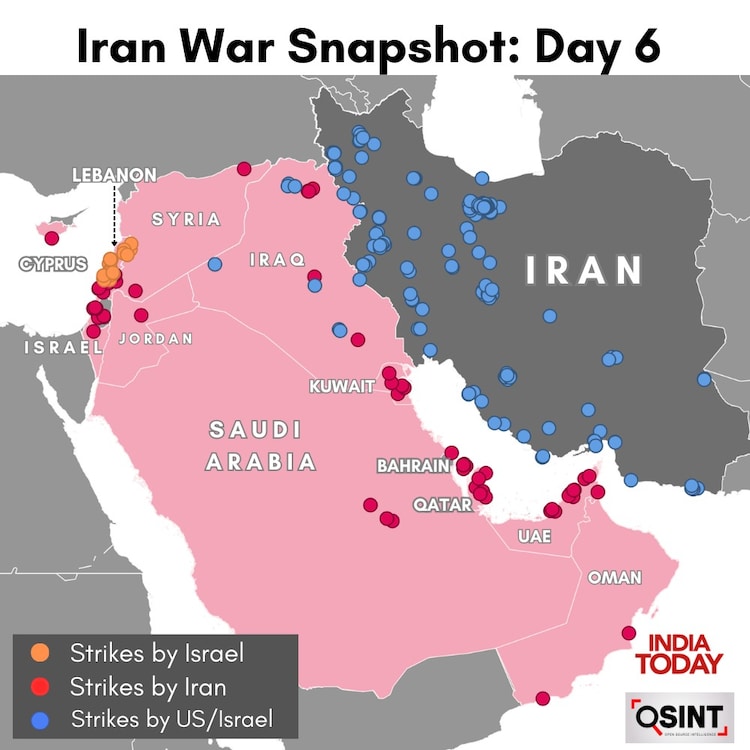
It is not precision but numbers that are powering the Iranian offensive in the West Asia conflict, which is now in its sixth day and has escalated across the entire region. Tehran’s drones are wreaking havoc, if not through financial losses, casualties, or major infrastructural damage, then through logistics.
The US possesses limited interceptors, largely because of their production cost and the pace at which Washington can manufacture them. However, that pace may soon change. A January 29 agreement between the Department of War and Lockheed Martin, the giant defence manufacturer, aims to quadruple the manufacturing of interceptors used by the Terminal High Altitude Area Defense system (THAAD).
Although drones are increasingly shaping modern warfare, conflicts are rarely decided by these smaller ‘birds’ carrying limited explosives. Yet Iran’s strategy of mass launching low-cost drones and projectiles is proving financially burdensome for Washington and its allies. A single Shahed 136 drone is estimated to cost roughly USD 20,000 to USD 50,000, allowing Tehran to deploy them in large numbers and sustain repeated attacks.
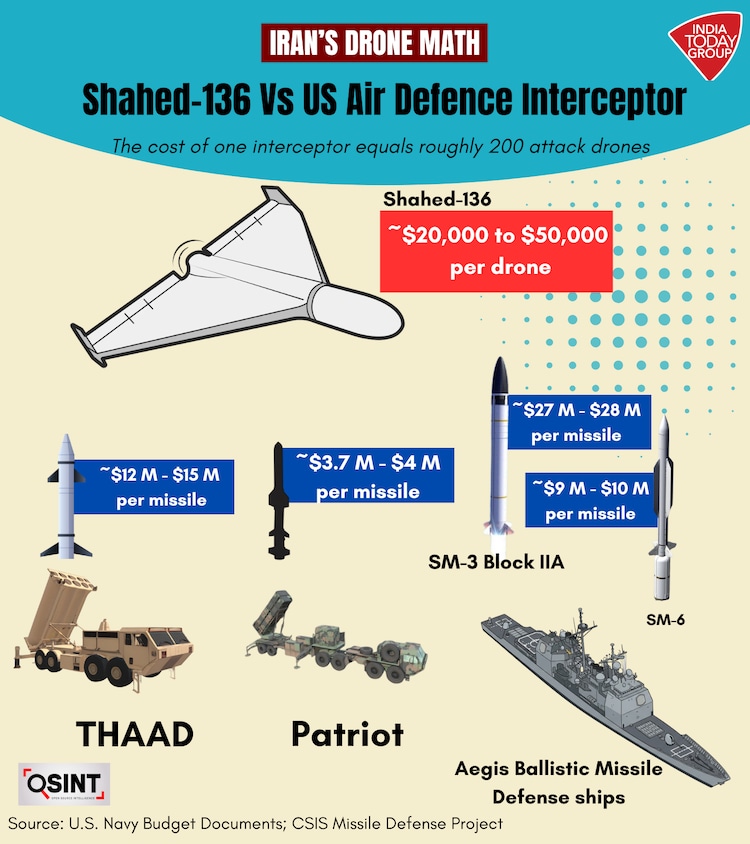
Intercepting these drones, however, often requires far more expensive systems. Missiles used by the Patriot air defence system cost about USD 3.7 million to USD 4 million per interceptor, while the THAAD system’s interceptors can range from USD 12 million to USD 15 million each. Naval air defence systems also come with a steep price. The SM 3 Block IIA interceptor used by Aegis ballistic missile defence ships costs around USD 27 million to USD 28 million per missile, and the SM 6 interceptor roughly USD 9 million to USD 10 million.
In Indian currency, a Shahed-136 costs roughly Rs 18–Rs 46 lakh each, letting Iran fire them in large numbers. But shooting them down can cost tens to hundreds of crores per interceptor: about Rs 34–37 crore (Patriot), Rs 110–Rs 137 crore (THAAD), Rs 82–Rs 92 crore (SM-6), and as high as Rs 247–RS 256 crore (SM-3).
This disparity means that the cost of firing a single interceptor can equal the price of dozens, sometimes even hundreds, of attack drones, creating the economic imbalance that Iran appears to be exploiting in the current conflict.
Iran’s Strikes on US Radar and Comms in Gulf
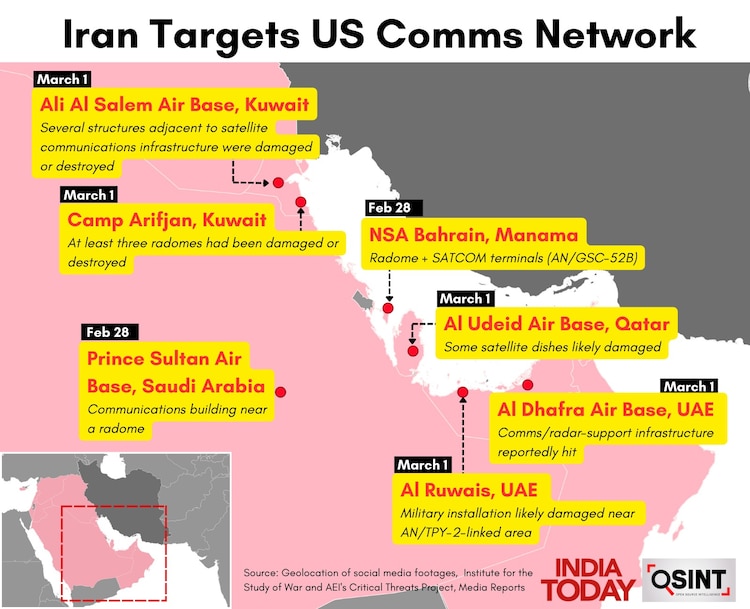
Reports suggest that Iranian strikes targeted communication and radar infrastructure linked to US military operations across several Gulf countries hosting American bases. Satellite imagery and geolocation analysis indicate damage to installations associated with satellite communications and air defence networks.
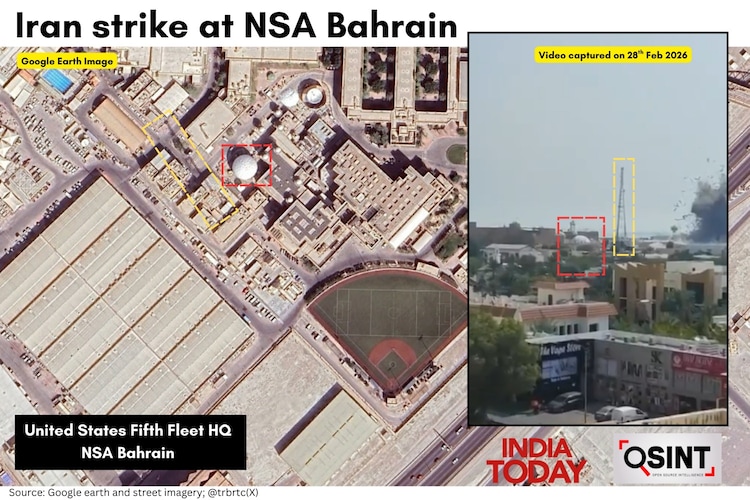
At Ali Al Salem Air Base in Kuwait, structures adjacent to satellite communication infrastructure appear damaged, while Camp Arifjan shows at least three radomes either damaged or destroyed. In Manama, Bahrain, facilities linked to NSA operations reportedly saw damage to a radome and SATCOM terminals.
In Saudi Arabia, a communications building near a radome at Prince Sultan Air Base appears affected. In Qatar, satellite dishes at Al Udeid Air Base were likely damaged.
Meanwhile, in the United Arab Emirates, communications and radar support infrastructure at Al Dhafra Air Base and a military installation near an AN/TPY-2-linked area at Al Ruwais show signs of impact. These sites form part of the communications backbone supporting US military coordination and missile defence operations across the Gulf.




