
Indian team makes big solar discovery that could save Earth’s satellites, GPS

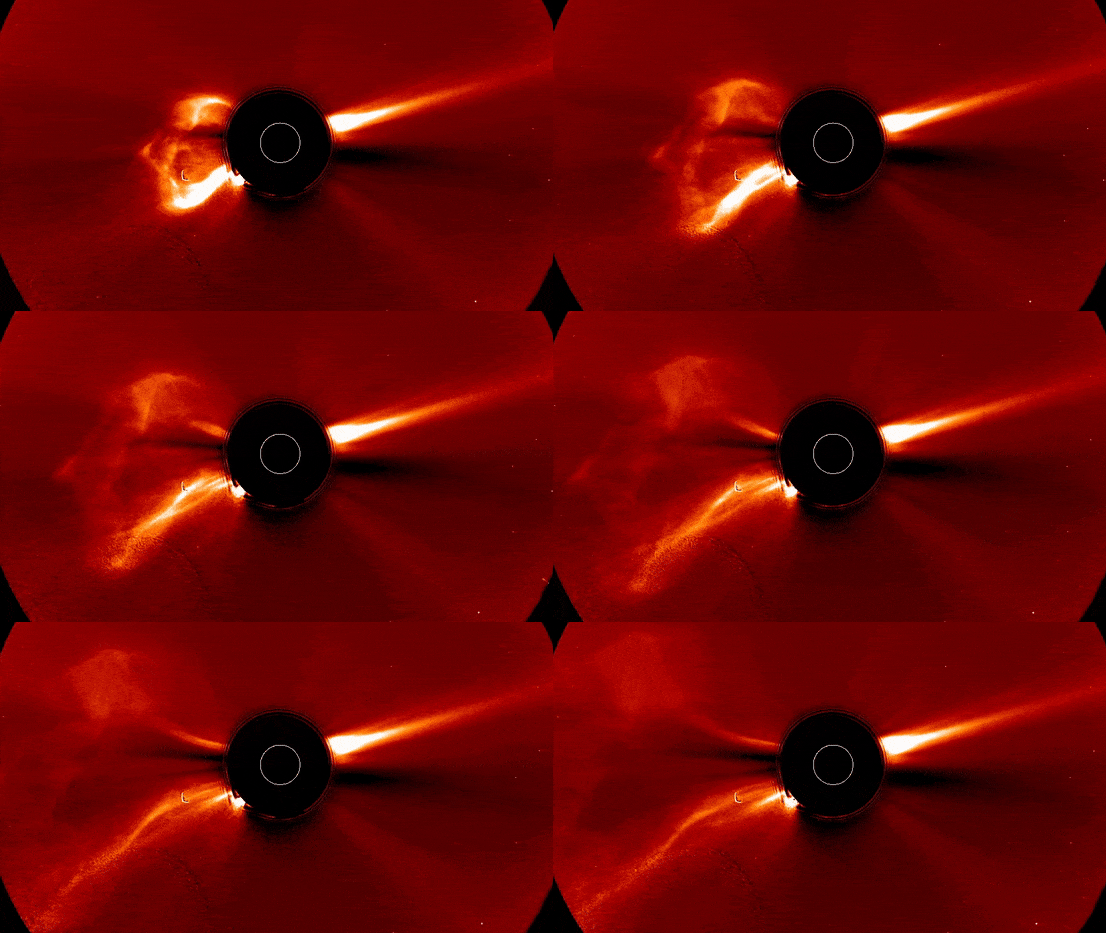
A team of astronomers from the Indian Institute of Astrophysics (IIA) have made a major breakthrough in understanding how dangerous solar storms begin, capturing the closest-ever observations of shock waves triggered by a coronal mass ejection (CME) near the Sun.

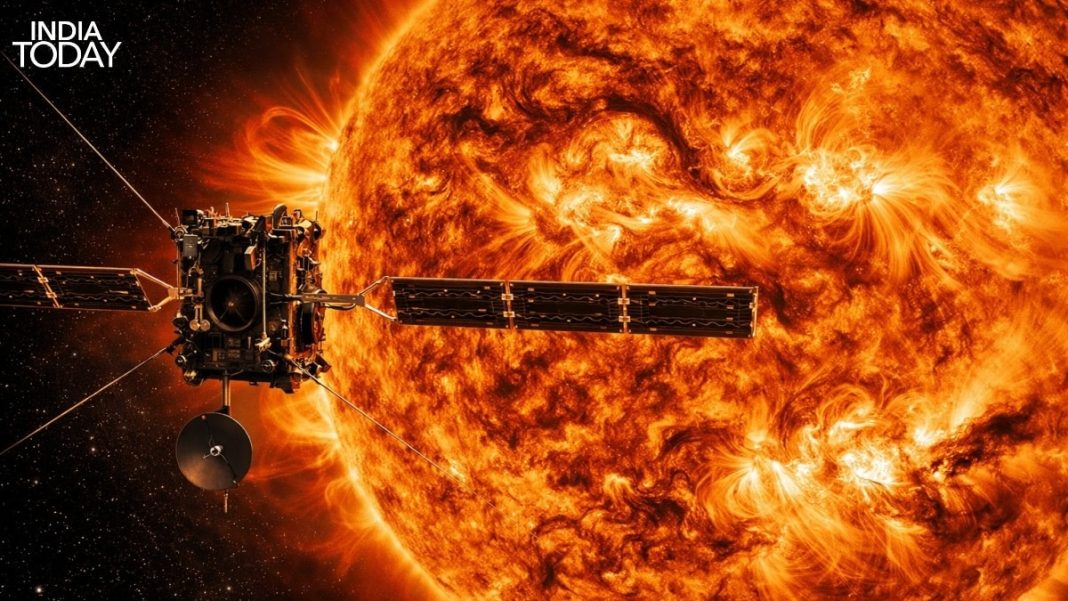
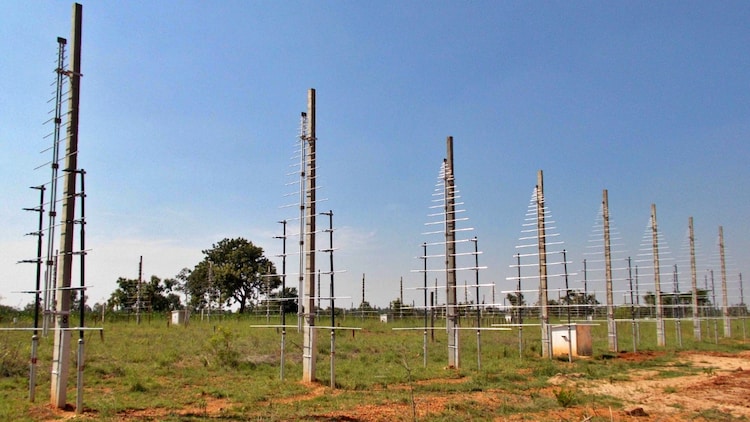
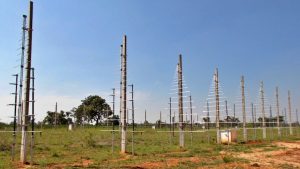
The discovery was made using the Gauribidanur radio telescope, operated by the Indian Institute of Astrophysics (IIA), along with the Visible Emission Line Coronagraph (VELC) onboard India’s solar mission, Aditya-L1.

Just as a supersonic aircraft creates a sonic boom when it breaks the sound barrier, fast-moving CMEs from the Sun generate shock waves in space. These shocks can compress Earth’s magnetosphere, leading to geomagnetic storms that disrupt satellites, GPS systems, radio communications, and even power grids.
CME

They can also intensify auroras and increase radiation risks for astronauts and high-altitude flights.

On May 27, 2024, scientists observed a CME-driven shock forming at a distance of approximately 130,000 kilometers above the Sun’s surface. The shock was traveling at nearly 1,700 kilometers per second.

According to Prof. R Ramesh, Senior Professor at IIA and Principal Investigator of VELC, this is the closest distance from the Sun at which such a shock and its associated radio burst have been unambiguously detected.

For nearly a century, scientists have debated where exactly these shock waves originate. While similar interplanetary shocks have been observed near Earth, identifying their “birth stage” near the Sun has remained challenging.

The breakthrough was possible because of the combined capabilities of the Gauribidanur radio telescope, currently India’s only dedicated low-frequency solar radio observatory, and VELC, which observes the Sun’s outer atmosphere in visible wavelengths.
Radio telescope

Radio telescopes detect intense bursts of low-frequency emissions produced by these shocks.

Radio telescopes detect intense bursts of low-frequency emissions produced by these shocks, while VELC helps identify the exact CME responsible.

Interestingly, the sunspot group linked to the May 27 event may have been the same region that produced the powerful “Mother’s Day” solar storm earlier in May 2024. Due to the Sun’s rotation, the active region reappeared on the eastern edge of the Sun later that month.

Lead author Dr. C. Kathiravan noted that continued coordinated observations during the peak of Solar Cycle 25 could help detect CME-driven shocks even closer to the Sun, possibly within 30,000 kilometers.

The findings, soon to be published in the Journal of Astrophysics and Astronomy, mark a significant step toward improving space weather forecasting and protecting modern technological infrastructure from solar threats.
Latest

Rain hits Delhi amid rising heat: What’s going on with the weather?

Triggered by a weak Western Disturbance, Delhi saw sudden cloud cover, gusty winds and light to moderate rain, bringing a temporary dip in temperatures without

Days after returning from the Moon, Artemis-2 astronauts begin moonwalk training

The timing of the training makes sense as the astronauts’ bodies are still adjusting to Earth’s gravity, their muscles and sense of balance feel off, simila

Satellites to surgery: How Isro’s space tech is entering hospitals’ operating theatre

Nasa began exploring remote surgery for astronauts in the 1970s, but the machines were too bulky, and the idea was shelved. The Moon Man of India, in an exclusi

Rain arrives in Delhi. Other states await similar relief from heat

Around 70% of the region, however, will remain dry and showers will provide only short-lived cooling after a hot afternoon, with temperatures likely to rebound

Indian summers are changing for good. They are getting longer and hotter

For India, where agriculture, water supply, and public health are all dependent on seasonal rhythms, the implications are significant. 

Topics

Bengal elections: AI, body cams and 100-metre ‘Lakshman Rekha’ to guard booths

A sweeping security overhaul, AI surveillance, and a strict no-entry zone promise to transform voting in West Bengal. But how will this unprecedented plan tackl

CBSE 3-language policy push: What happens to foreign languages and teachers now?

CBSE’s three-language rule is not just about adding one more subject. It raises a harder question: in schools that already teach French, Spanish, German and o

Who is Srinivas Narayanan? IIT Madras graduate behind ChatGPT growth exits OpenAI

OpenAI executive Srinivas Narayanan, an IIT Madras alumnus who helped scale ChatGPT and API products, has announced his exit after three years. He said he plans

Bhubaneswar boy scores perfect 100% in CBSE Class 10, now targets NEET

A Bhubaneswar student, Ayusman scored 100% in CBSE Class 10 board results. Starting the preparation from March-April, he says he focused on consistency, concept

KV schools are topping India’s boards. So why are bureaucrats opting out?

How Kendriya Vidyalayas' demographic shift reflects broader educational trends

MVA faces consensus challenge ahead of MLC polls, Mahayuti may secure majority

Can Thackeray's candidacy unify MVA for upcoming MLC elections?

Word of the day: What ‘alacrity’ means and how to use it right

The word of the Day for April 18 is: Alacrity. Learn what it means and how to use it in daily conversation. Add it to your vocabulary and impress everyone aroun

Quote of the day by Ratan Tata: I don’t believe in work-life balance. I believe in…

Powerful words by Ratan Tata inspire millions seeking success, happiness, and purpose in life. Discover his wisdom on work-life integration, leadership, persona
spot_img

Related Articles

Popular Categories

spot_imgspot_img

