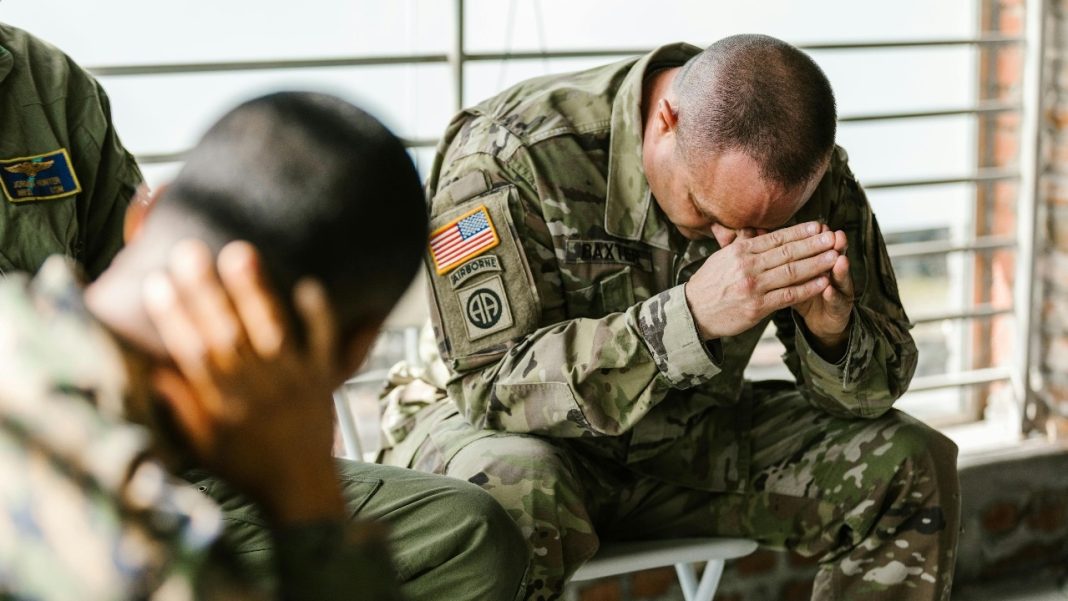
The US Department of Defense’s decision to remove 22 universities from its Professional Military Education (PME) list has been framed as an administrative reshuffle. It is worth being more honest about what it actually is: a deliberate narrowing of how military leaders are permitted to think.
Beginning in 2026–27, US officers will no longer attend Senior Service College fellowships at institutions such as Harvard University, Yale University, Columbia University and Princeton University under a directive issued by Defense Secretary Pete Hegseth. Ninety-three fellowships have been cancelled.
The stated rationale involves institutional alignment, minimal ties to adversaries and limited public opposition to the Department of Defense.
Read plainly, that is not an education policy. It is a loyalty filter.
THE OLDEST MILITARY PRINCIPLE: DON’T THINK, OBEY
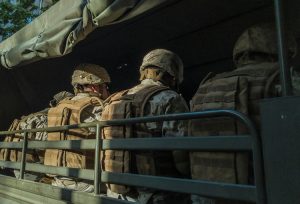
There has always been an uncomfortable truth at the heart of military institutions. Soldiers are trained, in part, to override their own moral instincts. Killing another human being runs against the most fundamental grain of human psychology.
Armies have known this for as long as armies have existed.
The entire architecture of military training — hierarchy, repetition, desensitisation, unit identity — is engineered, at least partly, to suppress the kind of individual moral reasoning that would otherwise make combat psychologically impossible for most people.
This is not a criticism unique to the US military. It is a structural reality of armed forces everywhere. The question has always been where that conditioning stops — and whether it extends beyond the battlefield into the strategic mind.
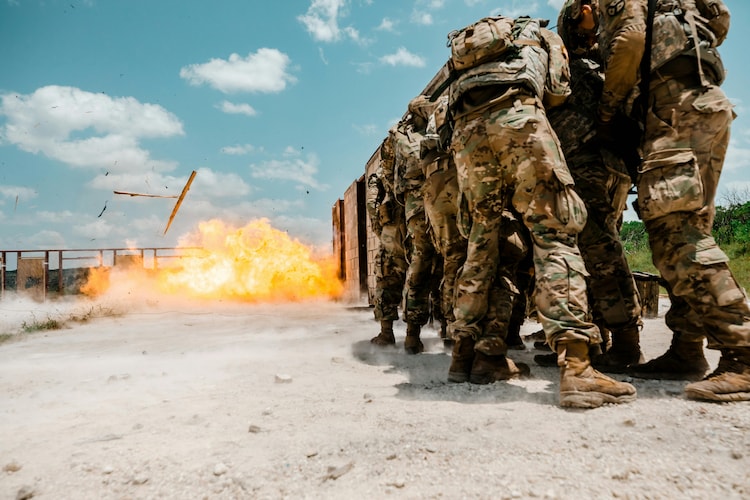
For decades, the United States answered that question carefully. It maintained rigorous internal war colleges, yes.
But it also deliberately sent select officers into civilian universities, placing future strategic leaders inside environments where assumptions were challenged, where competing frameworks collided, and where the word “why” was not treated as insubordination.
That deliberate choice is now being reversed.
WHAT CIVILIAN CAMPUSES ACTUALLY PROVIDED
The officers sent to elite institutions were not there for ideology. They were there for intellectual cross-training that the military’s own environment, by design, cannot fully provide.
Civilian universities offered exposure to competing policy frameworks, global academic perspectives, civilian critiques of defence strategy and interdisciplinary research spanning technology, governance and geopolitics.
Some of the removed institutions also hosted defence-linked research initiatives. Carnegie Mellon University, for instance, has supported AI collaborations connected to military applications — the kind of work that directly serves Pentagon interests.
Beyond curriculum, these placements created alumni networks stretching into government, industry and diplomacy.

In strategic leadership roles, such networks are not peripheral. They are often the difference between a commander who understands the full theatre of modern conflict and one who only understands the armed component of it.
None of this replaced military discipline. That was never the point. It complemented it.
THE ALIGNMENT CRITERION AND WHAT IT ACTUALLY MEANS
The Pentagon’s revised criteria now emphasise institutional alignment, which broadly means universities that do not publicly oppose Department of Defense policy.
This is a significant reframing. Education is no longer being evaluated primarily on intellectual merit or strategic value. It is being evaluated on political compliance.
The alternative institutions proposed under the new framework include Liberty University and George Mason University — institutions that, whatever their academic standing, are unlikely to produce the kind of institutional friction that challenges a military officer’s assumptions about power, strategy or the limits of force.
That friction was the point. Intellectual discomfort is not a threat to strategic competence. It is a prerequisite for it.
CRITICAL THINKING IN THE AI ERA IS NOT OPTIONAL
The timing of this decision is particularly striking given the strategic environment it arrives in.
Artificial intelligence, cyber operations, information warfare and space strategy define contemporary military competition. These are not domains that reward obedience.
They demand analytical agility — the ability to question models, identify blind spots, anticipate systemic failure and operate in conditions of profound ambiguity where the rulebook does not yet exist.
An officer who has spent a career in environments that discourage independent reasoning is not better prepared for this landscape. They are less prepared for it.
The capacity to interrogate an AI-generated threat assessment, to identify the assumptions baked into a machine learning model, or to recognise when a strategic algorithm is optimising for the wrong objective — these are not skills produced by institutional compliance. They emerge from the habit of critical thought.
The United States is making a decision to reduce that habit in its future strategic leadership, at precisely the moment when the strategic environment most demands it.
THE CIVIL-MILITARY BRIDGE
There is a broader cost that tends to receive less attention. Historically, the practice of sending officers to civilian universities served a function beyond individual development. It maintained the intellectual bridge between uniformed military leadership and civilian policymakers — a bridge that democratic systems depend on.
Officers who had spent time inside civilian academic environments understood how elected officials, diplomats, academics and the public reasoned about conflict and security. That understanding reduced miscalculation. It created leaders who could translate military reality into civilian language and vice versa.
Reducing that exposure, over time, does not simply affect what officers know. It affects how they relate to the civilian world they ultimately serve, and how well that world can hold them accountable.
POLITICAL CROSSCURRENTS AND WHAT THEY REVEAL
The directive arrives amid an ongoing federal confrontation with elite universities over research funding, campus governance and ideological alignment. Those are legitimate policy debates in their own right.
But by embedding officer development inside those political dynamics, the Pentagon has done something consequential. It has made the intellectual formation of military leadership a function of political loyalty rather than strategic necessity.
That is a meaningful shift in how the United States thinks about its armed forces, and about what kind of mind it wants running them.
THE HONEST QUESTION
The cancelled fellowships represent a relatively small fraction of total military personnel. But Senior Service College placements happen at pivotal career moments, and the minds shaped there go on to command for decades.
The broader question this decision raises is not whether US military officers will remain disciplined. They will. Military institutions are structured precisely to ensure that.
The question is what kind of leaders are being built beyond the discipline — whether they will be equipped to navigate a world that is too complex, too fast-moving and too ambiguous for a single institutional perspective to encompass.
History suggests that the most consequential military failures have not come from too much independent thinking at the top. They have come from too little of it.
Curtailing the intellectual environments that produce strategic breadth, in the name of institutional alignment, does not make the military stronger. It makes it more manageable. Those are not the same thing.