India feeds 1.4 billion people. But the very systems built to do that, including chemical-heavy, water-intensive, monoculture farming, are now buckling under the weight of a changing climate.
Monoculture farming is a technique in agriculture where only a single crop is grown across a large piece of land.
Erratic monsoons, dropping groundwater tables, and intensifying heat stress are straining the model that once saved India from famine, putting stress on thousands of hectares of land across the country, chipping away at the livelihoods of farmers, and sending ripple effects like a hike in food prices.
To try and control the situation and prepare for a potentially worse scenario, science is stepping in.
Indian researchers are engineering a new kind of agriculture.
Tools and techniques like CRISPR (Clustered Regularly Interspaced Short Palindromic Repeats) and breeding chambers are showing a glimmer of hope for a future where agriculture will have to be far more productive and resilient, as the weather grows more extreme from climate change.
CRISPR is a gene-editing tool that works like molecular scissors, allowing scientists to precisely modify a seed’s DNA to give future plants desirable traits, like drought resistance or higher yield.
By growing these genetically-edited seeds in controlled environments called breeding chambers, scientists can develop better, stronger crops in a fraction of the time traditional methods would take.
A second Green Revolution might just be upon us.
HOW IS SCIENCE HELPING AGRICULTURE?
The sharpest edge of this effort is genomics.
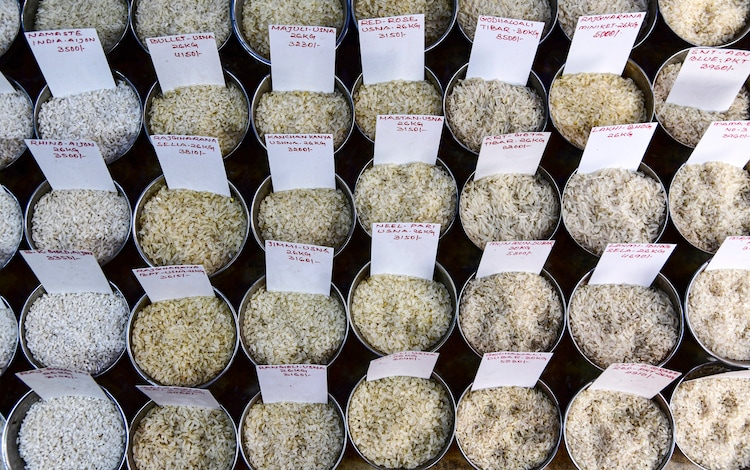
The Indian Council of Agricultural Research (ICAR) scientists have developed two genome-edited rice varieties, DRR Dhan 100 (Kamala) and Pusa DST Rice 1, using CRISPR-Cas9 to improve the crop’s drought and salinity tolerance.
Field trials between 2023 and 2024 recorded yield advantages of roughly 19 per cent over traditional varieties, alongside better water-use efficiency and lower greenhouse gas emissions from paddy cultivation.
Both varieties are being scaled for multi-state deployment.
Complementing genomics, speed breeding and controlled-environment chambers that can shorten multi-year crop cycles into months are rapidly generating stress-resilient lines, with preliminary research reaping early promise.
IS FARMING READY FOR EXTREME WEATHER?
The scientific breakthroughs have come within a decade-long institutional push.
Between 2014 and 2024, ICAR developed 2,900 improved varieties of crops, of which 2,661 carry validated tolerance to drought, salinity, and heat.
In August 2024, Prime Minister Narendra Modi dedicated 109 new climate-resilient, bio-fortified varieties of crops to farmers. This included Pusa 2002, a millet that matures in 70 days, and submergence-tolerant rice carrying the Sub1A gene.
Sub1A gene is a switch found in certain types of rice that allows the plant to survive while being completely submerged underwater for up to two weeks, such as during flash floods.
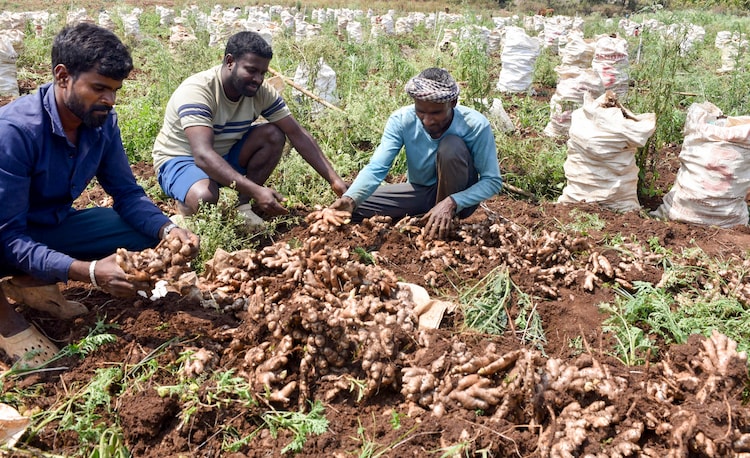
The level of these scientific breakthroughs is impressive, but it also underlines the urgency of the crisis we face. According to experts, a one-degree Celsius rise in temperature will cut India’s wheat output by 4 to 5 million tonnes.
Such a significant drop in output for a staple food will have cascading effects.
Alongside science, traditional crops are also playing a role in helping sustain the push.
In Odisha, over 200 indigenous varieties have demonstrated stronger drought-tolerance than commercial hybrids under rainy conditions.
On the other hand, millets consume 60 to 70 per cent less water than paddy while delivering a comparable caloric density per hectare.
Caloric density per hectare refers to the amount of food energy, measured in calories or kilocalories, that can be produced from a specific agricultural area, typically one hectare.
HOW DOES GOVERNMENT SUPPORT SUSTAINABLE FARMING?
While innovation is driving change, science is also finding institutional backing.
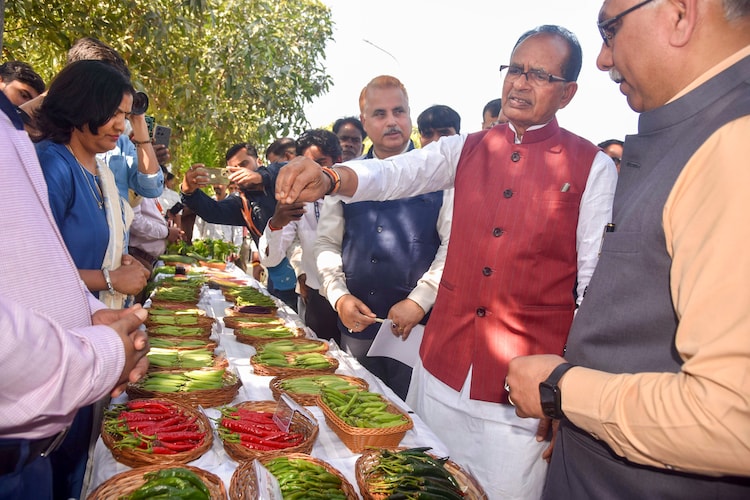
The agriculture ministry is targeting 25 per cent of kharif paddy acreage with climate-resilient seeds.
The National Mission on Natural Farming (NMNF), approved in November 2024 with a Rs 2,481-crore outlay, is deploying microbial bio-inputs across 7.5 lakh hectares.
Scientists and policymakers agree that science-backed solutions need to be mixed into the national policies to help India’s agricultural sector.
In other words, they agree that resilient seeds must work alongside optimised irrigation, diversified rotations, and digital farm advisories to make Indian agriculture genuinely weatherproof.