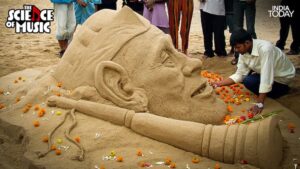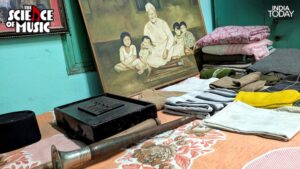
There is a sound that has announced every Indian wedding for a thousand years, but the modern generation has barely heard it.
We have not heard it being played by a man who had spent his entire life learning how to make one note sound like a question and the next one sound like an answer.
We have heard it as a sample on a keyboard, looped into the opening bars of a Bollywood song, layered over a synthesised drum at a wedding hall.
We have heard of it. The shadow.
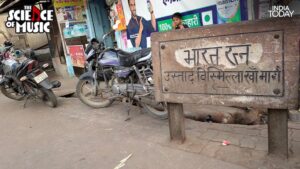
The actual sound of the shehnai, as it was played at the door of a bride’s house at four in the morning, as it was played from rooftops for three days before a wedding, and as it was played by Ustad Bismillah Khan from the ramparts of the Red Fort on the morning India became free, has gone almost completely quiet.
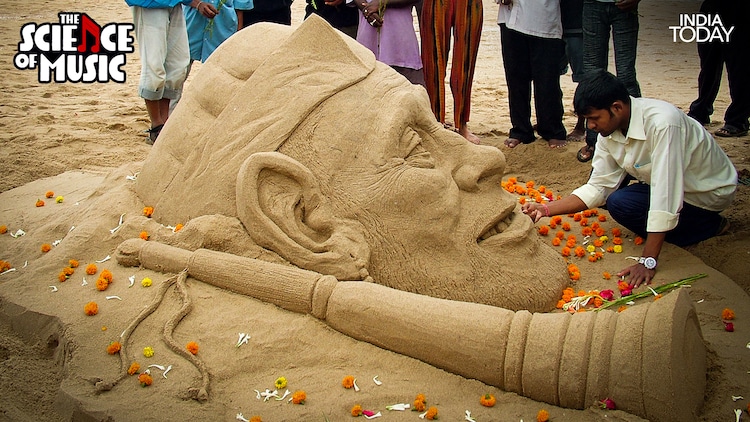
It is the strangest kind of disappearance. Not death exactly.
The instrument is still there, in concert halls and temples and the recordings of a few great masters that you can still find on YouTube if you know what to look for.
But at the place where the shehnai actually lived, at the wedding mandap, at the funeral procession, at the courtyard at dawn, the silence at times is haunting.
This is the story of how that happened.
And underneath it, the physics, which is more astonishing than almost anyone who ever danced to a shehnai has ever bothered to know.
THE ORIGIN OF A ROYAL INSTRUMENT
The name shehnai carries its history inside it.
The most widely cited theory combines shah, meaning king or royal, and nai, meaning a wind instrument or flute, and gives us a name that translates as the royal flute, or the king’s instrument.
Another theory, advanced by the musicologist Dileep Karanth, suggests the name is a modification of sur-nal, where sur means musical note and nal means pipe or reed in several Indian languages.
Karanth has argued that this same sur-nal may be the etymological root of the surna, or zurna, the name by which similar reed pipes are known across the Middle East and Eastern Europe, suggesting a deep, ancient connection between the shehnai and its Persian and Central Asian relatives.
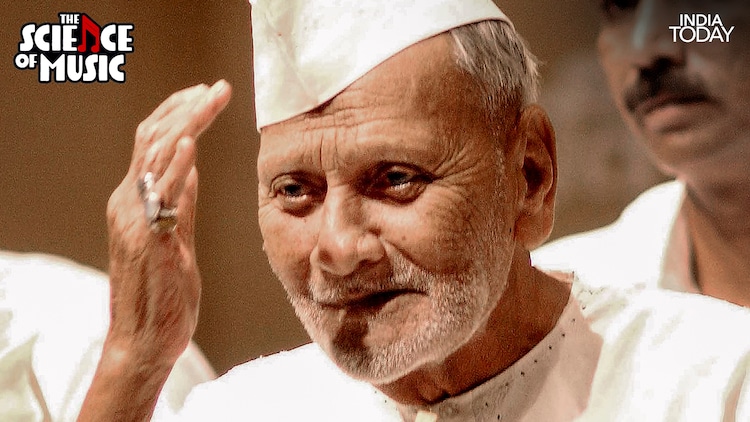
The shehnai is believed to have arrived in India with Muslim musicians and to have featured prominently in the naubat, the nine-instrument ensemble of the Mughal royal court.
It is closely related to the Persian surna, and it travelled into India along the same routes that brought other Persian cultural forms across the subcontinent: through Sufi musicians, through Mughal courts, through the slow, patient movement of instruments and traditions across the long centuries.
Dr Arun M Kumar, Adjunct Professor of Engineering Design at IIT Madras, suggests the shehnai may also have evolved partly from the pungi, an older Indian instrument.
“The pungi with its cylindrical bore produces a sharper, shriller sound, which made it less attractive when the first shehnai made its appearance in India with its mellower, more pleasing sound, attributable to the tapering bore,” Dr Kumar tells indiatoday.in.
“Perhaps the shehnai has evolved from its ancestors with a pronounced taper of the bore, larger bore size and more pronounced metallic flare, key factors in producing a mellow, muted and pleasing sound,” he adds.
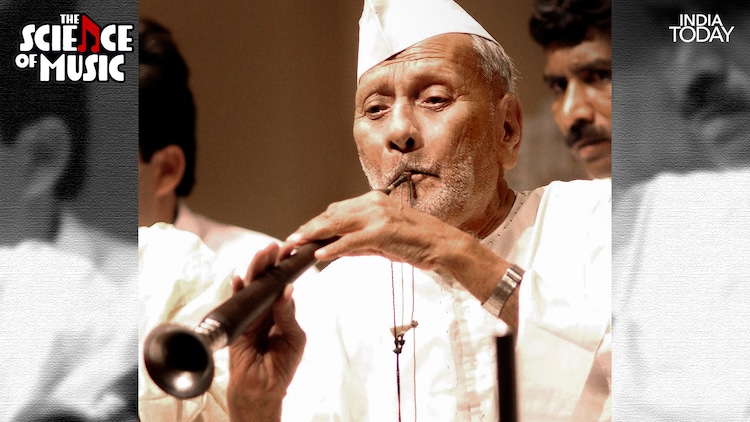
The home of the shehnai, across all the centuries, has been Varanasi.
The temples on the banks of the Ganga, the Naubat Khana of the Balaji temple, the small lanes where instrument makers shaped wooden tubes by hand and listened, struck the reed, and listened again.
Varanasi is where the shehnai found its finest players, its most devoted practitioners, and its deepest connection to the religious and ceremonial life of North India.
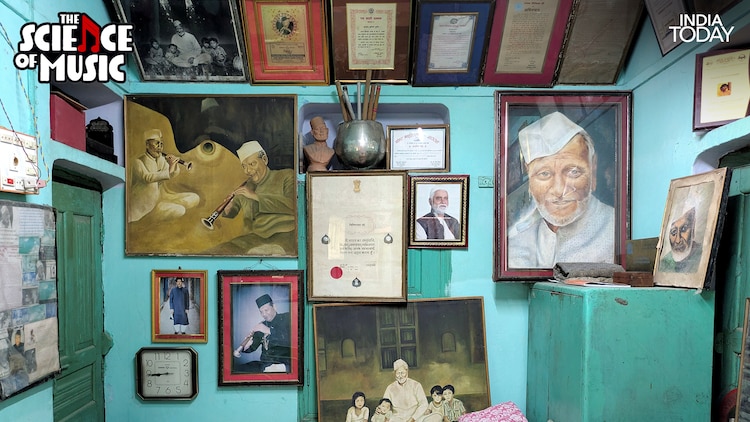
Varanasi is also where Bismillah Khan grew up.
THE SOUND THAT SHOULD NOT CARRY THIS FAR
Let’s begin with what the shehnai actually is, because the answer matters.
It is a double reed instrument, which means that at the very top, where the player’s lips press, sit two thin slivers of cane bound together with a tiny gap between them.
When you blow air through those slivers, they slap against each other hundreds of times every second, and the air going past them breaks into a furious vibration.
That vibration is the beginning of the sound.
Dr Kumar describes this opening moment in a way that no textbook ever will.
“When the two slivers of reed vibrate, they produce a sound very similar to how children blow air through lips to mimic a bus driving by, except that the upper and lower lips are the two reeds in the case of shehnai,” Dr Kumar says. “This sound, once produced, gets amplified in the conical tube of the shehnai.”
The reed by itself would produce nothing musical at all, just a small, comic, buzzing rasp.
What turns that buzz into the sound that broke hearts across centuries of Indian weddings is the body of the instrument.
A long, gradually widening wooden tube, narrow at the top where the reed sits, expanding gently toward the bottom, where a flared metal bell opens outward like the mouth of a flower.
This shape, wider at one end than the other, is called a conical bore. The bore is just the hollow inside of a tube.
Conical means it widens slowly along its length, like the inside of a megaphone, or the inside of a funnel held upside down.
THE CONICAL BORE, AND WHAT IT DOES TO SOUND
When a sound wave travels down a tube, it does not travel alone.
Alongside the main note that you actually hear, there are quieter, fainter, and higher tones that ring within and around it, the way the echo of a word lingers after the word itself has ended.
These are called harmonics, or overtones, and they are everything.
They are what give an instrument its character, its warmth, its personality.
The reason a shehnai sounds like a shehnai and not like a clarinet is not the main note, which any wind instrument can produce. It is a choir of fainter tones woven through it.
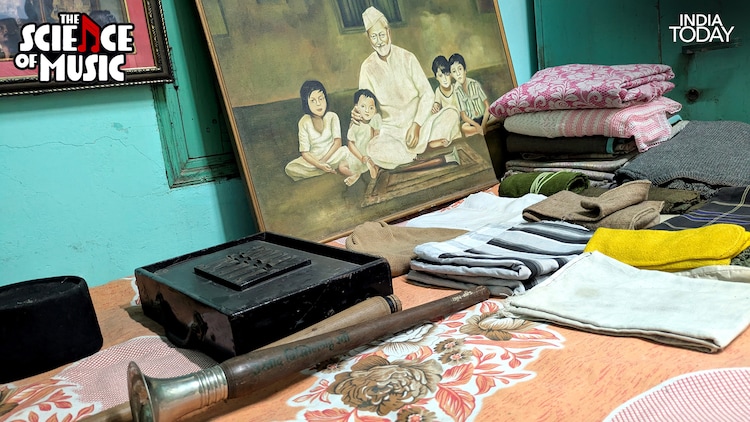
Dr Bikash Dey, Professor at IIT Bombay, explains the principle behind all wind instruments simply.
“In wind instruments, the shape of the air column inside plays an important role,” Dr Dey tells indiatoday.in. “Most importantly, the length and diameter play crucial roles, and higher octaves can be played by increasing blowing pressure and speed, but in shehnai, the reeds also play a role.”
An octave is the musical distance between one note and the next note that sounds the same but higher, like the gap between one Sa and the next Sa, where the higher note vibrates at exactly twice the frequency of the lower one.
In a straight, uniform tube, the kind found in some Western instruments, the wave inside keeps roughly the same shape from end to end, and the sound that comes out is bright, direct, sometimes piercing.
The shehnai’s tube is not like that.
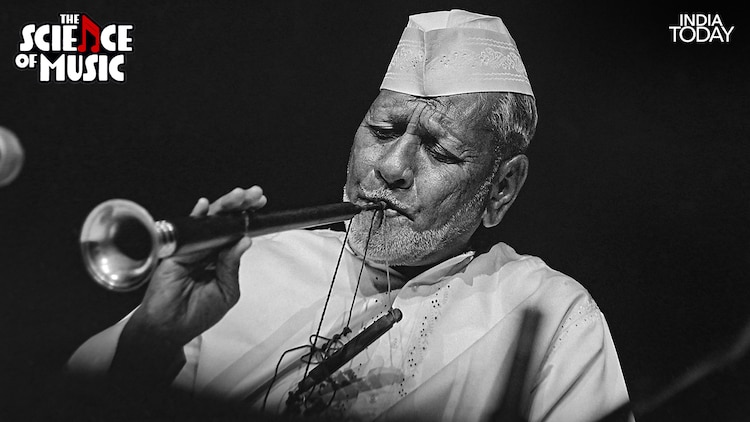
Its tube widens, and that single design choice changes everything about the music that emerges from it.
“In the case of a gradually widening tube, the magnitude of the peak amplitude reduces, and the larger the diameter, the smaller the peak amplitude,” Dr Kumar explains.
In plain language, as the sound wave moves through the widening tube, its highest points get smaller and smaller.
The peaks soften. The brightness mellows.
The sound that emerges at the bell is rounder, warmer, and more melancholy than what would emerge from a straight tube.
This is the secret of why the shehnai sounds the way it does, and why it can carry sorrow and joy in the same breath.
It is also why the shehnai sounds so different from the nadaswaram, its larger South Indian cousin played in Tamil Nadu temples and weddings.
“The length and size of the nadaswaram are bigger compared to the tiny shehnai, and this leads to larger waveforms with higher amplitudes, leading to a louder and deeper sound,” Dr Kumar says.
Same family. Same logic. But, different size, different sound.
THE DANCING WAVEFORM INSIDE THE TUBE
The shehnai has no keys, no valves, no mechanical aids of any kind.
There is only the wooden body, the reed at the top, and six to nine small holes drilled along the side of the tube.
A player creates different notes on a shehnai by opening and closing finger holes along its two-octave range. In physics terms, each change alters the shape of sound waves travelling through the air column inside the instrument.
To understand this, imagine a skipping rope tied at one end and shaken from the other. As it moves, certain points remain almost still while the rest vibrate. These motionless points are called nodes, which are spots where there is no movement despite surrounding vibration.
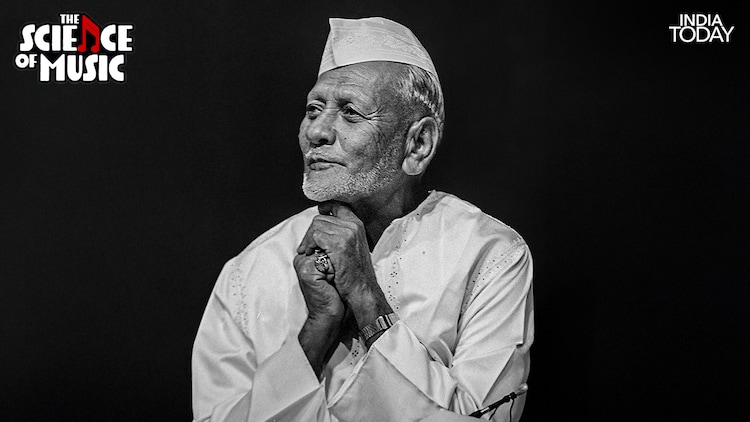
Inside the shehnai, air behaves in a similar way. Instead of a rope, invisible waves move back and forth between the reed and the flared bell. Nodes form at positions where the air momentarily does not move.
When all holes are closed, a basic wave pattern forms with one node at the bell end and strong vibrations near the reed, producing the lowest note. More nodes create higher-pitched notes.
“Once the player opens a hole, the waveform pattern changes with more nodes, thus lowering the wavelength, or increasing the frequency of the sound,” Dr Kumar explains.
Frequency is just the number of times per second the wave completes one full cycle, and a higher frequency produces a higher note.
So when a shehnai player lifts a finger from a hole, the air column inside the tube reorganises itself into a new pattern with more still points, the wavelength shortens, the frequency rises, and the note climbs.
“As the player opens and closes the holes, you can visualise a dancing waveform that keeps changing its pattern with more nodes or fewer nodes, with corresponding changes in wavelength and frequency,” Dr Kumar says.
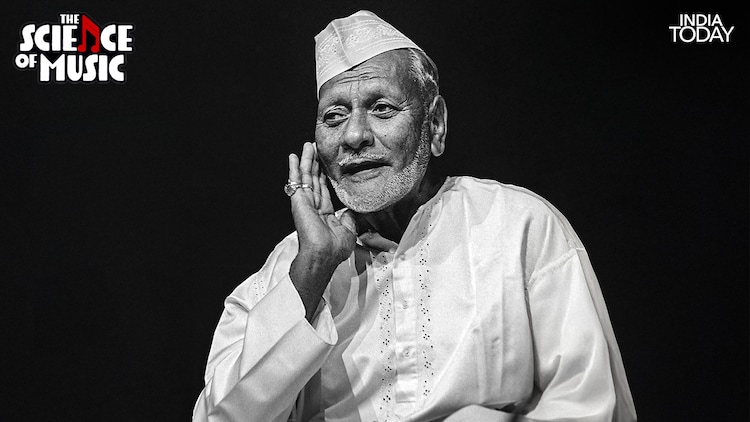
The player’s lips also do something.
A technique musicians call embouchure, the specific pressure and position of the lips on the reed, allows the player to bend notes, slide between them, hold one note slightly higher or slightly lower than its neighbour, and produce the speech-like, sliding intervals that are at the heart of Indian classical music.
The keyboard cannot do this. The keyboard plays each note exactly where it has been told the note lives, and not a fraction higher or lower.
The shehnai breathes between the notes.
THE PHYSICS OF PROJECTION
There is something about the shehnai that anyone who has ever heard it outdoors already knows in their body.
The sound carries.
Not just to the back of the room, but across courtyards, over walls, beyond any acoustic logic that seems reasonable for an instrument held in two hands.
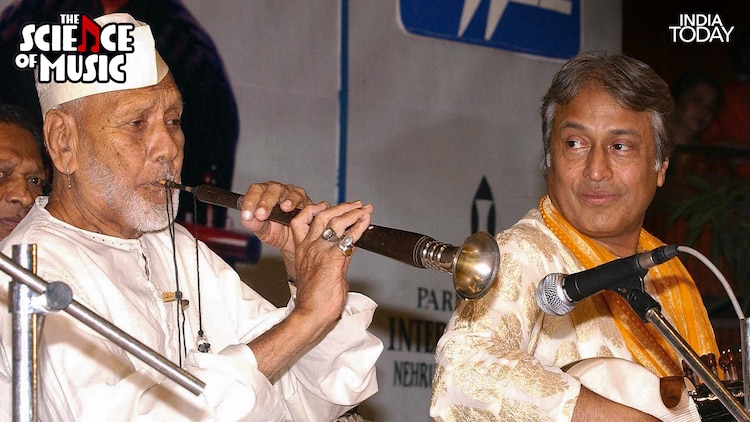
When Bismillah Khan played from the ramparts of the Red Fort on the morning of August 15, 1947, his sound filled an enormous open space without a single microphone, and the country heard it.
Dr K R Guruprasad, Associate Professor of Mechanical Engineering at IIT Kanpur, explains why a small wooden instrument can do this.
“The horn-type shape of the main component of the instrument, along with a brass horn at the end, amplifies the sound, and the instrument does not attenuate the energy,” Dr Guruprasad tells indiatoday.in.
Attenuation simply means reduction.
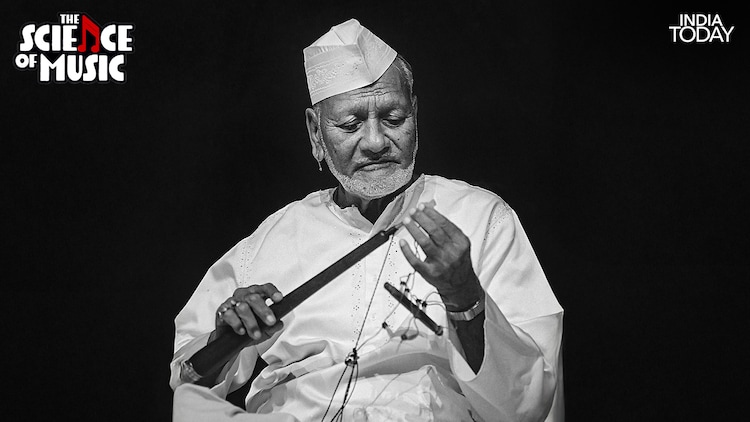
What Dr Guruprasad is pointing at is the fact that the shehnai takes the energy a human player breathes into it and converts it into sound with almost no loss along the way.
The metal bell at the end is not decorative.
It does the same job a megaphone does for a human voice, smoothing the transition between the sound trapped inside the tube and the open air outside, allowing more of the wave’s energy to leave the instrument and travel outward into the world.
“These instruments use direct human input compared to modern electronic instruments, which is a fundamental advantage from this perspective,” Dr Guruprasad adds.
This is one of those quiet, devastating sentences whose full meaning lands only on second reading.
THE AUSPICIOUS SOUND AND WHAT MAKES IT SOULFUL
Ancient Indian texts describe the shehnai as mangaldhwani, which translates as auspicious sound.
It is part of the naubat, the ensemble of nine instruments considered sacred and essential in the Mughal royal court, and it has been called a mangal vadya, an instrument of good fortune, for centuries.
A wedding without a shehnai was unthinkable.
A temple festival without one is half a festival.
A funeral, half a goodbye.
Dr Guruprasad believes the answer to why the shehnai sounds the way it does goes beyond physics.
“Both the acoustic characteristics due to the combination of the wooden material and its shape, and the coupling of the reed with the player’s mouth, help it produce its characteristic timbre and mangaladhvani,” he says.
Timbre, pronounced TAM-ber, is the quality of a sound that makes it recognisable as itself, the difference between the same note played on a flute, a sitar, and a shehnai.
“I feel it is the coupling of the instrument through the reed which makes it produce an auspicious sound,” Dr Guruprasad adds. “Beyond the acoustics, it is a more humane aspect.”
What he is pointing at is something physics has never quite found a language for.
The shehnai carries the physical signature of a human body in every note it produces.
The breath pressure, the lip tension, and the fractional shift of the embouchure with every phrase.
The slight difference between a note played by a man who has practised for forty years and a note played by a man who has practised for forty-one.
A keyboard does not carry these things.
This is the gap, the small unbridgeable gap between the shehnai and what replaced it, and the country crossed it without quite noticing.
THE MASTERS WHO MADE THE SHEHNAI SING
Before Bismillah Khan, before the Red Fort, before the Bharat Ratna, there were others.
Chhote Khan, Gaurishankar, and Nandlal of the Benaras tradition were among those who began, in the nineteenth century, weaving the structures of classical raga into shehnai performance.
Pandit Ram Sahay of the Banaras Gharana served as a royal musician in the court of Nawab Asafuddaula of Lucknow.
Ustad Wazir Ali Khan performed the shehnai at Buckingham Palace when Pandit Motilal Nehru took him to London in 1910, making him possibly the first Indian classical musician to play the instrument before a European audience.
Of the twentieth-century masters, Pandit Anant Lal, born in 1927, was a beloved figure of the Banaras Gharana.
He worked with All India Radio, performed alongside Pandit Ravi Shankar, and was known affectionately to the music world as Babuji.
Ustad Ali Ahmed Hussain Khan, born on March 21, 1939, in Kolkata, became so synonymous with the shehnai in the eastern part of the country that the evening broadcast of Doordarshan opened every night with his rendition of Saare Jahan Se Achchha, the signature tune composed by Pandit Ravi Shankar.
Ustad Ali Ahmed Hussain Khan served as a guru at the ITC Sangeet Research Academy, and passed away in March 2016.
Pandit S Ballesh Bhajantri, a Padma Shri awardee known across South India as Dakshina Bharat Bismillah Khan, has played the shehnai for over 85,000 film songs in different languages, working with music directors including Ilaiyaraja, A R Rahman, and Keeravani.
Among the younger generation, Lokesh Anand, born in 1978, continues the classical tradition.
Bhaskar Nath, born in 1994, belongs to the Meerut Shehnai Gharana and is widely considered a prodigy.
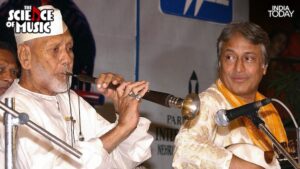
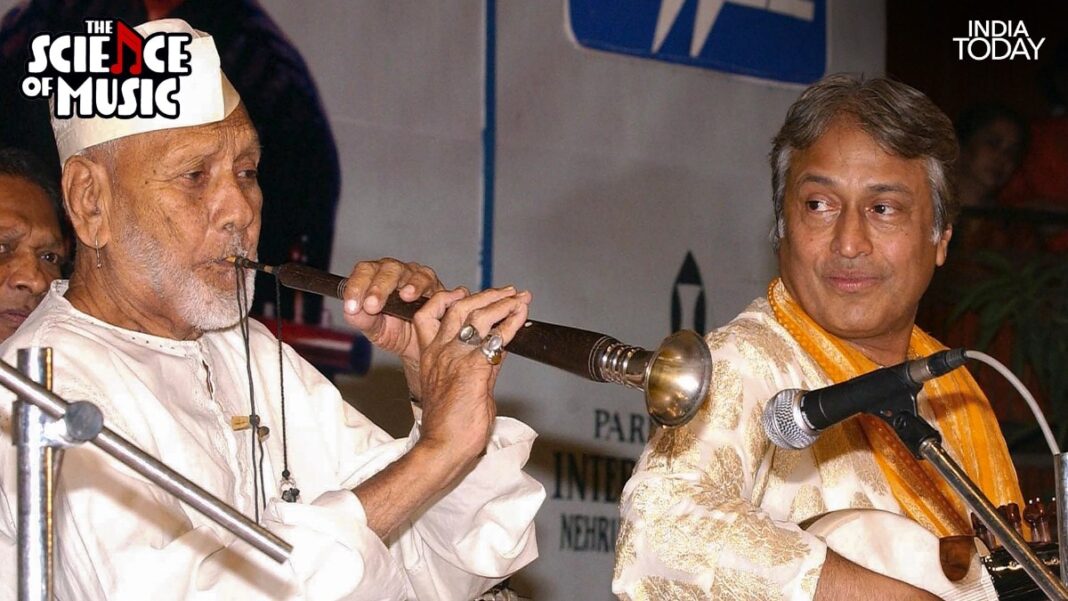
And then there was Bismillah Khan, and there is, even now, simply no one else quite like him.
THE MAN WHO PLAYED AT INDIA’S BIRTH
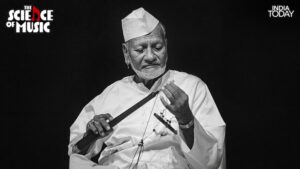
Born on March 21, 1916, in Dumraon (now in Bihar), Bismillah Khan came from a family of traditional musicians.
Named Qamaruddin Khan at birth, he earned the name “Bismillah” when his grandfather blessed him as a newborn. At just three, he moved to Varanasi to train under his uncle, Ali Bux Vilayatu Khan, a temple shehnai player.
A disciplined student, he practised for hours daily at temple complexes, maintaining this rigorous routine throughout his life.
His breakthrough came in 1937 at the All India Music Conference in Kolkata, where he elevated the shehnai from a ceremonial instrument to the classical stage.
Over the years, he performed globally, taking the sound of Varanasi to audiences worldwide.
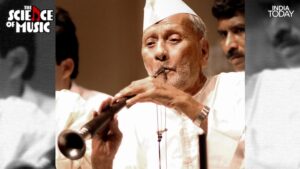
On August 15, 1947, at age 31, he played Raag Kafi from Delhi’s Red Fort during India’s independence celebrations, invited by Jawaharlal Nehru. His contributions earned him India’s highest honours, including the Bharat Ratna in 2001.
He passed away in 2006 at 90 and was buried in Varanasi with full state honours. His legacy lives on through disciples and family, though the shehnai’s prominence has since declined.
THE KEYBOARD THAT SILENCED THE SHEHNAI
The displacement of the shehnai at Indian weddings happened with remarkable speed once electronic keyboards became affordable in the 1980s.
The principal wedding instrument of North India, the instrument that had announced celebrations and accompanied funerals for a thousand years, was suddenly redundant.
The economics were brutal and simple.
A shehnai player required years of training and commanded a fee commensurate with his craft. A keyboard costs a one-time sum and needs no specialist to operate.
The wedding industry made its choice quickly, and once it had been made, the choice was almost impossible to undo.
What those keyboards could not replicate, Dr Guruprasad says, was not just the sound of the instrument, but the contribution of the player.
“Synthesisers cannot completely reproduce the instrument, and more so, nor the player. The player, I think, is the main missing link as far as the feel of sound goes,” he says.
This is the central, devastating truth.
A synthesiser can approximate the frequency profile of a shehnai. It can produce a sound that, in a blind test on a small phone speaker, a casual listener might identify as shehnai-like.
What it cannot produce is the variation that comes from a living person, the fractional changes in breath pressure, the micro-adjustments of the lips, the difference between a note played in the first hour of a wedding and a note played in the eighth.
Dr Dey adds another layer to this.
“Most electronic instruments try to mimic certain acoustic instruments, and they can do this only imperfectly for various reasons,” Dr Dey says.
“About certain frequency combinations having appeal, this is indeed true due to the resonance of common harmonics, which play crucial roles in Indian as well as Western music,” he adds.
The physical limits of the shehnai, Dr Guruprasad notes, are not weaknesses but signatures.
“The kind of pressure required to generate out-of-range notes is typically beyond human capabilities,” he says.
This is a beautiful reframing.
The boundaries of the shehnai are the boundaries within which its character was formed, and to take away those boundaries is to take away the instrument itself.
The shehnai still plays in concert halls, in temples, in the recordings of Bismillah Khan that remain among the most important music India has ever produced.
It plays at the occasional wedding that still seeks it out, at Ramlila troupes in Old Delhi, at mandirs marking holy days.
But the pavement at Katra Pyare Lal in Chandni Chowk, where shehnai players once waited each morning for their patrons to come and book them, is quieter than it used to be.
Before he died, Bismillah Khan said something that has stayed with everyone who has ever loved the instrument.
“Shehnai mere saath nahi maregi, Insha Allah koi dusra Bismillah paida hoga.” (The shehnai will not die with me. God willing, another Bismillah will be born.)
He said it with hope.
Whether the weddings are listening is another question entirely.
#TheScienceOfMusic