
The long-running debate over Pluto’s planetary status has been reignited after Nasa chief Jared Isaacman publicly backed calls to restore the icy world to full planet status.
Nearly two decades after its controversial demotion, Pluto is once again at the centre of a scientific and emotional discussion about how we define planets.
Speaking during a US Senate hearing, Isaacman said he supports efforts to “make Pluto a planet again,” adding that discussions are underway within the scientific community to revisit the criteria that led to its reclassification. His comments have revived a debate that has divided astronomers and space enthusiasts since 2006.
WHY WAS PLUTO DEMOTED AS A PLANET?
In 2006, the International Astronomical Union (IAU) officially downgraded Pluto from a planet to a “dwarf planet.” The decision came as astronomers began discovering several Pluto-sized objects in the distant Kuiper Belt, raising concerns that the solar system’s planet count could rapidly expand.
To address this, the IAU introduced a formal definition of a planet based on three criteria: it must orbit the Sun, be large enough for gravity to shape it into a sphere, and have “cleared its orbit” of other debris. While Pluto met the first two conditions, it failed the third, as it shares its orbital neighbourhood with other icy bodies in the Kuiper Belt.
However, critics argue that the definition is flawed and inconsistently applied. They point out that Earth and even giant planets like Jupiter also share their orbits with asteroids and other objects. This has led to claims that Pluto was unfairly singled out.
ALL YOU NEED TO KNOW ABOUT PLUTO
Pluto’s demotion was particularly contentious in the United States, where it holds a special place in scientific history. It was discovered in 1930 by Clyde Tombaugh at Lowell Observatory in Arizona, making it the only planet discovered by an American.
Supporters of Pluto’s reinstatement argue that the 2006 decision oversimplified the complexity of planetary science. Interest in Pluto surged again in 2015, when Nasa’s New Horizons spacecraft delivered the first close-up images of the distant world.
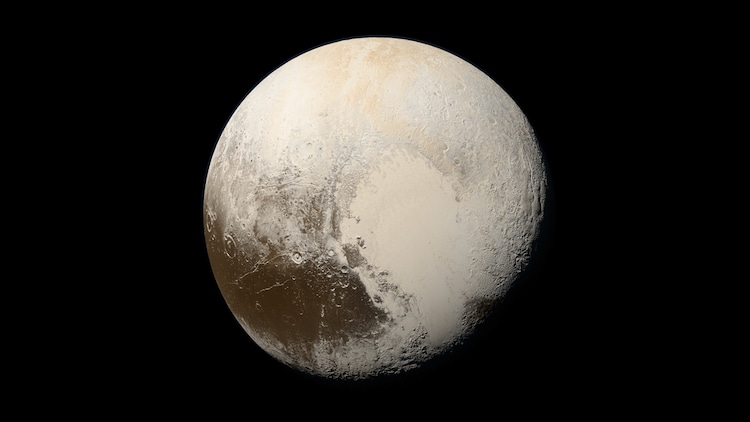
The mission revealed a surprisingly dynamic landscape, with towering ice mountains, vast glaciers and the iconic heart-shaped region known as Tombaugh Regio.
These findings challenged earlier assumptions that Pluto was a frozen, inactive body, strengthening arguments that it deserves full planetary status.
Despite renewed momentum, any official change will require action from the IAU, which remains the authority on defining celestial classifications. Nasa itself does not have the power to reclassify Pluto, but can influence the debate through research and advocacy.
For now, Pluto remains a dwarf planet, but as scientific understanding evolves and influential voices like Isaacman’s join the call, the possibility of its reinstatement is once again on the table.