
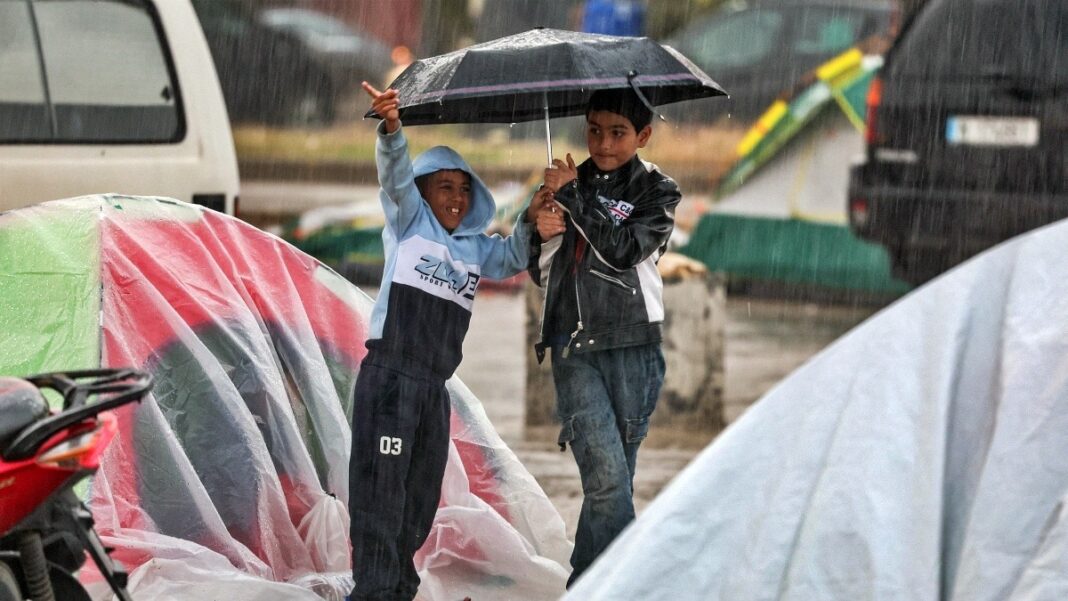
A wave of viral claims sweeping social media has reignited a familiar question in West Asia: can countries “control” the weather?
After unusual rainfall across parts of Iran, Iraq and Turkey, conspiracy theories have alleged that the United States and the United Arab Emirates were manipulating rain patterns, even “stealing” rainfall from Iran, through advanced technologies such as cloud seeding or secret weather systems.
Multiple social media accounts claimed that after Iran destroyed dozens of US and Israeli radars in the region, it is raining heavily. They supported the much-claimed alleged climate war against Iran.
But a closer look at the science and available evidence tells a very different story.
At the centre of these claims is cloud seeding, a real but often misunderstood technique. Countries like the UAE use it to enhance rainfall by dispersing particles into existing clouds. However, scientists are clear: its effects are limited, local and unpredictable. It cannot create clouds, redirect storms across borders or control regional weather systems.
More dramatic claims often invoke the HAARP, a US-based facility frequently cited in conspiracy theories. In reality, HAARP studies the upper atmosphere, mostly the ionosphere, while weather systems form much lower down in the troposphere.
Experts have repeatedly stated that it cannot influence rainfall or generate storms.
WHAT’S BEHIND THE INTENSE RAIN IN WEST ASIA?
The answer lies in a combination of powerful and very real climatic factors.
Scientists point first to Climate change, which is intensifying the global water cycle. Warmer air holds more moisture, meaning when it rains, it often pours. This is why even arid regions are now seeing short bursts of heavy precipitation.
A key driver is the unusually warm Mediterranean Sea. Higher sea surface temperatures increase evaporation, loading the atmosphere with moisture that is later transported inland toward Iran, Iraq and Turkey. This effectively turns the Mediterranean into a “fuel tank” for storms.
At the same time, shifts in the jet stream, high-altitude winds that steer weather systems, are making rainfall patterns more erratic.
Instead of moving steadily, these currents can stall, causing storms to linger over specific regions and dump large amounts of rain in a short period.
The geography of West Asia further amplifies the impact. Much of the region is desert or semi-arid, where dry soil struggles to absorb water quickly. This leads to rapid runoff and flash flooding, even during relatively short-lived storms.
Together, these factors are producing what scientists describe as weather whiplash, long dry spells followed by sudden, intense rainfall events. While such extremes may feel unnatural, they are increasingly consistent with a warming climate.
WHAT’S FUELLING THE CONSPIRACY?
The persistence of conspiracy theories reflects deeper anxieties over water scarcity and geopolitical tensions in the region.
Iran has previously accused neighbouring countries of interfering with its rainfall, but experts say such claims often emerge during periods of environmental stress.
The science, however, remains unequivocal: no country today can control regional weather systems or redirect rainfall across borders.
As extreme weather events become more frequent, misinformation is likely to grow alongside them.
The real challenge, scientists warn, is not hidden weather weapons, but adapting to a rapidly changing climate that is already reshaping rainfall patterns across the world.


