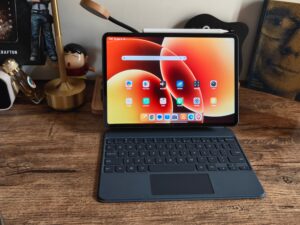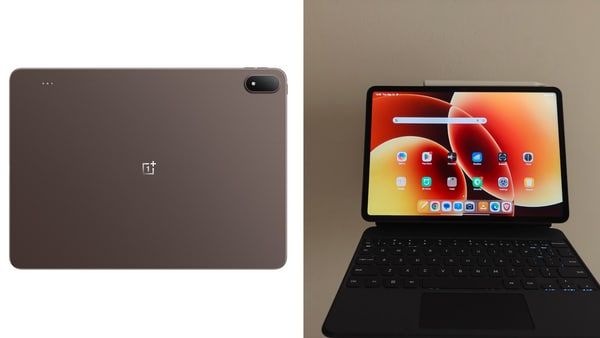
It’s an exciting time in the Android tablet market, with companies finally prioritising the segment with their flagship devices. The segment has seen two new products in recent months, the Xiaomi Pad 8 and the OnePlus Pad 4, both devices running on Android 16 and Snapdragon processors but coming in at different price ranges.
If you are looking to buy a new tablet and wondering which of these tablets may be the right choice for you, here’s a detailed comparison.
Display:
The OnePlus Pad 4 features a 13.2-inch 3.4K display with a 144Hz variable refresh rate that can dial all the way down to 30Hz to save battery. The display comes with up to 1,000 nits of brightness in High Brightness Mode (peak brightness the display can reach when auto-brightness is turned on), with support for Dolby Vision.
Meanwhile, the Xiaomi Pad 8 features a smaller 11.2-inch 3.2K LCD display with the same 144Hz refresh rate and Dolby Vision. The Pad 8 also comes with lower 800 nits in High Brightness Mode (HBM), but there is an option to choose a nano-texture coating variant of the tablet to reduce glare.

The OnePlus Pad 4 features a 7:5 aspect ratio, which gives more area for tasks like reading, multitasking, and editing documents side by side. Meanwhile, the Pad 8 comes with a 3:4 aspect ratio, which makes the display feel more compact and better optimised for portrait viewing but doesn’t feel as spacious for split-screen use.
In terms of design, the Pad 8 is both lighter (485g) than the Pad 4 (672g) while being slimmer at 5.75mm thickness compared to 5.94mm thickness of the Pad 4.
Processor and software:
The OnePlus Pad 4 is powered by the flagship Snapdragon 8 Elite Gen 5 chipset, which is the same chipset powering most high-end phones of 2026, including the Samsung Galaxy S26 Ultra and even the OnePlus 15. The tablet comes with support for up to 12GB of LPDDR5X RAM and UFS 4.1 storage across all variants.
Meanwhile, the Pad 8 runs on the more mid-range Snapdragon 8s Gen 4 processor. The tablet comes with support for LPDDR5x RAM and UFS 3.1 storage for the 128GB variant and bumps it up to UFS 4.1 for the 256GB variant.
In terms of software, it is always a personal choice, with both the OnePlus Pad 4 and Xiaomi Pad 8 running on Android 16-based custom skins, Xiaomi with HyperOS 3 and OnePlus with OxygenOS 16.
Both the tablets have some basic features like computer shortcuts on their keyboards and seamless connectivity with their own smartphones that allows for a shared clipboard, easy file transfer, and screen sharing. However, I personally feel OxygenOS 16 is slightly more optimised for tablets, with its Open Canvas multitasking system that allows for opening three apps at once along with floating windows.
The system feels more intuitive, as you can adjust the size of all three individual apps, and each app can also be easily replaced by clicking on the three-dot button above them.
Battery:
The OnePlus Pad 4 features a much larger 13,380mAh battery with support for 67W SUPERVOOC fast charging. Meanwhile, the Pad 8 comes with a 9,200mAh battery with 45W charging support. Both tablets also come with reverse charging support, meaning you can use them to power up other devices like TWS earbuds or even your phone in emergency situations.
Another area where the Pad 4 takes a lead is in the speaker department, with the OnePlus tablet packing an 8-speaker setup with Hi-Res certification, while the Xiaomi Pad 8 sticks to a quad-speaker setup with Dolby Atmos support. While the Pad 8 speaker still sounds good, its volume feels lacking despite the 200% volume booster when compared to the Pad 4.
Price:
OnePlus Pad 4
₹59,999 (8GB + 256GB)
₹64,999 (12GB + 512GB)
Xiaomi Pad 8
₹33,999 (8GB + 128GB)
₹36,999 (12GB + 256GB)
Which tablet is better for you?
Both the Xiaomi Pad 8 and OnePlus Pad 4 are strong offerings in their respective price ranges. The choice, in the end, comes down to your expectations from a tablet.
If you want your tablet to handle heavy multitasking, video editing, lots of gaming, and rigorous streaming sessions, the OnePlus Pad 4 with the Snapdragon 8 Elite Gen 5 processor is the clear choice. However, it also commands a premium price of around ₹60,000.
Meanwhile, if you want a more portable option to handle everyday tasks and light gaming, and are okay compromising slightly on audio quality, the Pad 8 is a very decent option at a starting price of ₹33,999.
| Feature | OnePlus Pad 4 | Xiaomi Pad 8 |
|---|---|---|
| Display | 13.2-inch 3.4K (3392×2400), 144Hz VRR, Dolby Vision | 11.2-inch 3.2K (3200×2136) LCD, 144Hz, Dolby Vision |
| Processor | Snapdragon 8 Elite Gen 5 (3nm) | Snapdragon 8s Gen 4 |
| RAM | 8GB / 12GB LPDDR5X | 8GB / 12GB LPDDR5X & LPDDR5T |
| Storage | 256GB / 512GB (UFS 4.1) | 128GB (UFS 3.1) / 256GB (UFS 4.1) |
| Battery & Charging | 13,380mAh with 67W charging | 9,200mAh with 45W charging |
| Audio | 8 Speakers, Hi-Res Audio | 4 Speakers, Dolby Atmos, Hi-Res Audio |
| Cameras | 13MP Rear, 8MP Front | 13MP Rear, 8MP Front |
| Software | Android 16 (OxygenOS 16) | Android 16 (HyperOS 3) |
| Dimensions / Weight | 289.71 x 209.76 x 5.94mm / 672g | 251.22 x 173.42 x 5.75mm / 485g |
| Starting Price | ₹59,999 | ₹33,999 |