
30.1 C
Delhi
Thursday, February 26, 2026

Indian team makes big solar discovery that could save Earth’s satellites, GPS

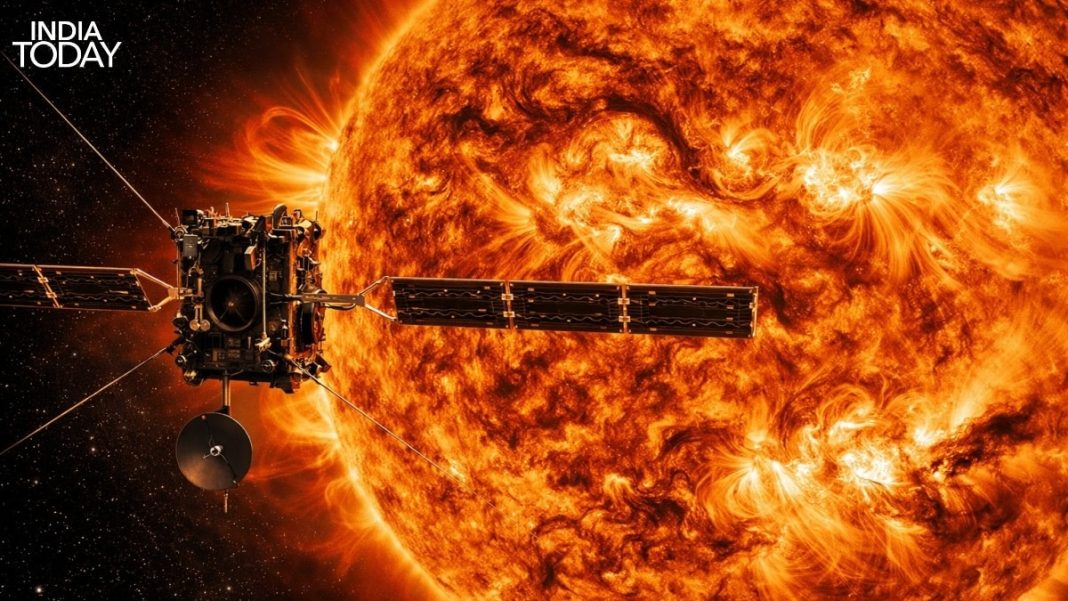
A team of astronomers from the Indian Institute of Astrophysics (IIA) have made a major breakthrough in understanding how dangerous solar storms begin, capturing the closest-ever observations of shock waves triggered by a coronal mass ejection (CME) near the Sun.

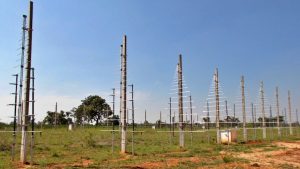
The discovery was made using the Gauribidanur radio telescope, operated by the Indian Institute of Astrophysics (IIA), along with the Visible Emission Line Coronagraph (VELC) onboard India’s solar mission, Aditya-L1.

Just as a supersonic aircraft creates a sonic boom when it breaks the sound barrier, fast-moving CMEs from the Sun generate shock waves in space. These shocks can compress Earth’s magnetosphere, leading to geomagnetic storms that disrupt satellites, GPS systems, radio communications, and even power grids.
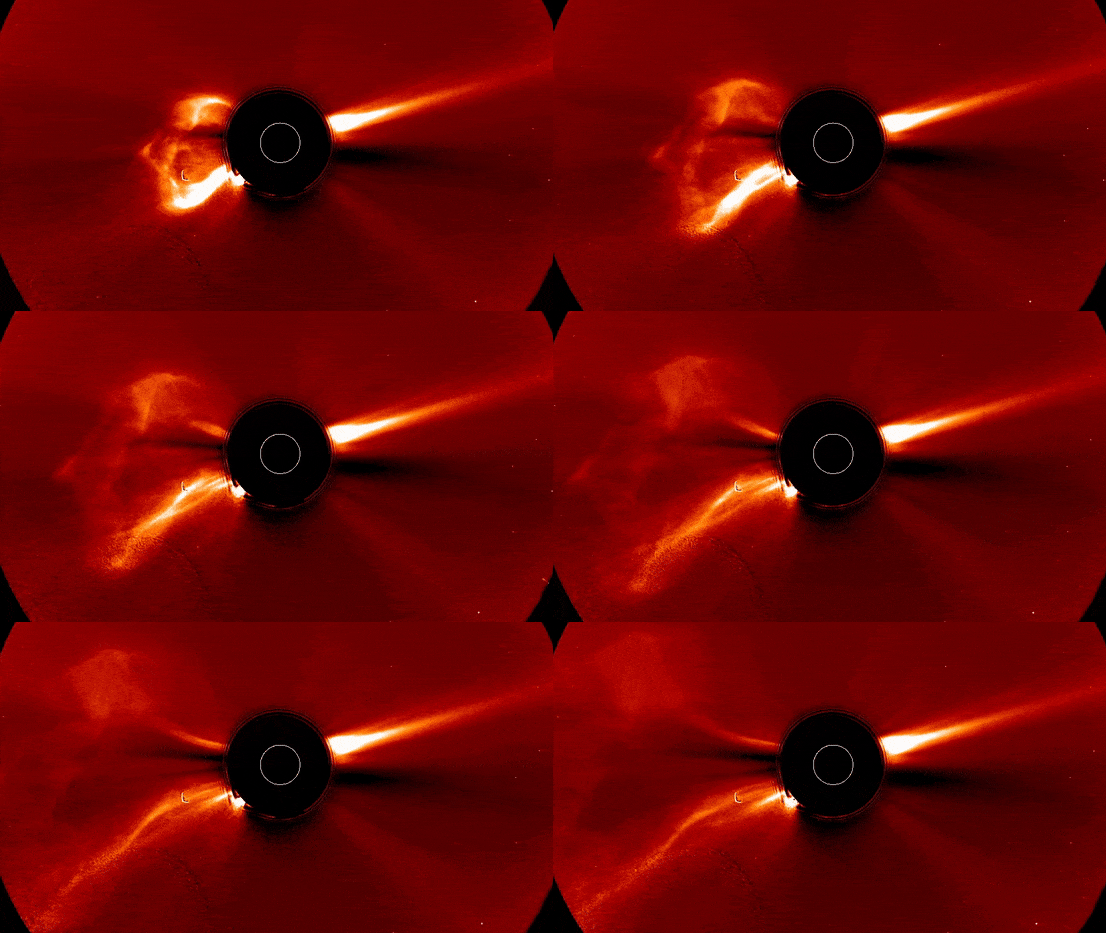
CME

They can also intensify auroras and increase radiation risks for astronauts and high-altitude flights.

On May 27, 2024, scientists observed a CME-driven shock forming at a distance of approximately 130,000 kilometers above the Sun’s surface. The shock was traveling at nearly 1,700 kilometers per second.

According to Prof. R Ramesh, Senior Professor at IIA and Principal Investigator of VELC, this is the closest distance from the Sun at which such a shock and its associated radio burst have been unambiguously detected.

For nearly a century, scientists have debated where exactly these shock waves originate. While similar interplanetary shocks have been observed near Earth, identifying their “birth stage” near the Sun has remained challenging.

The breakthrough was possible because of the combined capabilities of the Gauribidanur radio telescope, currently India’s only dedicated low-frequency solar radio observatory, and VELC, which observes the Sun’s outer atmosphere in visible wavelengths.
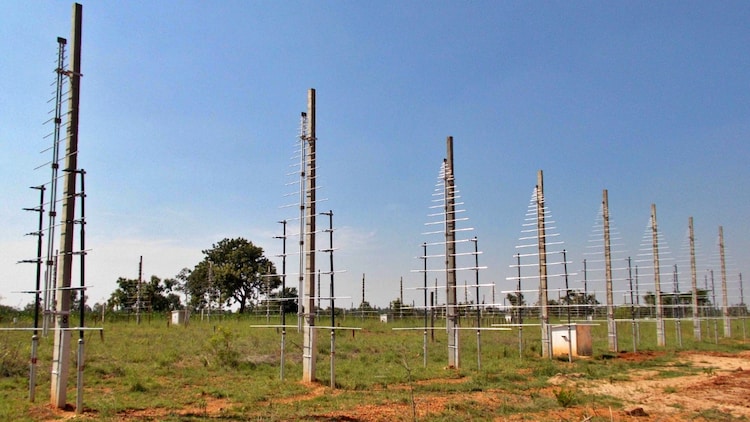
Radio telescope

Radio telescopes detect intense bursts of low-frequency emissions produced by these shocks.

Radio telescopes detect intense bursts of low-frequency emissions produced by these shocks, while VELC helps identify the exact CME responsible.

Interestingly, the sunspot group linked to the May 27 event may have been the same region that produced the powerful “Mother’s Day” solar storm earlier in May 2024. Due to the Sun’s rotation, the active region reappeared on the eastern edge of the Sun later that month.

Lead author Dr. C. Kathiravan noted that continued coordinated observations during the peak of Solar Cycle 25 could help detect CME-driven shocks even closer to the Sun, possibly within 30,000 kilometers.

The findings, soon to be published in the Journal of Astrophysics and Astronomy, mark a significant step toward improving space weather forecasting and protecting modern technological infrastructure from solar threats.
Latest

Nasa reveals astronaut’s name behind the rare medical evacuation from space

Nasa astronaut Mike Fincke has come forward as the one who suffered a medical event on the ISS, leading to Crew-11's unprecedented early return.

Why do worms socialise? IISc study finds they share a genetic secret with humans

Researchers at the Indian Institute of Science have identified a specific gene that controls social behaviour in worms. The study reveals how serotonin pathways

Indian high school students design, launch mini satellite to 22 km height

Class XI students from a Sivagangai government school built and launched the Vikko Sat 1 mini satellite. The device reached 22 km to detect atmospheric fungal s

Rain expected over hills on Thursday, dry conditions to prevail in the plains

Northwest India is set to experience rising temperatures as a heatwave looms over Delhi and Punjab. Meanwhile, parts of Kerala and Karnataka may see light rain

India to provide free HPV vaccines: What is it and how does it work? Science explained

India is launching a free HPV vaccination drive for 14-year-old girls to eliminate cervical cancer. Discover the fascinating science of how these vaccines creat

Topics

Ramayana first screening has US viewers raving about ‘monstrous VFX, rooted storytelling’ of Ranbir Kapoor, Yash film

A test screening of the first cut of Ranbir Kapoor and Yash's Ramayana Part One was reportedly held in Los Angeles earlier this week.

Salesforce CEO says SaaSpocalypse will not kill SaaS, AI agents make it stronger

Salesforce has dismissed fears of a "SaaSpocalypse," saying AI agents will strengthen, not weaken, software-as-a-service. CEO Marc Benioff said businesses are n

Why would Annie Guthrie’s car be part of probe? Abuse survivor shares chilling ‘stalkers’ theory

New details have been emerging in the Nancy Guthrie case, including PCSD's confirmation that Annie Guthrie’s car "is still part of the investigation.”

‘Infiltration for terrorism purpose’: What Cuba said on motorboat incident amid US tensions

Cuban forces on Wednesday killed four people who were sailing in Cuban waters on a Florida-flagged ship.  

Zydus bets big on affordable GLP-1 therapy with new semaglutide brands in India

A single reusable pen could make costly GLP-1 therapy more affordable and accessible for millions of Indians battling diabetes and obesity.

Samsung Galaxy S26 has lots of AI, here are 5 new features that really matter

Samsung’s Galaxy S26 series brings a range of advanced AI features aimed at simplifying everyday life. From proactive reminders that surface at the right time

Surgeon with 25 years of experience warns less than 6 hours of sleep can increase risk of heart disease, certain cancers

Dr Jeremy London explains that sleeping fewer than 6 hours or more than 9 hours is dangerous, and aiming for 6-8 hours of quality rest is key.

Ambanis host Arjun Tendulkar, Saaniya Chandhok and family in Jamnagar before wedding

Before the big wedding next month, Ambanis and Tendulkars came together to bless the couple Arjun Tendulkar and Saaniya Chandhok in Jamnagar.
spot_img

Related Articles

Popular Categories

spot_imgspot_img

