
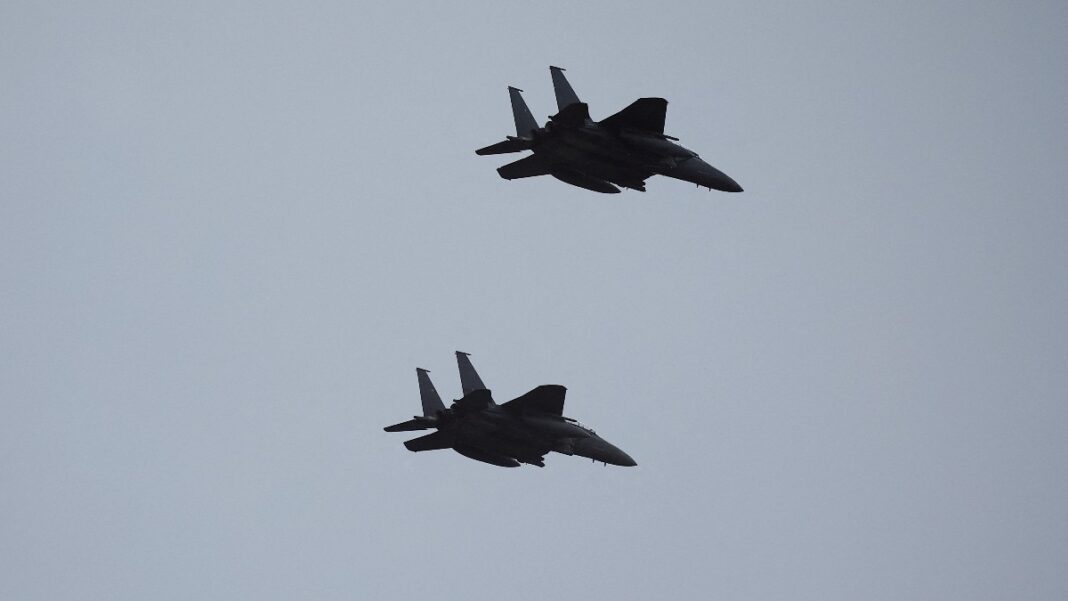
A mid-air collision between two South Korean fighter jets was not caused by any technical failure or combat error. Instead, it happened because pilots were trying to take photos and record video during a routine mission. The incident, which took place in 2021 but has now been detailed in an official probe.
According to findings released by Seoul’s Board of Audit and Inspection, the collision occurred during a formation flight involving two F-15K aircraft near the central city of Daegu. While both jets managed to land safely and no injuries were reported, the damage was significant. The total repair bill was estimated at around 880 million won (55.70 million INR).
The pilot, now out of military service, was ordered to pay a fine of 88 million won.
PILOT’S FINAL FLIGHT PLAN INCLUDED MID-AIR PHOTOS
According to South Korean newspaper, The Chosun Daily, one of the pilots, identified as a senior lieutenant at the time, had planned to take commemorative pictures during what was to be his final flight before a transfer. He had openly said during the pre-flight briefing, “This is my last flight before a transfer, so I will take photos of the flight after completing the mission.”
As the aircraft began their return journey, the wingman pilot used his personal mobile phone to take photographs. Noticing this, the lead pilot reportedly instructed a crew member to record video footage, saying, “I will take the photo for you.”
In an attempt to improve the camera angle, the wingman pilot suddenly altered his position mid-air, lifting his jet and flipping it above the lead aircraft. The abrupt manoeuvre brought the two jets dangerously close, leaving little room for correction.
MID-AIR COLLISION LEADS TO DAMAGE
Despite last-minute evasive attempts, the aircraft collided, with one jet’s tail striking the wing of the other. Both planes returned safely to base, but the impact damaged critical components, requiring multiple parts to be replaced.
The Air Force initially moved to hold the wingman pilot fully accountable, ordering him to pay the entire cost. He was also suspended and has since left military service to join a commercial airline. However, the pilot challenged the financial penalty, prompting a review by the audit board. He admitted that his sudden manoeuvre led to the crash, whlie arguing that the lead pilot had “tacitly consented” to the act, given the prior discussion about taking photos.
The Board of Audit and Inspection acknowledged that taking commemorative photos during flights had been “a widespread practice among pilots at the time”. It also noted gaps in regulation by the Air Force, which failed to clearly prohibit such behaviour.
Taking these factors into account, the board reduced the compensation to roughly one-tenth of the original demand. It also cited the pilot’s prior service record and his ability to safely land the damaged aircraft as mitigating factors.
The report, however, did not clarify whether any disciplinary measures were taken against other personnel involved in the incident.


