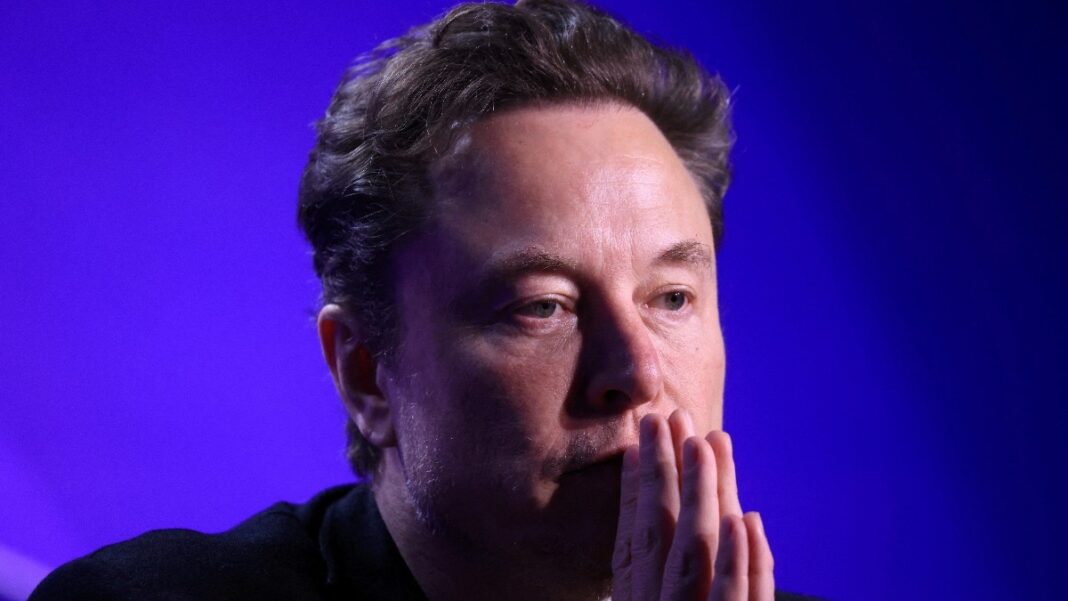
“I left at 17. Well, in part, in order to avoid conscription in the army. You know, spending two years suppressing Black people didn’t seem to be a great use of time.”
Those are Elon Musk’s own words, spoken years later in an interview, looking back on why he left South Africa as a teenager in 1989. A lanky, bookish 17-year-old from Pretoria, he endured brutal bullying at Pretoria Boys High School. One particularly vicious gang beating left him hospitalised and unconscious for days. His parents separated when he was young, and he grew up with his father, Errol Musk, whom he said was emotionally distant and harsh.
Back then, South Africa enforced a rule that every young white man had to serve two full years in the South African Defence Force. This was not optional. When a boy turned 18, the government could call him up to join the army. Many young men like Elon were sent to patrol Black townships during protests or to fight in wars. Their job was often to help maintain the apartheid system. It was a system created around the late 1940s that separated people by race and gave all power to the white minority. The government had declared a state of emergency because Black townships were rising up against unfair rules. Violence was increasing, the world was punishing South Africa with heavy economic sanctions. Elon wanted no part of enforcing a system he saw as unjust.
So, in June 1989, just after finishing high school at the age of 17, Elon packed his bag and baggage and fled South Africa. He first went to Canada using his mother Maye’s Canadian citizenship. He arrived in Canada in the summer of 1989 and stayed there for about two years. During this time, he worked several odd jobs — including cleaning a grain elevator and even farming — while studying at Queen’s University in Kingston, Ontario. In 1991, after spending roughly two years in Canada, he moved to the United States to continue his studies at the University of Pennsylvania.
South Africa in the late 1980s felt too small, too politically toxic, and too limited for the grand future he imagined: programming video games (he had already sold his first one, Blastar, at age 12), building rockets, and creating companies that could shape humanity for good.
He rarely looked back. The teenager, who walked away from one form of racial hierarchy, went on to build PayPal, Tesla, SpaceX, Neuralink, The Boring Company and xAI, becoming the richest man alive in the process.
INSIDE ELON MUSK’S ‘APARTHEID 2.0’ CLAIMS
Decades later, Elon Musk — born in Pretoria in 1971 — continues to return to the country he walked away from at 17. He flooded the social media platform X, which he owns, with posts accusing South Africa of practising “Apartheid 2.0.”
In his pointy posts, he flagged brutal attacks on white South Africans, particularly Afrikaners. He also shared videos from political rallies where leaders and supporters were heard chanting “Kill the Boer, Kill the Farmer.” (The term ‘Boer’ refers to descendants of Dutch and Huguenot settlers who arrived in Southern Africa in the late 17th century.)
He also criticised a growing set of race-based laws, which are “viciously racist” and “evil.” In a post, Elon said, “South Africa has now passed 142 laws forcing discrimination against anyone who is not black!”
This month alone, Elon has been relentlessly firing off reposts and comments on the subject. In one of the post he declared: “There are now more anti-White and anti-Asian laws in South Africa than anti-Black laws under Apartheid. Racism is wrong no matter who it is against.” In another post, he flagged that certain violent incidents “are very common in South Africa.” He has continued to label the current system “super racist Apartheid 2.0.”
The intensity surprises everyone. After all, this is the man who fled the old apartheid system because he didn’t want to defend it. Why does a billionaire now living between Texas, California, and the stars keep returning — almost obsessively — to the purported racial politics of his birth country? Is it a lingering personal connection? An allergy to any form of race-based discrimination? Or a warning that South Africa’s path towards identity politics could preview dangers elsewhere?
Elon felt targeted by the same race-based policies that were allegedly used to block one of his flagship companies. The case that stung the most was Starlink, which is his satellite internet service created to bring fast connectivity to remote and underserved parts of the world.
Despite being born in South Africa, he blamed that regulators have blocked the satellite internet service “simply because I (Elon) am not Black.” He has claimed government representatives proposed ways to “bribe our way to a license by pretending that a Black guy runs Starlink SA,” but he refused.
“This is a shameful disgrace to the legacy of the great Nelson Mandela who sought to have all races treated equally in South Africa,” he wrote on X.
He has called on the world to turn its back on South African politicians backing these policies, and has even implied sanctions or asset seizures against those he believes are fuelling anti-white sentiment.
BETRAYAL OF THE DREAM OF RAINBOW NATION?
Much of Elon’s frustration appears rooted in his view that Nelson Mandela’s vision of a “Rainbow Nation” has been betrayed.
Nelson Mandela, after 27 years in prison, became South Africa’s first democratically elected President of South Africa in 1994. In his inauguration speech, he promised: “We enter into a covenant that we shall build the society in which all South Africans, both black and white, will be able to walk tall, without any fear in their hearts, assured of their inalienable right to human dignity — a rainbow nation at peace with itself and the world.”
He often spoke about the importance of non-racialism. “It is not our diversity which divides us; it is not our ethnicity, or religion or culture that divides us. Since we have achieved our freedom, there can only be one division amongst us: between those who cherish democracy and those who do not,” Mandela said.
TWO VERY DIFFERENT NARRATIVES
To Elon’s critics, including the South African government and President Cyril Ramaphosa, these claims are a “false narrative” spread by those resisting necessary transformation. Cyril Ramaphosa has repeatedly stated that “There is no white genocide in South Africa.”
On Starlink row, Cyril Ramaphosa’s spokesperson Vincent Magwenya made it clear that South Africa was not going to bend. He told Elon to look elsewhere, saying there were plenty of other opportunities beyond the country. “There are currently 193 member states in the United Nations. Surely, there’s good money to be made out of 192 markets. It’s okay to move on!” he said.
According to the government, the Broad-Based Black Economic Empowerment (B-BBEE) and employment equity laws are essential tools to heal the deep wounds of colonialism and apartheid, during which a tiny white minority controlled almost all wealth, land, and opportunity while the Black majority was systematically oppressed.
However, civil rights group, AfriForum, and UK-based think-tank, Institute of Race Relations (IRR), counter that temporary redress after 1994 has hardened into something far more systematic and permanent. According to the IRR’s Index of Race Law updated in June 2025, South Africa today has 145 operative racial Acts of Parliament — more than at the peak of the old apartheid system in several categories — with 122 of them adopted or significantly amended since 1994.
These laws treat legal subjects differently based on perceived race or skin colour across employment, ownership, licencing, procurement, land, and education. The Employment Equity Amendment Act, which became fully operational in January 2025, requires companies with 50 or more employees to meet strict government-set numerical racial and gender targets across 18 economic sectors by 2030. In some sectors, such as accommodation and food services, the targets demand up to 95.9 per cent of skilled technical employees and over 90 per cent of senior management positions to be filled by “designated groups” (primarily Black African, Coloured, Indian/Asian, women, and people with disabilities). Non-compliance can lead to fines or disqualification from government contracts.
The Broad-Based Black Economic Empowerment (B-BBEE) Act and its associated codes require minimum Black ownership stakes — often 30 per cent or more — for companies to qualify for telecom licenses, mining rights, government tenders, and many business contracts. This is precisely the barrier Elon cites in the Starlink case.
More layers come from the Mining Charter, the Preferential Procurement Policy Framework Act, and various sector-specific transformation charters that tie licensing and contracts directly to racial ownership and employment quotas.
However, Cyril Ramaphosa has made it clear that Broad-Based Black Economic Empowerment (B-BBEE) isn’t going anywhere. “It cannot be acceptable to anyone in this house for African people, coloured people, and Indian people to be poorer and have fewer opportunities than white people. It cannot be acceptable,” Ramaphosa said.
THE OVAL OFFICE FACE-OFF
Musk is not alone in flagging these issues. In May 2025, during a bilateral meeting at the White House with South African President Cyril Ramaphosa, US President Donald Trump directly confronted the issue. He played videos and displayed reports of farm attacks, claiming that white farmers in South Africa were being “brutally killed” and that “a genocide is taking place” in the country.
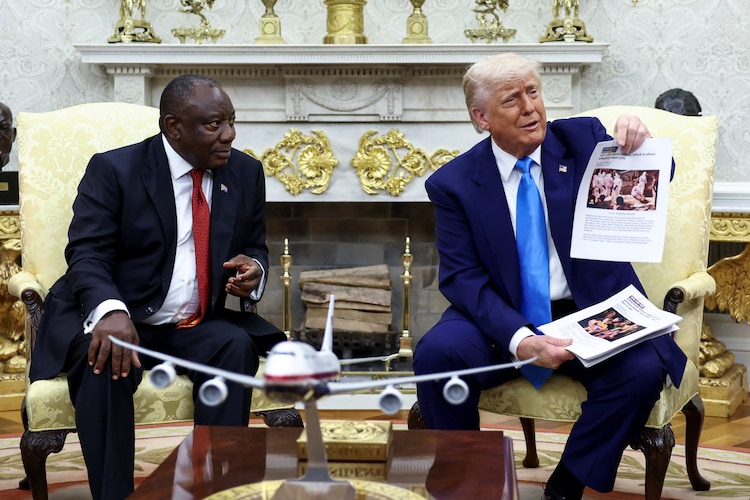
He said, “White farmers are being brutally killed and their land is being confiscated in South Africa,” while defending his administration’s decision to fast-track refugee status for some Afrikaner farmers fleeing violence. He even said that South Africa will be excluded from the 2026 G20 summit in Miami.
Ramaphosa pushed back. He said, “There is no white genocide in South Africa,” and pointed to prominent white South Africans present in the room (golfers Ernie Els and Retief Goosen, and billionaire Johann Rupert), saying if there truly was a genocide against Afrikaner farmers, “these three gentlemen would not be here.” He added that farm attacks are part of the country’s crime problem, and that the majority of murder victims in South Africa are Black, not white. He also blamed politicians like Julius Malema, who do not represent government policy, for chants and views expressed against white people.
Musk left South Africa to avoid enforcing a racial system. Today, he is one of its loudest critics from thousands of miles away. But is he exposing a real problem, or amplifying a narrative that suits his own battles? The truth is, South Africa is still trying to fix an unequal past with policies it says are necessary to correct decades of exclusion.